Jensen Huang at GTC 2026: Nvidia sets the course for the future of AI and computing
Nvidia opens GTC 2026, the company's flagship annual conference. Jensen Huang will deliver a keynote on Nvidia's role in the future of computing and AI…
AI-processed from TechCrunch; edited by Hamidun News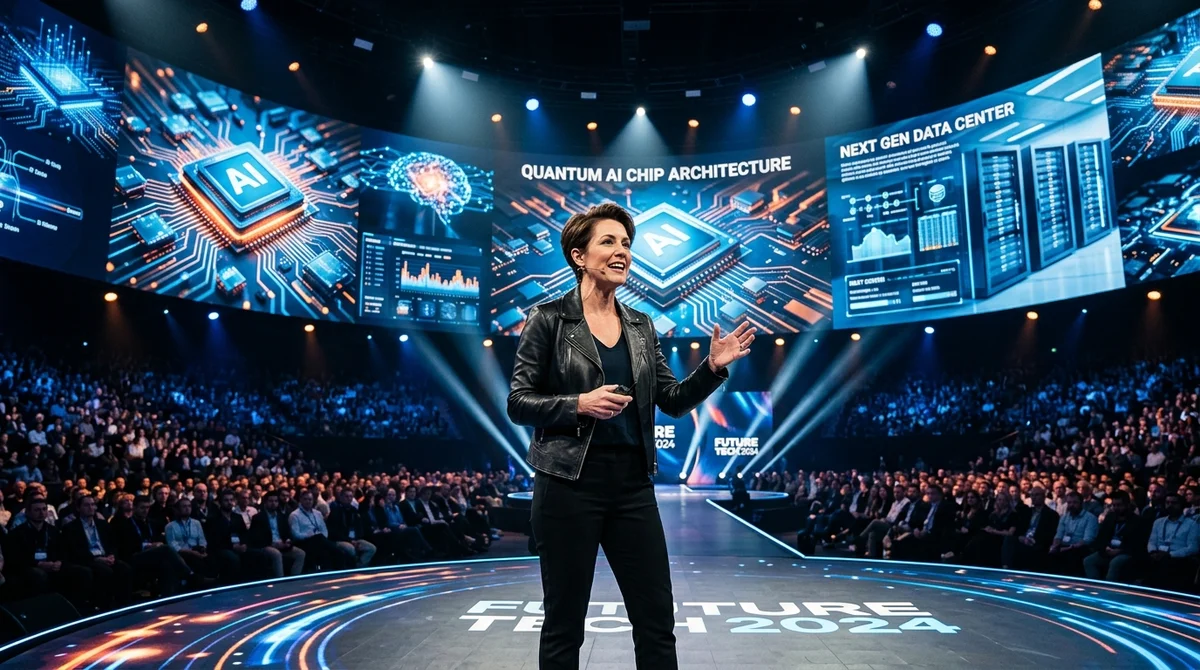
Nvidia is hosting GTC 2026 — an annual conference that over the past few years has transformed from a niche forum for GPU developers into one of the major events of the global technology industry. The centerpiece will be the keynote by CEO Jensen Huang: he traditionally sets not just the company's product agenda, but also charts the direction of computing and AI infrastructure as a whole. GTC stands for GPU Technology Conference — Nvidia has held it since 2009.
The early forums gathered primarily game graphics developers and scientific simulation researchers. Today's GTC audience includes chief technology officers of major corporations, leaders of cloud platforms, researchers from leading AI laboratories, and investors closely watching every word Huang says. The reason for this transformation is clear: GPUs have become the foundation of modern AI infrastructure, and Nvidia is the dominant provider of this foundation.
At GTC 2025, Huang unveiled the Blackwell Ultra architecture and signaled the transition to the next generation — the Vera Rubin platform. At the same time, the NVLink Fusion system and new solutions for scalable data centers were announced. GTC 2026 is expected to be no less eventful: the industry is waiting for details on Vera Rubin, including timelines for commercial availability and performance characteristics for large language model inference tasks.
Huang's keynote style has long become iconic. He doesn't read corporate slides — he tells a story about why computing is changing the world and what role Nvidia plays in that story. It was at GTC that the company introduced the H100, Grace Hopper Superchip, and expanded the CUDA platform beyond the gaming segment.
Each presentation contains several surprises — announcements that weren't in preliminary leaks. Analysts point to several key themes that will likely occupy center stage in 2026. First is the architecture roadmap: after Vera Rubin, the market wants to understand what comes next.
Second is the development of NIM (Nvidia Inference Microservices), a corporate platform for deploying language models without deep MLOps expertise. Third is physical AI: robotics, autonomous systems, and industrial automation, areas where Nvidia is actively investing through its Isaac platform. The competitive landscape in 2026 has become noticeably more complex.
AMD is aggressively pushing its MI lineup and narrowing the gap in software ecosystems. Hyperscalers — Google, Amazon, Microsoft — are scaling custom ASIC production for predictable workloads. Regulatory restrictions on chip exports have reshaped market geography.
Huang will almost certainly comment on all these factors: Nvidia needs to demonstrate that its advantage is technological, not just situational. GTC 2026 is more than a product presentation. It is the annual manifesto of a company that in five years has evolved from a gaming graphics card manufacturer into a key infrastructure player in the AI economy.
What Jensen Huang says about the future of computing will largely determine investment priorities, technological strategies, and partnership decisions of the world's largest companies over the next one to two years.
Want to stop reading about AI and start using it?
AI News is a curated feed of AI/tech news. Hamidun Academy teaches you to use AI systematically in your work.