Nvidia introduced DLSS 5 with generative AI — and already divided the gaming community
Nvidia presented DLSS 5 at the GTC conference — a new upscaling technology with generative AI. The company's CEO Jensen Huang called it a 'GPT moment for graphi
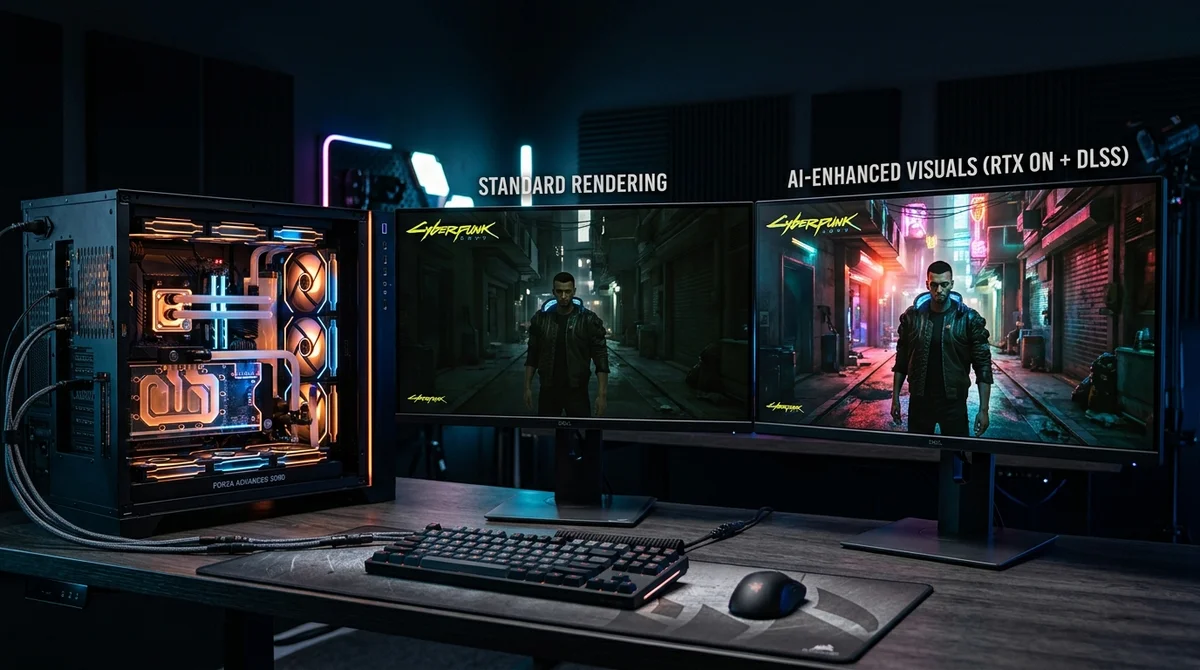
Nvidia announced the launch of DLSS 5 at the GTC conference — and it has already become one of the most discussed announcements in the PC gaming world in recent months. For the first time in the series' history, the new technology uses a full-fledged generative neural network to create pixels in real time, rather than simply using machine learning for smoothing and image restoration. Nvidia CEO Jensen Huang called it a "GPT moment for graphics — the fusion of hand-crafted rendering and generative AI for a dramatic leap in visual realism." The reaction turned out to be exactly what happens with every "GPT moment": some of the community is delighted, others are troubled.
Previous versions of DLSS worked on the principle of upscaling: the game was rendered at a reduced resolution, and a neural network filled in the missing details, bringing the final image up to native quality. This made it possible to achieve high framerates without noticeable losses.
DLSS 5 changes the logic fundamentally. Instead of restoring an already-rendered image, the technology generates new pixels, lighting, and shadows from scratch — using generative models architecturally similar to those behind modern AI art services. According to Nvidia's plan, this allows compensation for the gap between budget and top-tier hardware significantly better than DLSS 3 or 4. In supported games, the increase in visual quality promises to be immediately noticeable: more dynamic lighting, detailed shadows, realistic reflections on surfaces.
Nvidia uses the term "Hand-Crafted + AI Pipeline": artists still set the basic scene parameters, place light sources, and define materials — while the neural network works on top, amplifying and complementing the result. Developers will get fine-tuning tools to control how aggressively AI intervenes in the artistic decision of each scene.
This is where the polemic begins. Part of the gaming community and lighting artists met the announcement with clear skepticism. The main complaint: a generative neural network by definition makes changes to the image that the game's authors didn't plan. If previous versions of DLSS restored pixels strictly based on the already-existing frame, then DLSS 5 essentially reinterprets the scene — adding its own interpretation of how light and shadows should look.
A game deliberately styled in a restrained color palette or with intentionally dark lighting risks looking brighter and hyperrealistic with DLSS 5 — but not the way its creators intended. The term "slop" — slang for featureless, characterless AI-generated content — appeared in discussions on Reddit and Bluesky within hours of the announcement. Several developers expressed concern that players would perceive their works in a form they never authorized.
The arguments of technology supporters are pragmatic. For most players, the performance gain and picture quality matter more than philosophical arguments about authenticity. DLSS 5 allows running heavy AAA games on mid-range hardware with decent framerates and image quality that in native resolution would require a graphics card costing several thousand dollars. This is effectively democratization of high-quality graphics: what was previously available only to those with top-tier GPUs becomes closer to the mass market.
Nvidia emphasizes that implementing DLSS 5 remains a conscious choice of the studio, not a mandatory condition. DLSS 5 is a symptom of a larger shift: generative AI is moving into real time. What a year ago required minutes of rendering on server farms now works on consumer GPUs live. For Nvidia, this is a strategically important move: the more unique and powerful DLSS is, the more tightly the ecosystem is tied to GeForce cards. The main question is whether studios and players will accept the logic of "AI as an extension of the artist," or whether DLSS 5 will turn out to be that very setting that gets disabled first in the menu.