Rana el-Kaliouby: "boys' club" in AI threatens to entrench the gender income gap
AI investor Rana el-Kaliouby warns: if women remain sidelined from AI funding and leadership, the income gap will not just persist—it will grow. Teams of…
AI-processed from TechCrunch; edited by Hamidun News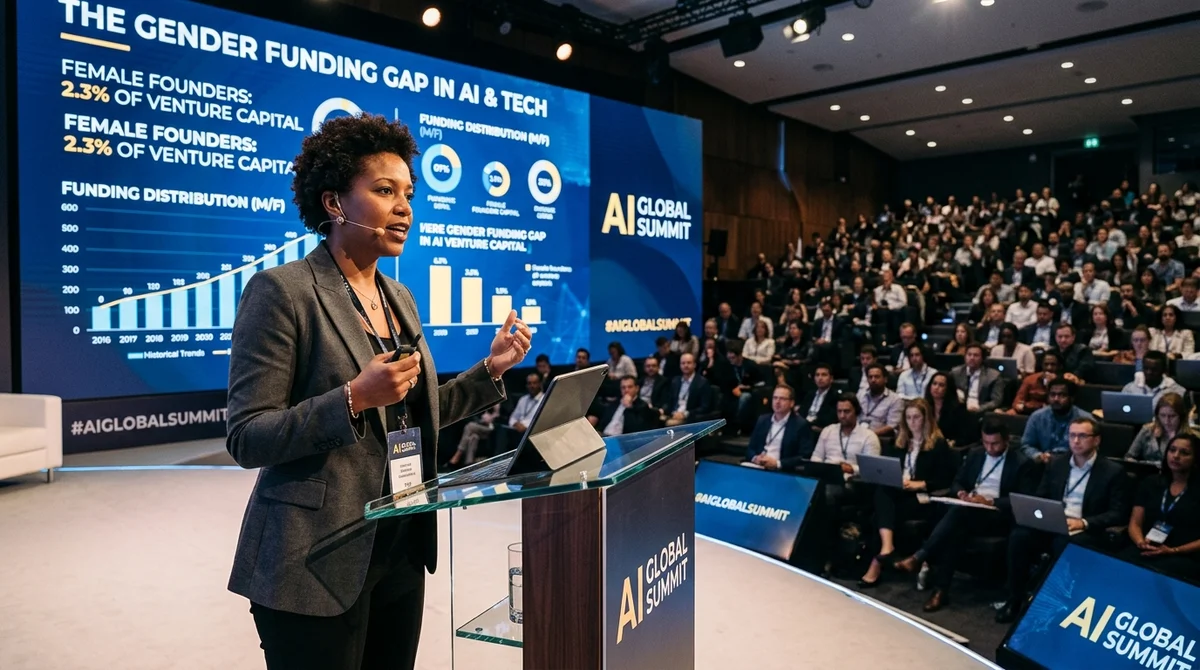
Rana el-Kaliouby is one of the few women holding significant positions in the global AI industry. As co-founder of Affectiva and an active venture investor, she sees the situation from the inside. Her warning is unequivocal: if women remain excluded from AI financing and leadership, the gender income gap will not simply persist — it will worsen with each year of technological economic growth.
The consequences, in her assessment, will be catastrophic. The industry, which el-Kaliouby calls a "boys' club," demonstrates persistent structural bias. The largest AI players — OpenAI, Anthropic, Mistral, xAI — are founded and led predominantly by men.
Most venture funds financing AI startups operate under male leadership. The result is a closed loop: those who control capital decide who gets it, and typically choose people like themselves. The numbers speak to a systemic problem.
According to PitchBook, teams of women founders receive around 2% of total venture funding in the US. In the AI sector, where rounds often number in the hundreds of millions of dollars, this share is even lower. Among private AI companies valued above a billion dollars, women CEOs are virtually absent.
It is the founders and early employees of these companies that form the capital, which in the next generation transforms into new investments, board positions, and the next generation of startups. The problem begins long before investment decisions. Women comprise about 26% of computer science specialists in the US and an even smaller share in research divisions of leading AI laboratories.
When the talent pool is limited and industry culture creates additional barriers, the outflow of women happens faster. Underrepresentation forms long before a funding round is discussed. This logic contains the main threat.
AI today is not merely a technology — it is infrastructure for the future economy. Companies setting its rules now will extract rent from it for decades. If women are largely excluded from the start of industry formation, the wealth gap — already significant by all measures — risks becoming permanent.
El-Kaliouby herself is a rare exception to this rule. Of Egyptian origin, she earned a doctoral degree from Oxford, founded Affectiva, a pioneer in emotion recognition, and sold the company to Swedish Smart Eye in 2021. After that, she moved into venture capital, becoming one of the few women making real investment decisions in AI.
It is this combination of experience — founder and investor — that makes her position weighty: she speaks not as an outside observer, but as someone who has lived through the system. The proposed solutions do not amount to symbolic quotas. They concern structural changes: targeted financing programs for women AI founders, diversification of investment committees, intentional recruitment of candidates for technical and leadership positions from underrepresented groups.
The goal is not to lower the bar, but to remove the barriers preventing competent people from reaching it. The parallel with the past is troubling. The 1990s internet boom created enormous fortunes concentrated among a limited circle of people.
Those left out then never managed to catch up — the gap became permanent. AI is moving along the same trajectory, only faster and with higher initial capital concentration. If nothing changes now, in ten years this conversation will lose its meaning — not because the problem will be solved, but because the window of opportunity will close.
Want to stop reading about AI and start using it?
AI News is a curated feed of AI/tech news. Hamidun Academy teaches you to use AI systematically in your work.