Google Expands Personal Intelligence to All US Users
Google launches Personal Intelligence to all US users. The company's AI assistant gains access to Google's ecosystem — Gmail, Google Photos, and other…
AI-processed from TechCrunch; edited by Hamidun News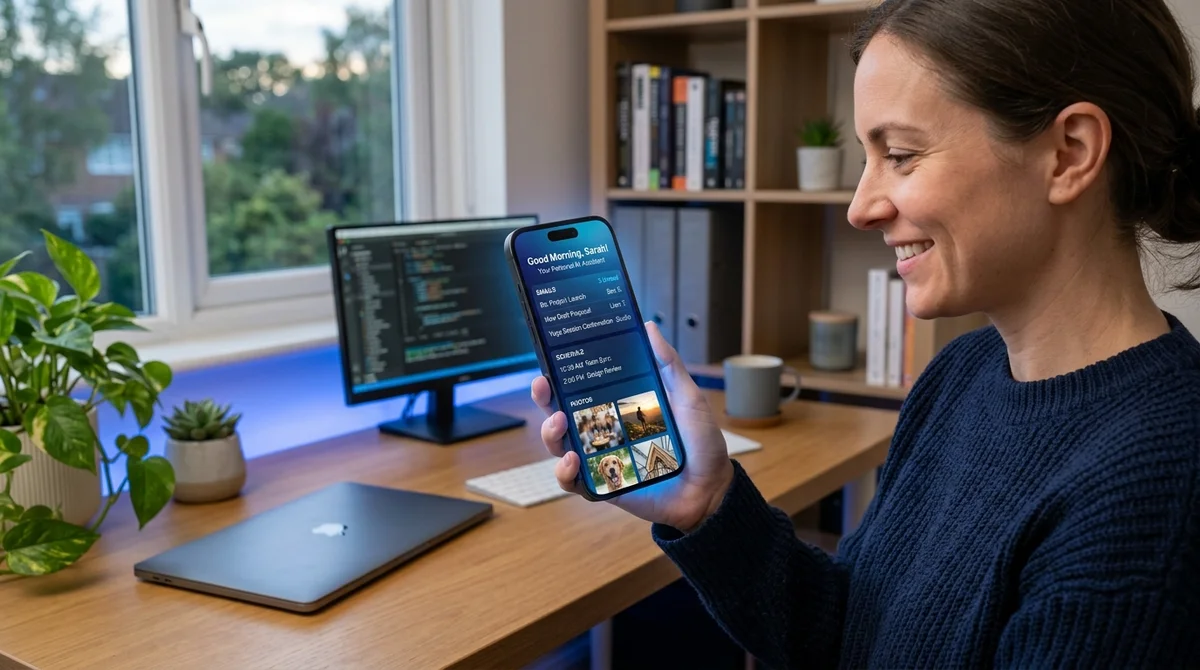
Google is expanding its Personal Intelligence feature to all users in the USA — a step that marks the transition from an experimental AI assistant to a real personal helper capable of working with a specific person's data. Personal Intelligence is a feature built into Google's AI assistant that allows it to access the content of your Google account. The assistant can view emails in Gmail, analyze photos in Google Photos, and use other data from the ecosystem to provide answers tailored to your specific situation rather than abstract ones. In essence, the idea is to transform a universal AI into a personal secretary who knows the context of your life.
The difference between an AI with access to personal data and without it is fundamental. Without access, the assistant responds to the question "When is my next flight?" with a template instruction on how to check your ticket on the airline website. With Personal Intelligence enabled, it will open Gmail, find the booking confirmation, and tell you the exact date, time, flight number, and terminal. Similarly with photos: instead of explaining how to find a picture, the assistant with access to Google Photos will answer immediately — or help you find a document you photographed months ago and lost track of.
Until now, Personal Intelligence was available only to a portion of American users — apparently as part of a phased rollout. Expanding to the entire US audience means Google considers the technology technically mature. This is an important signal: not simply a feature launched, but the company taking responsibility for its stable operation at scale.
Privacy is a central and inevitable question here. Google positions Personal Intelligence as an opt-in feature with granular control: the user chooses which services the assistant can access. According to the company's statements, data is not used to train general models and is not shared with third parties. Nevertheless, the decision to allow an AI to read your email is a psychologically non-trivial step. Google, judging by its step-by-step permission confirmation scheme, is betting on gradual trust rather than forced enablement.
In a broader context, the expansion of Personal Intelligence is Google's response to what competitors are doing. Apple Intelligence is integrated with email, notes, and photos in iOS. Microsoft Copilot is built into Outlook, Teams, and OneDrive. OpenAI is pushing the concept of memory for ChatGPT with user context persistence between sessions. The race for personal AI assistants has fundamentally shifted: the winner is determined not by the power of the underlying model, but by how deeply the assistant is integrated into a specific person's daily life.
Google holds a strong position in this race — the company's ecosystem covers email, file storage, calendar, photos, browser, search, and mobile operating system. This is potentially the most complete user context of all the tech giants. The question is how skillfully the company can leverage it.
If you have long lived in the Google ecosystem, Personal Intelligence is a feature worth trying. Especially for tasks like searching for information in old correspondence, composing responses taking into account the context of previous communication, or working with large photo archives. This is not a revolution, but a real step toward an AI assistant that is not just intelligent, but knows exactly who it's talking to.
Want to stop reading about AI and start using it?
AI News is a curated feed of AI/tech news. Hamidun Academy teaches you to use AI systematically in your work.