U.S. Justice Department: Anthropic illegally restricted Claude's military use
The U.S. Department of Justice responded to Anthropic's lawsuit: the government lawfully penalized the company for trying to restrict Claude's military use…
AI-processed from Wired; edited by Hamidun News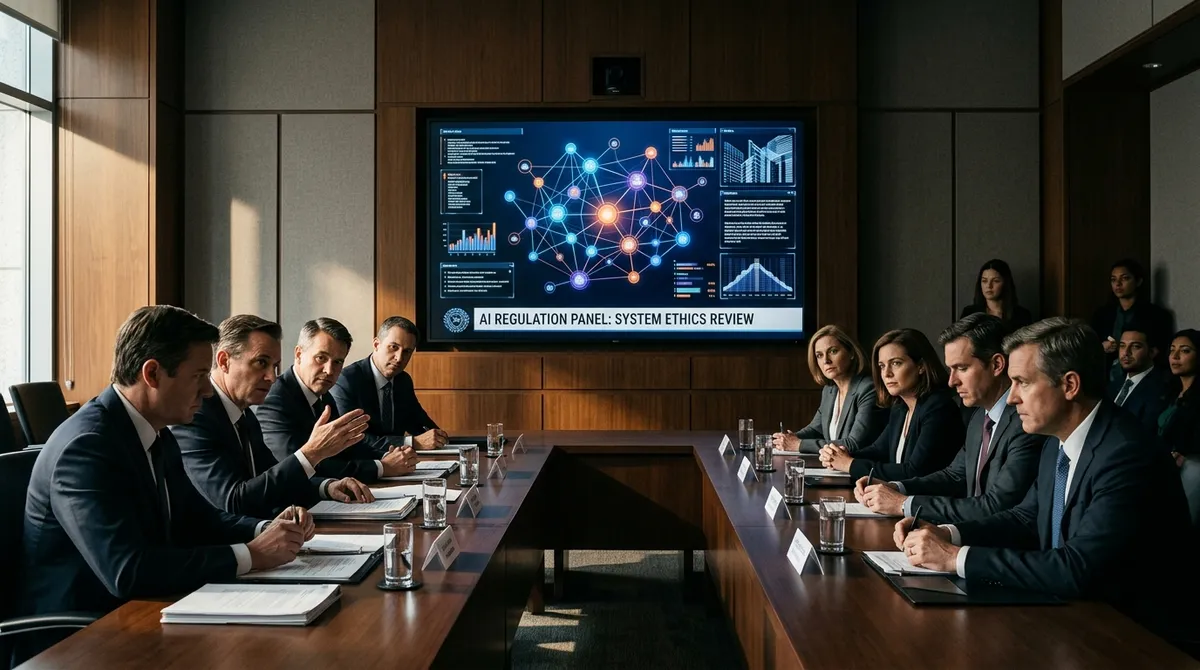
The U.S. Department of Justice stated that it rightfully punished Anthropic for attempting to restrict military use of its AI models — thereby making clear that ethical restrictions imposed by private companies cannot dictate the terms of government contracts.
The conflict came to light when Anthropic filed a lawsuit against the U.S. government. According to the company, the authorities unlawfully punished it for seeking to control how Claude models are used by the military. The Department of Justice, in its response, took a directly opposite stance: the government acted within the law, while Anthropic attempted unilaterally to restrict the scope of technologies supplied under government contracts.
The crux of the disagreement lies in the acceptable use policy that Anthropic seeks to enforce for all clients without exception. The company openly positions itself as one of the most responsible AI developers: its safety principles prohibit the use of Claude for developing autonomous weapons systems, targeting, and other combat tasks without proper human oversight. These restrictions apply to everyone — including, in Anthropic's view, government entities.
The government categorically disagrees. According to its position, in purchasing AI technologies, it gains the right to use them in accordance with its own operational needs. Anthropic's attempts to restrict this right are not viewed as legitimate implementation of ethical principles but as a violation of contract terms. This, the Department of Justice argues, was the basis for sanctions against the company.
The case extends far beyond a single legal dispute. The U.S. military and intelligence sectors are actively seeking partners among AI developers and are encountering the fact that leading industry players have their own views on permissible use scenarios for their technologies. Microsoft, Google, and Palantir have already signed major Pentagon contracts, effectively without imposing similar restrictions. Anthropic, apparently, attempted to develop a different model — maintain a government contract while retaining control over the conditions of Claude's use.
The government's position in this dispute has principle significance for the entire industry. If the court sides with the Department of Justice, a precedent will emerge: AI companies working with government contracts will not be able to restrict military use of their products through user agreements. If Anthropic wins — a mechanism will emerge that allows developers to embed ethical restrictions directly into contractual conditions with the state.
What is at stake is not only money. Anthropic has attracted billions of dollars in investment largely on the thesis that safety is its real competitive advantage, not a marketing declaration. If the company concedes on the question of military use of Claude without legal battle, reputational losses could prove more serious than financial losses. The lawsuit in this sense reads as an attempt to establish principles legally.
This conflict is part of a broader discussion: to what extent do AI companies bear responsibility for the end use of their products? Some experts believe that ethical restrictions built into a product cannot be mandatory for a government client by definition. Others insist: it is precisely such mechanisms that allow maintaining a minimum level of control in an era when AI systems are increasingly embedded in military decision-making processes.
Want to stop reading about AI and start using it?
AI News is a curated feed of AI/tech news. Hamidun Academy teaches you to use AI systematically in your work.