Rebel Audio: AI Platform for Podcast Beginners Without Tool Switching
Rebel Audio is a new AI service for podcast creation without switching between tools. Aimed at beginners: recording, editing, clipping for TikTok and…
AI-processed from TechCrunch; edited by Hamidun News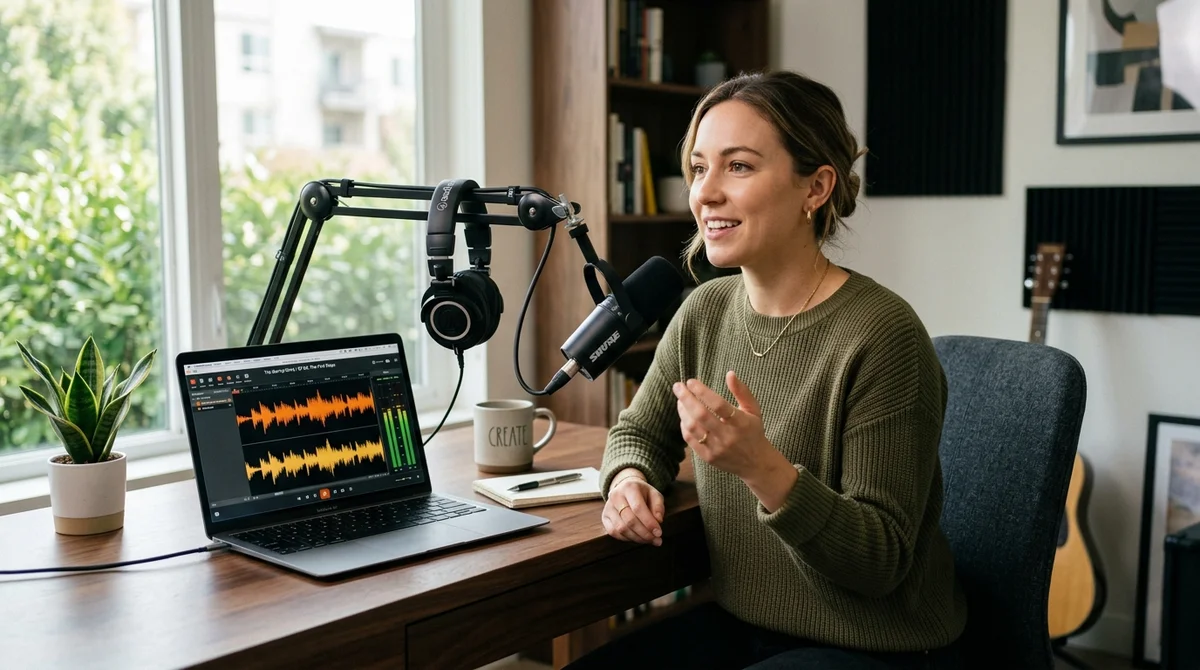
Rebel Audio is entering the market as a universal AI tool for podcast creation, designed primarily for those who have never done audio production before. The platform combines recording, editing, cutting short clips for social media, and publishing episodes in a single interface—without needing to switch between applications or install professional editors. The barrier to entry in podcasting has traditionally been determined not by ideas or microphones, but by the complexity of the technical workflow.
Recording is usually done in one application, editing in another, and publishing to Spotify, Apple Podcasts, and other platforms requires separate integrations. Each transition between tools is a friction point where beginner creators lose motivation and abandon the project. Rebel Audio is built on the hypothesis that a single closed platform will eliminate this gap and turn launching a podcast into a process as simple as recording a voice message.
The AI component of the platform automates the most labor-intensive technical operations: noise reduction, volume level equalization between conversation participants, cutting long pauses and filler words. Authors don't need to know the difference between a compressor and a limiter or understand the concept of "audio normalization"—the system handles all of this without user involvement. As a result, the entry threshold shifts from "you need to know how to edit" to "you just need to talk."
For a first podcast, this removes the main psychological barrier: the lack of confidence that the result will sound sufficiently professional. Particular attention deserves the built-in tool for cutting content for social networks. The finished Rebel Audio episode is automatically transformed into a set of short video clips with subtitles, suitable for publication on TikTok, Instagram Reels, and YouTube Shorts.
For authors who simultaneously manage multiple distribution channels, this significantly reduces operational burden and allows them to get by without a video editor or separate content specialist. Rebel Audio is entering a competitive market. Descript, Riverside.
fm, Podcastle, and Cleanfeed are already established players with AI-editing features, multi-track online recording, and distribution tools. However, most of them have evolved toward professional users: they have more settings, more capabilities—and a steeper learning curve. Rebel Audio deliberately chooses the opposite strategy: a limited set of features tailored specifically for first-time experience.
Less flexibility—fewer points where users can get confused. According to industry surveys, about 60% of beginning podcasters stop working after the first two or three episodes. The key reason is not lack of topics or listeners, but the feeling that the technical production process requires too much time and effort for a disproportionately small result.
It is in this segment—authors who want to start but haven't—that there is a significant untapped audience for podcasting platforms. If Rebel Audio truly closes this gap, the platform lands in a real uncovered niche in the market where competitors are still poorly serving the beginner audience. Details about monetization and pricing model have not yet been disclosed—the product is in early access.
The team does not name the number of users, the amount of attracted investment, the specific technology stack, or the names of key partners. This is a typical early-stage startup strategy—maximum flexibility until product-market fit is found. The emergence of Rebel Audio reflects a steady trend: AI is reducing the cost of entry into content production across all formats—text, video, images, now audio.
If just a few years ago launching a professional podcast required studio equipment, help from a sound engineer, and several months of practice in an editor, now a browser and the desire to speak are sufficient. This does not automatically mean an increase in content quality, but it does mean an increase in the number of authors. For the market—more diversity and significantly higher competition for listener attention.
Want to stop reading about AI and start using it?
AI News is a curated feed of AI/tech news. Hamidun Academy teaches you to use AI systematically in your work.