Google Teaches Fitbit AI Trainer to Read Users' Medical Records
Google has updated its Fitbit AI trainer: soon American users will be able to connect their medical records to the app — test results, medications, doctor…
AI-processed from The Verge; edited by Hamidun News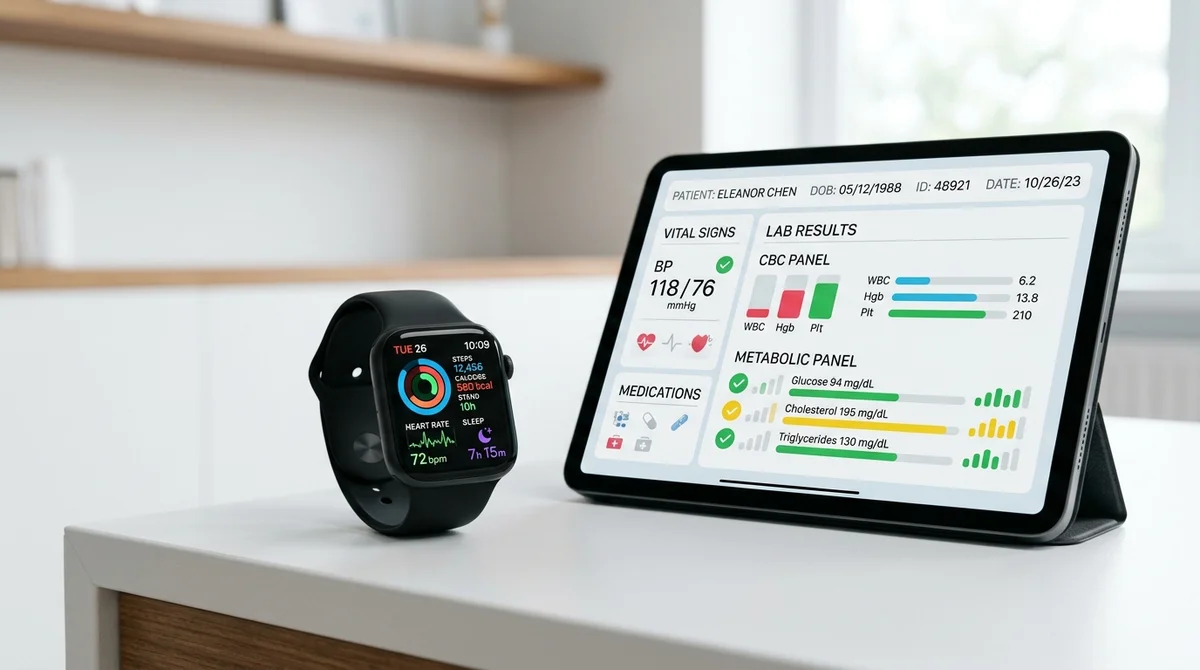
Google announced a major update to its AI coach Fitbit: next month, the service will gain access to users' medical records. Laboratory tests, prescribed medications, doctor visit history — all of this will come together in a unified picture along with data from the wearable device, allowing the algorithm to provide much more accurate health advice. For now, the feature is launching in preview mode and is only available in the United States.
Users will be able to manually link their medical record to the Fitbit app — it's a voluntary decision, no one is forced to share data. However, the very possibility of such access raises a significant question: how willing are people to trust a corporation that already knows how they sleep, move, and their heart rate per minute?
Google is not a pioneer here. Amazon expanded access to its own medical AI agent this year. OpenAI launched ChatGPT integration with Health Connect and medical records. Microsoft released Copilot Health. All major tech players have reached the same conclusion: users are willing to share their most sensitive data in exchange for personalized advice.
The idea looks attractive on the surface. Modern medicine is fragmented: a general practitioner doesn't know what a cardiologist prescribed, a fitness tracker doesn't see lab results. AI could theoretically become a connecting link — spotting patterns, warning about deviations, adjusting workout plans based on chronic conditions. This is a scenario where technology truly improves quality of life.
But the coin has another side. Medical data is the most valuable and most vulnerable of all. A financial data breach is unpleasant; a medical record leak can affect insurance, employment, and relationships. Storing such data with a commercial company is a risk that each user assumes voluntarily. Google and OpenAI are not healthcare regulators. In the United States, medical data is protected by HIPAA law, but its application to consumer applications remains a matter of debate. European users remain on the sidelines of this race — partly due to GDPR's strict requirements. The question of storing biometric and medical data is pressing beyond the American market as well.
We are witnessing not merely a technological update to one application, but a structural shift in the relationship between humans, their bodies, and large technology corporations. An AI coach reading your medical record is convenience, opportunity, and risk all at once. How balanced these are — each person decides for themselves.
Want to stop reading about AI and start using it?
AI News is a curated feed of AI/tech news. Hamidun Academy teaches you to use AI systematically in your work.