Why people don’t trust AI: surveys show a widening gap between hype and reality
Companies of all kinds are rushing to deploy AI and talking about a revolution. But ask ordinary people and the answer is unchanged: no, thanks. Pew Research…
AI-processed from The Verge; edited by Hamidun News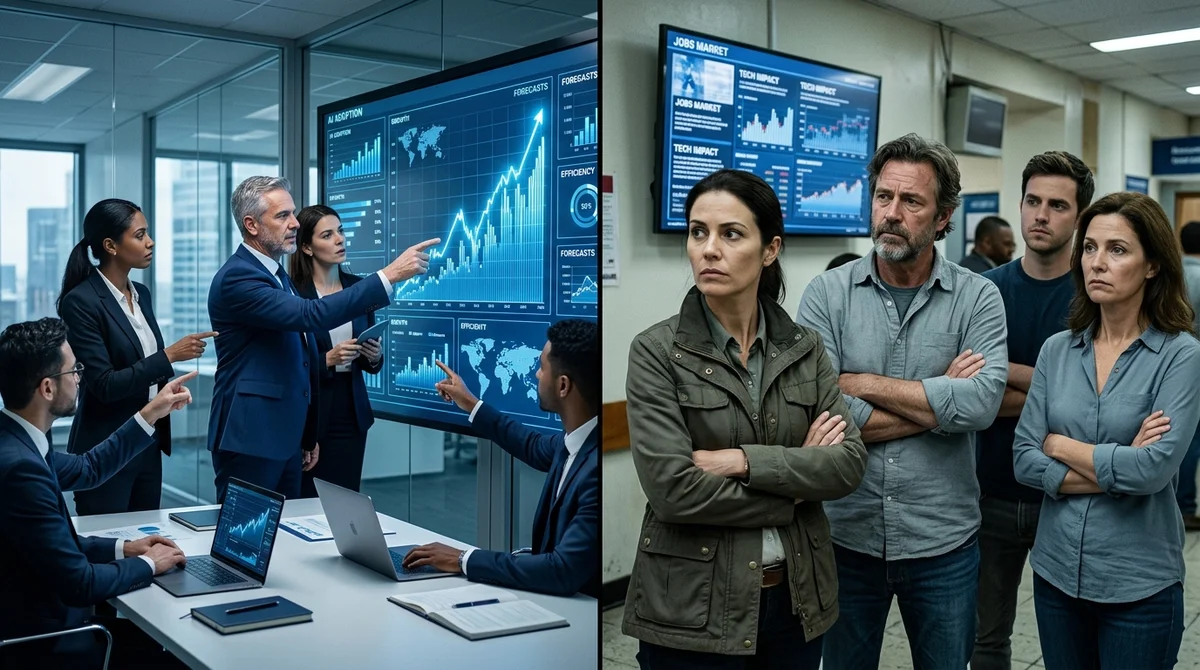
Artificial intelligence is experiencing an era of incredible corporate enthusiasm. Every major company — from technology giants to banks and retailers — has either already implemented AI or is actively seeking ways to do so. Investments are measured in hundreds of billions of dollars.
Press releases talk about transformation, revolution, and an inevitable future. Yet ordinary people are reacting quite differently: with skepticism, wariness, and reluctance. This is not a casual observation — it is a persistent trend that independent researchers are documenting.
Pew Research Center in September 2025 surveyed Americans about their attitudes toward AI and found a troubling picture: most respondents are concerned about the technology's impact on society. They worry about data privacy, threats to jobs, the spread of misinformation, and algorithmic opacity. NBC News, together with its partners, conducted a similar survey of voters — and the majority stated that AI risks exceed benefits.
What is particularly noteworthy here: the gap is not narrowing — it is widening. The louder companies report their successes, the more money is invested in development, the stronger public distrust becomes. This is reminiscent of the situation with nuclear energy in the 1970s or with GMOs in the 1990s: technologies with enormous potential that encountered a wave of public rejection — largely due to failures in communication and real, not just perceived, threats.
The reasons for skepticism are clear. People see AI in action — and what they see does not always inspire trust. Hallucinating chatbots confidently reporting false information.
Hiring systems that filter out candidates by opaque criteria. Content farms filled with meaningless machine-generated text. Voice clones and deepfakes in the hands of scammers.
Even positive scenarios raise the question: who bears responsibility if something goes wrong? Meanwhile, the corporate narrative remains virtually unchanged. Top executives continue to speak about killer applications that will change everything, about productivity that will skyrocket.
But this rhetoric is directed at investors — not at end users. And here lies the key contradiction: the industry is optimizing AI according to metrics that matter to business, but not according to values that matter to people — transparency, accountability, control. The cultural gap has practical consequences.
Companies forcing AI implementation without considering public perception risk facing product boycotts, regulatory pressure, and reputational losses. We are already seeing early examples: employee protests against AI tools, lawsuits over copyright, legislative initiatives in the EU and US states. The gap between industry enthusiasm and public reaction is not merely a PR problem.
It is a signal that technology is developing faster than trust in it is being built. And if that trust is not established — through transparency, real protection mechanisms, and dialogue rather than monologue — then the most powerful technological tool of recent decades risks becoming unwanted precisely by those for whom it was created.
Want to stop reading about AI and start using it?
AI News is a curated feed of AI/tech news. Hamidun Academy teaches you to use AI systematically in your work.