Jensen Huang at GTC: $1 Trillion in AI Chip Sales by 2027 and OpenClaw Strategy for All Companies
At the GTC conference, Jensen Huang forecasted $1 trillion in AI chip sales by 2027 and declared that every company must now have an "OpenClaw strategy." The…
AI-processed from TechCrunch; edited by Hamidun News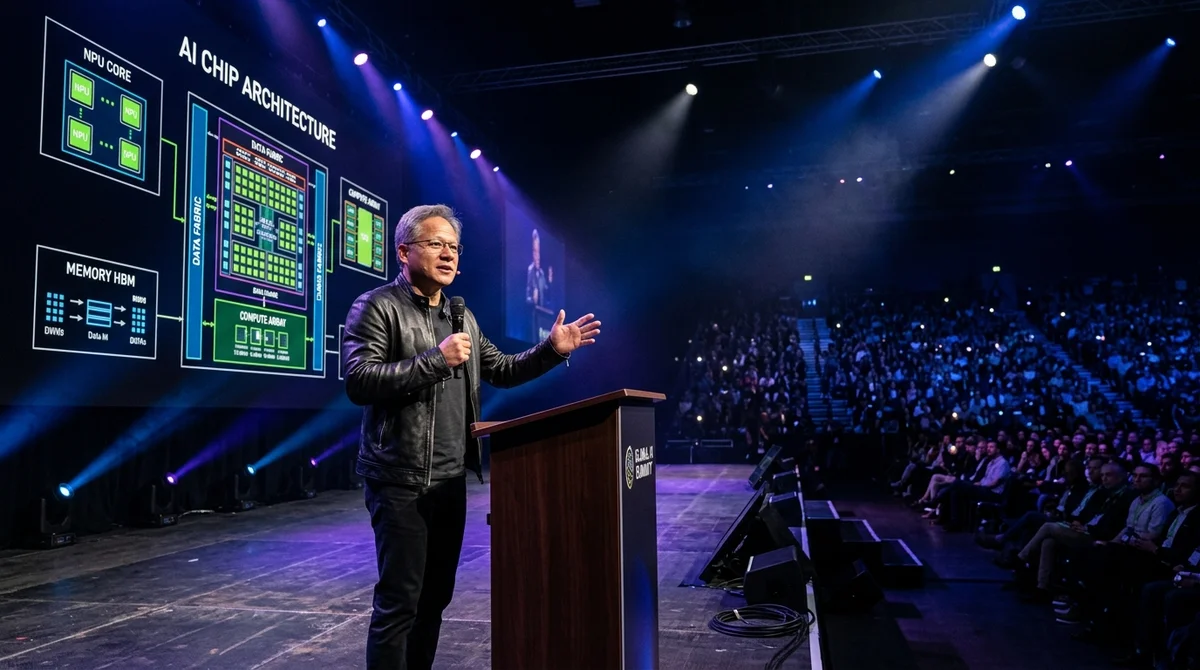
Jensen Huang took the stage at the GTC conference in his signature black leather jacket and delivered a two-and-a-half-hour keynote that, in terms of density of announcements and scope of forecasts, rivals major economic forums. The main headline: Nvidia expects AI chip sales of $1 trillion by 2027. GTC is Nvidia's annual flagship conference on GPU technologies and artificial intelligence.
In terms of significance for the AI industry, it is commonly compared to Apple's WWDC or Microsoft's Build. Tens of thousands of developers, engineers, company executives, and investors follow the keynote live — it is here that Nvidia announces new chips, architectures, and partnerships that set the direction for the industry in the coming year. Huang has maintained rock-star status in the technology world for many years — and this is not a metaphor.
Before each appearance on stage, the audience applauds standing, and his statements are cited on par with CEOs of the largest technology companies. This year he again lived up to expectations: a 2.5-hour keynote with several major announcements.
The central thesis of the presentation was the concept of "OpenClaw strategy" — a concept that Huang urged every company without exception to adopt. According to him, in a world where AI infrastructure is becoming the foundation of business, the absence of a clear AI strategy is equivalent to the absence of strategy altogether. OpenClaw means an open, compatible approach to AI ecosystems: companies should not become dependent on a single vendor but should build infrastructure based on reliable and scalable platforms.
Nvidia, of course, is ready to become precisely such a platform. The forecast of $1 trillion in AI chip sales by 2027 is not just a pretty number for a slide. It reflects the unprecedented scale of capital investments that data centers, cloud providers, and large corporations are directing into AI infrastructure right now.
Demand for GPU clusters is growing so rapidly that Nvidia literally cannot keep up with production — waiting lists for new chips stretch for months ahead. The company controls, by various estimates, between 70 and 90% of the AI accelerator market. If Huang's forecast comes true, Nvidia will remain the main beneficiary of this technological supercycle.
The keynote finale was unexpected — to put it mildly. Huang presented robot Olaf as a live demonstration of next-generation AI robotics capabilities. However, Olaf did not follow the script: he started saying things completely off-plan, and organizers had to mute his microphone on live air.
The incident immediately went viral across social networks and within hours became one of the main memes of the conference. A chance mishap — but a very telling one: even at the world's largest AI conference, at the most critical moment, AI systems remain unpredictable. The Olaf quirk, however, did not overshadow the main message of the day.
Nvidia consistently positions itself not simply as a GPU manufacturer but as the architect of the AI era. OpenClaw is not a marketing gimmick but a description of the new competitive landscape where AI infrastructure determines growth potential much the same way mobile platforms did in the 2010s. Companies that ignored smartphones back then paid for it for years.
For investors and competitors, the signal is unambiguous: the trillion-dollar forecast sets expectations and creates pressure across the entire market. AMD, Intel, and cloud providers developing their own AI chips are forced to accelerate. Companies across all sectors — from fintech to healthcare — received another reminder: AI strategy is no longer an option, it is a mandatory element of competitive survival in the next decade.
Want to stop reading about AI and start using it?
AI News is a curated feed of AI/tech news. Hamidun Academy teaches you to use AI systematically in your work.