Pentagon Told Anthropic of "Near Agreement" — a Week Before Trump's Breakup Announcement
Anthropic sued the Pentagon, challenging the blockade of an export license. Court documents revealed an unexpected detail: a week before Trump announced the…
AI-processed from TechCrunch; edited by Hamidun News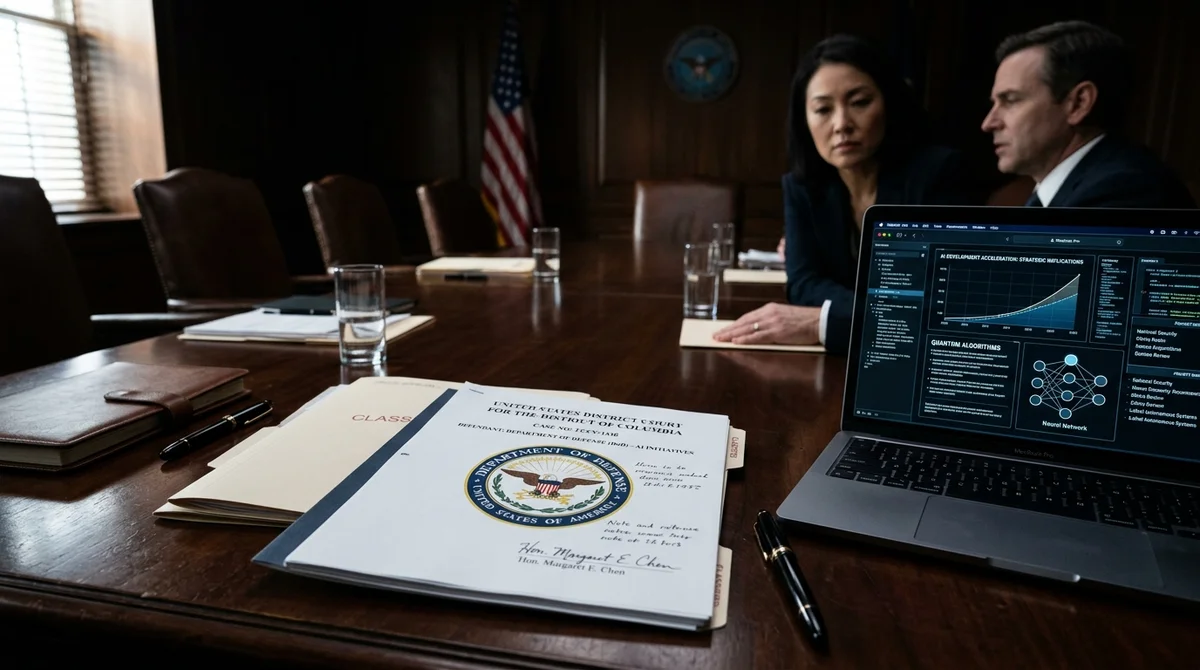
Anthropic filed two sworn legal statements in a federal court in California, challenging the Pentagon's claim that the company represents an "unacceptable risk to national security." In parallel, details of negotiations have emerged that cast doubt on the logic of the entire conflict: according to court materials, just a week before Trump publicly announced the end of cooperation, representatives of the Department of Defense told Anthropic that the parties had "nearly reached agreement." The conflict between Anthropic and the Pentagon intensified after the Trump administration blocked the company's export license, citing national security threats.
For Anthropic, this is a critical issue: without the license, the company cannot supply its AI solutions to US allies and major international clients. Anthropic challenged the decision in court, arguing that it was made arbitrarily and violated established regulatory procedures. According to the filed statements, Anthropic insists: the government's position is based on technical misunderstandings and claims that were never raised during months of negotiations.
The company provides specific arguments — the Pentagon allegedly misinterpreted the architectural features of Claude models and applied security requirements developed for fundamentally different systems. A key piece of evidence in the case became an internal Department of Defense document, according to which Pentagon officials directly told Anthropic representatives during negotiations a week before the breakdown that the positions of the two sides "almost coincide." This assertion directly contradicts the official rhetoric about "unacceptable risk" — and, in Anthropic's view, indicates that the decision was political rather than technical in nature.
The history of Anthropic's relations with the federal government is ambiguous. The company has consistently positioned itself as a "safe" alternative player in the AI race. This allowed it to attract major investments from Amazon and Google, as well as establish contacts with the defense department.
The breakdown of these relations dealt a blow to Anthropic's reputation as a reliable partner for government structures — a reputation that the company has carefully built over recent years. Trump stated back in February that he considered relations with Anthropic "finished," without clarifying the reasons publicly. Nevertheless, official representatives of the Ministry of Defense continued negotiations with the company for another week after these remarks — a fact that Anthropic now uses as evidence of inconsistency in the government's position.
This court case is important not only for Anthropic. It demonstrates how vulnerable AI companies are to politically motivated decisions in the field of export control. At a time when AI development is increasingly intertwined with issues of national security, the government's ability to block the activities of private companies under vague pretexts becomes a real systemic risk for the entire industry.
The next hearing is expected in the coming weeks — its outcome may set a precedent for the entire sector.
Want to stop reading about AI and start using it?
AI News is a curated feed of AI/tech news. Hamidun Academy teaches you to use AI systematically in your work.