Director Valerie Veatch: AI enthusiasts overlook racism and eugenics in their tools
Director Valerie Veatch entered the AI community after Sora's release in 2024 — she was drawn by the hope of creative unity. Instead, she encountered racist…
AI-processed from The Verge; edited by Hamidun News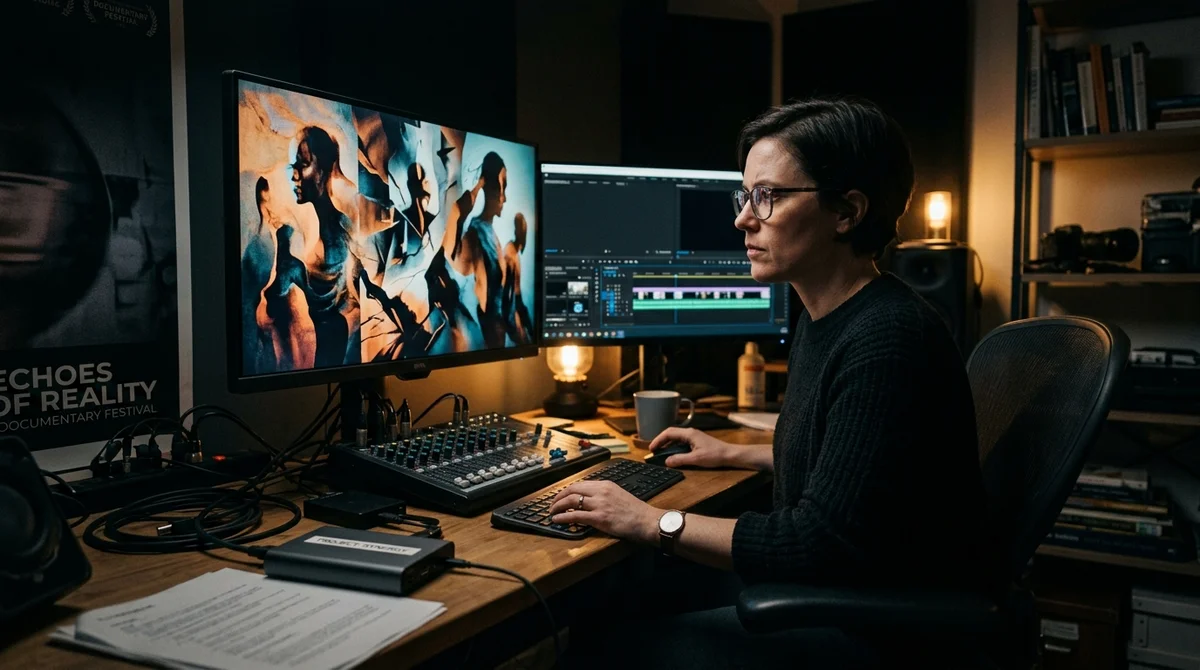
Documentary filmmaker Valerie Wich came to generative AI the way most people do — out of curiosity. When OpenAI opened public access to Sora in 2024, a model that transforms text into video, she didn't fully understand how the technology worked, but wanted to see what it was capable of. She was particularly drawn to the community of artists who shared their AI works online.
It seemed like a new space for creative dialogue. However, what Wich discovered inside shocked her. Generative models repeatedly produced images saturated with racism and sexism — stereotypical images reflecting deeply ingrained prejudices in the training data.
Bias in AI is not news in itself: researchers have been talking about it since the first language models appeared. But Wich didn't just confront the problem — she confronted the reaction to it, or rather its absence. The enthusiasts she found herself in community with largely didn't notice or preferred to ignore the problem.
The technology was interesting, the results were captivating, and few really wanted to deal with the fact that the machine was reproducing historically established hierarchies. This indifference proved a more troubling signal to Wich than the artifacts in the AI output itself. Ultimately, her experience became the foundation for the documentary film Ghost in the Machine, in which she explores not so much the technical aspects of generative AI as the ideology behind it.
The title of her Verge interview — "Gen AI Kool-Aid tastes like eugenics" — sounds like provocation, but it contains a specific thesis: the narrative of progress that the industry promotes has roots in the same soil as eugenics. The idea that technologies will make the world better by automatically filtering out the "inefficient" and "imperfect" reproduces logic that humanity has already condemned in another context. Wich is not the first to draw such a parallel.
Critics of technological optimism have long pointed out that the Silicon Valley narrative about "improving" people and systems through data and algorithms carries hierarchical, and sometimes directly discriminatory, undertones. But the documentary format allows this to be shown not through academic argumentation but through personal experience — and that is precisely what makes Wich's position difficult to dismiss. Her journey into AI space is typical.
Most users first marvel at the capabilities, then notice problems — and here a fork in the road appears. Some begin demanding changes. Others rationalize: "technology is neutral," "these are data artifacts," "everything will improve over time."
It is precisely this silent consent that Wich considers the main symptom. What she describes is not a technical bug that can be fixed by the next update. It is a question about whose values are encoded into the tools that shape visual culture.
And as the generative AI industry grows faster than it manages to comprehend its own consequences, voices like Wich's remain an important counterweight — all the more so because they ask uncomfortable questions not from the outside, but from within.
Want to stop reading about AI and start using it?
AI News is a curated feed of AI/tech news. Hamidun Academy teaches you to use AI systematically in your work.