Musk is building the Terafab plant in Texas — chips for robots, AI and orbital data centers
Elon Musk announced the construction of the Terafab plant in Austin, Texas — a joint project by Tesla and SpaceX. The goal is to produce chips at industrial…
AI-processed from The Verge; edited by Hamidun News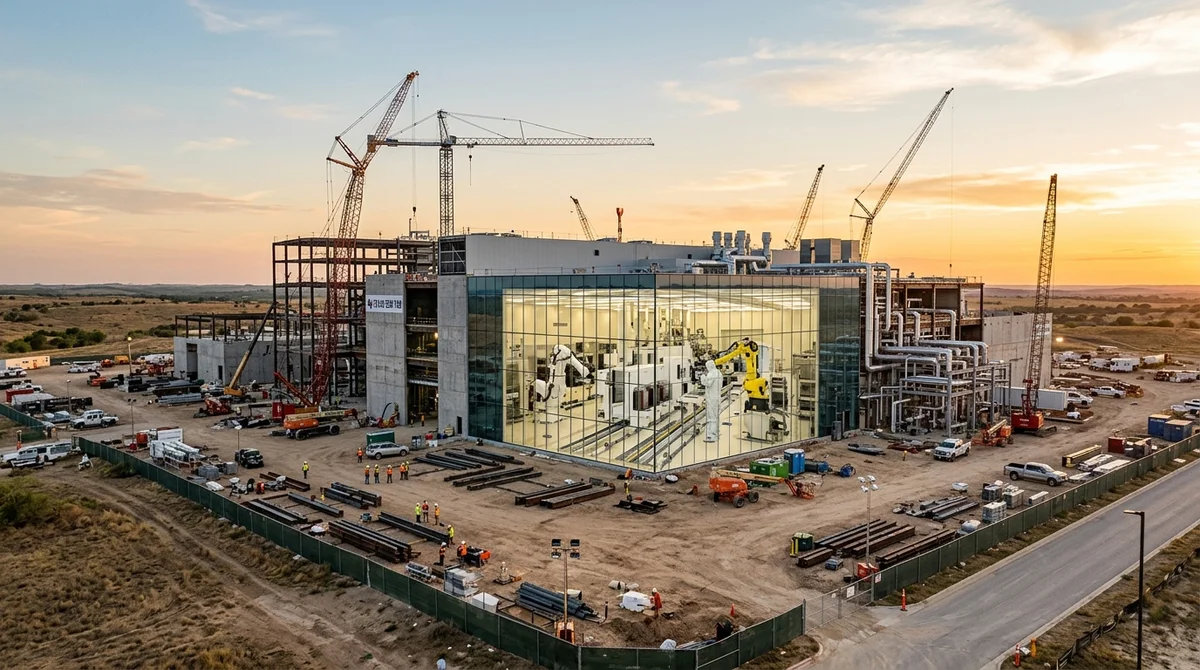
Elon Musk has announced plans to build a chip factory called Terafab in Austin, Texas. The enterprise will be jointly managed by Tesla and SpaceX and will be focused on mass production of semiconductors for robotics, artificial intelligence, and orbital data centers. The announcement has already triggered a wave of skepticism among industry experts.
Chip shortages have become one of the key pain points for the technology industry. As the AI sector grows, demand for specialized semiconductors far outpaces manufacturing capacity: NVIDIA cannot keep up with orders, memory costs are hitting multi-year records, and cloud providers are waiting in line at Taiwan's TSMC. Musk has repeatedly raised this issue publicly — and now offers his own answer in the form of a vertically integrated factory.
By Musk's design, Terafab is meant to supply chips to several of his companies at once. Tesla needs semiconductors for Optimus humanoid robots and autonomous driving systems. xAI requires computing power to train and operate the Grok language model.
SpaceX sees the factory as a supplier of chips for rocket onboard systems and an ambitious project for orbital data centers — solar power stations on low-orbit satellites. Thus, Terafab should close a critical dependency of Musk's entire ecosystem on external suppliers. Realizing these plans will be extremely difficult.
Building a modern fab factory requires investments from tens to tens of billions of dollars, takes four to seven years, and directly depends on supplies of specialized equipment. The key link in this chain is the EUV lithography tools from Dutch ASML: without them, chip production using processes below 7 nm is simply impossible, and each machine costs over $200 million. For comparison: TSMC invested over $40 billion in factories in Arizona, and even with substantial government support under the CHIPS Act, the launch of the first phase was accompanied by multi-year delays.
Bloomberg particularly noted Musk's lack of experience in semiconductor manufacturing — one of the most technologically complex industries in the world. Additional reason for skepticism — his track record with announced deadlines: promised dates for Tesla's full self-driving have been repeatedly postponed, mass production of the Optimus robot is being delayed, and the timeline for Starship's first crewed flight has also shifted. The technological parameters of the future factory have not yet been disclosed.
Competitive AI chips today are manufactured using 3-5 nm technology, which is owned only by TSMC and Samsung. Building comparable capacity from scratch means entering a segment where hundreds of billions of dollars in infrastructure and unique know-how have accumulated over decades. It is likely referring to less advanced technology or a model with proprietary chip design and contract manufacturing — similar to how Apple or Google operate.
Terafab fits into Musk's long-standing strategy of complete vertical integration. If the factory works, Tesla and xAI will be able to reduce dependence on external suppliers and accelerate the development cycle for specific tasks. If the project repeats the fate of other major announcements — the market, judging by the reaction, is already factoring this into its expectations.
Want to stop reading about AI and start using it?
AI News is a curated feed of AI/tech news. Hamidun Academy teaches you to use AI systematically in your work.