AI boom strains Europe's power grids: operators seek unconventional solutions
Data center developers have filled connection queues across European power grids—the AI boom is creating unprecedented strain on energy infrastructure. Grid…
AI-processed from Wired; edited by Hamidun News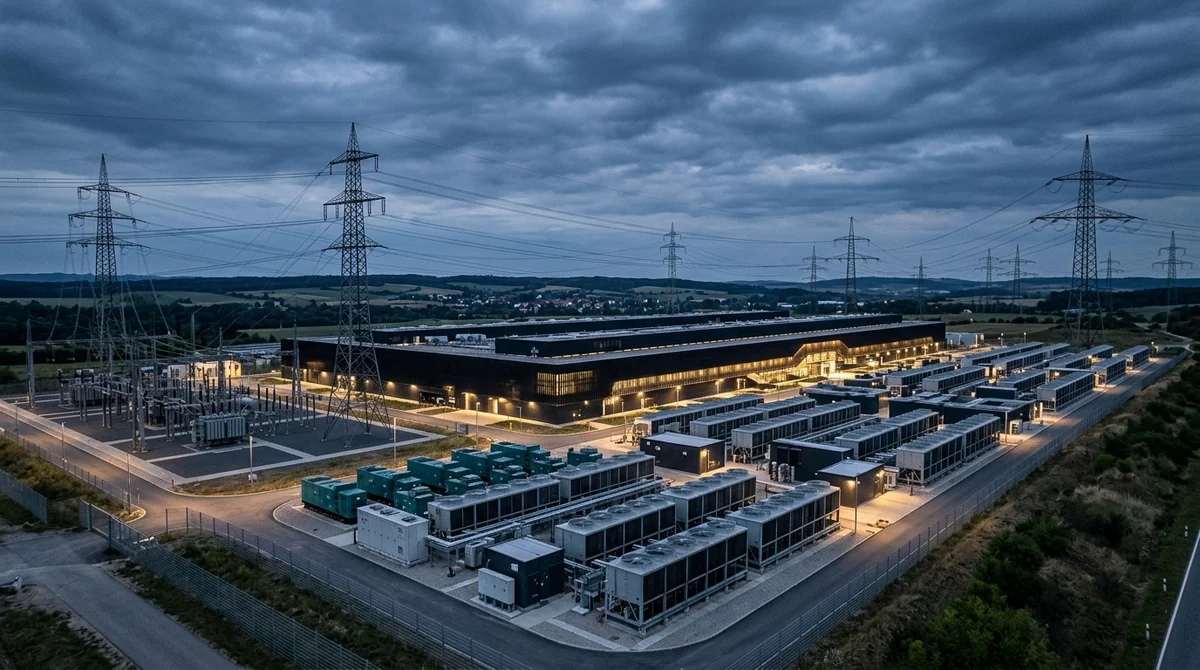
The race for computational power for artificial intelligence has encountered an unexpected obstacle — a simple shortage of electrical energy. Across Europe, data center developers are lining up for years waiting to connect to power grids, while infrastructure operators are forced to urgently search for unconventional ways to free up capacity. The scale of the problem is growing with each quarter.
The largest technology companies — Microsoft, Google, Amazon, Meta — are actively expanding their European infrastructure: this is required by EU regulatory standards on data localization and the rapidly growing demand for cloud AI services. In just 2023–2024, the volume of confirmed investments in European data centers exceeded 40 billion euros. Each major facility consumes hundreds of megawatts — comparable to the energy consumption of a small city.
Power grid operators were not prepared for this. In the Netherlands, Ireland, and a number of regions in the United Kingdom, temporary moratoria on new technology connections have been introduced. In some cases, the queue has stretched to 5–10 years.
The problem is not only in the electricity itself — the grid infrastructure: transformers, high-voltage cables, distribution substations — needs large-scale modernization, which physically takes years even with funding and political will in place. In response, operators are beginning to test fundamentally new connection schemes. One of them is flexible contracts: a data center gains access to the network, but takes on the obligation to reduce consumption during peak load hours.
In fact, this means that server capacity can be temporarily reduced during the most strained periods — cold winter evenings or when renewable generation is insufficient. For workloads that do not require instant response — primarily for training large language models — such a mode is quite applicable in practice. Another tool is demand management in real time.
Modern algorithms allow automatically redistributing load across multiple facilities, guided by the current congestion of network segments and exchange prices for electricity. A number of operators are exploring the possibilities of virtual power plants — aggregated systems that combine large consumers, energy storage, and renewable generation into a single managed structure. In theory, this allows smoothing out consumption peaks without building new lines and substations.
The energy question is becoming strategic for the entire AI industry. According to analysts' forecasts, by 2030, data centers will consume 8 to 15% of all electricity in Europe — compared to the current 2–3%. At the same time, the European Union is tightening decarbonization requirements: new facilities are obliged to operate primarily on renewable sources, which without large-scale backup are not yet able to ensure stable round-the-clock supply.
The situation exposes a structural contradiction: states compete to attract investment in AI infrastructure, offering subsidies and tax incentives — but the physical limitations of power systems do not allow fulfilling these commitments in acceptable timeframes. In the race for capacity, those who managed to lock in long-term energy contracts beforehand or are considering building their own generation win out. It is no coincidence that several major technology companies are already in negotiations about placing small nuclear reactors near their data centers.
Want to stop reading about AI and start using it?
AI News is a curated feed of AI/tech news. Hamidun Academy teaches you to use AI systematically in your work.