Project Maven: How Pentagon Skeptics Became Champions of Military AI
Project Maven — a Pentagon AI program launched in 2017 to analyze video footage from drones. Initially, there were considerable skeptics within the…
AI-processed from Wired; edited by Hamidun News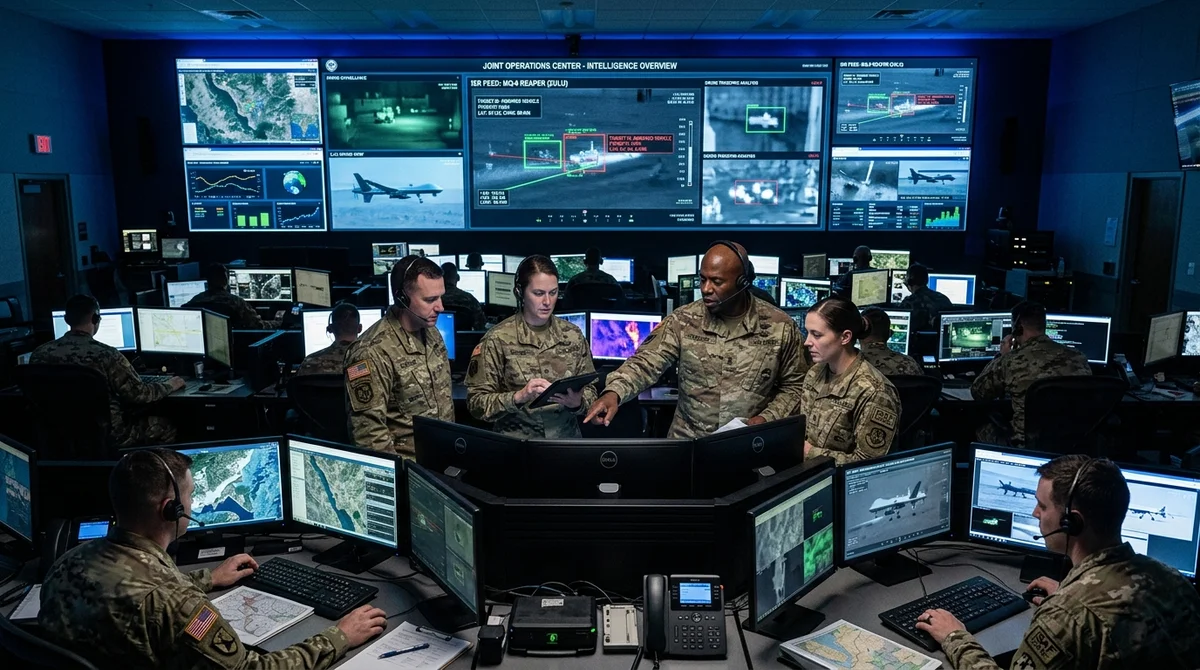
The Project Maven program, launched in 2017 at the Pentagon's initiative, is today perceived as the starting point of the military AI era. When it first appeared, there was no shortage of people within the U.S.
Department of Defense who viewed it with undisguised skepticism. Today, nearly a decade later, many of these people have transformed into convinced supporters — or, as investigative journalist Katrina Manson calls them, the gods of military AI. In 2017, Deputy Secretary of Defense Bob Work set the Pentagon an ambitious task: use machine learning algorithms to analyze video streams from drones.
The idea was simple — automatically recognize objects, vehicles, and people in footage that analysts previously reviewed manually for hours. The project received the codename Maven. At first, many Pentagon officers and civilians viewed the initiative warily.
Skeptics pointed to traditional risks: algorithm errors, legal and ethical questions surrounding autonomous weapons systems, bureaucratic inertia of the military department. When it became known that the Pentagon had engaged Google as a contractor, a major scandal erupted within the company itself: thousands of employees signed a petition demanding the contract be terminated. In 2018, Google refused to continue its involvement.
But the program did not stop. The Pentagon found other partners — Palantir, Booz Allen Hamilton, Shield AI, and dozens of other technology companies. Gradually, Maven transformed from an experimental pilot into a full-fledged combat system.
Computer vision algorithms, trained on millions of frames of intelligence video, today help operators more quickly identify threats and make tactical decisions. The key argument for skeptics became practice. Officers who previously doubted AI capabilities became convinced: the system truly reduces processing time and decreases the cognitive load on analysts.
Over several years, Maven helped process hundreds of thousands of hours of video footage — a volume that would have required incomparably greater human resources using traditional methods. At the same time, the Pentagon's very understanding of military AI transformed. If in 2017 the discussion was about a separate experiment, today AI is embedded in the Defense Department's strategy at all levels — from logistics and cybersecurity to operational planning and early warning systems.
Project Maven became an organizational precedent for dozens of subsequent initiatives. Manson's book is released at a moment when the debate about AI in the military sphere is acquiring a new dimension. Several states — including China, Russia, and a number of European countries — are actively investing in combat AI, and the international community is attempting to develop norms regulating autonomous weapons.
The history of Project Maven in this context is not simply a chronicle of one program, but a mirror in which a broader process is reflected: how military institutions learn to trust machines in matters of life and death. The transformation of skeptics into believers is not so much a story about technology as a story about institutional psychology. Project Maven demonstrated: the most difficult thing in military AI is not writing an algorithm, but convincing people accustomed to trusting their own judgment that a machine can be a reliable partner in combat.
Want to stop reading about AI and start using it?
AI News is a curated feed of AI/tech news. Hamidun Academy teaches you to use AI systematically in your work.