Arm Releases Its Own AI Chips: Meta, OpenAI, and Cloudflare Are First Customers
Arm made an unexpected move: the company whose architecture powers billions of devices has started manufacturing its own AI chips. First customers are Meta…
AI-processed from Wired; edited by Hamidun News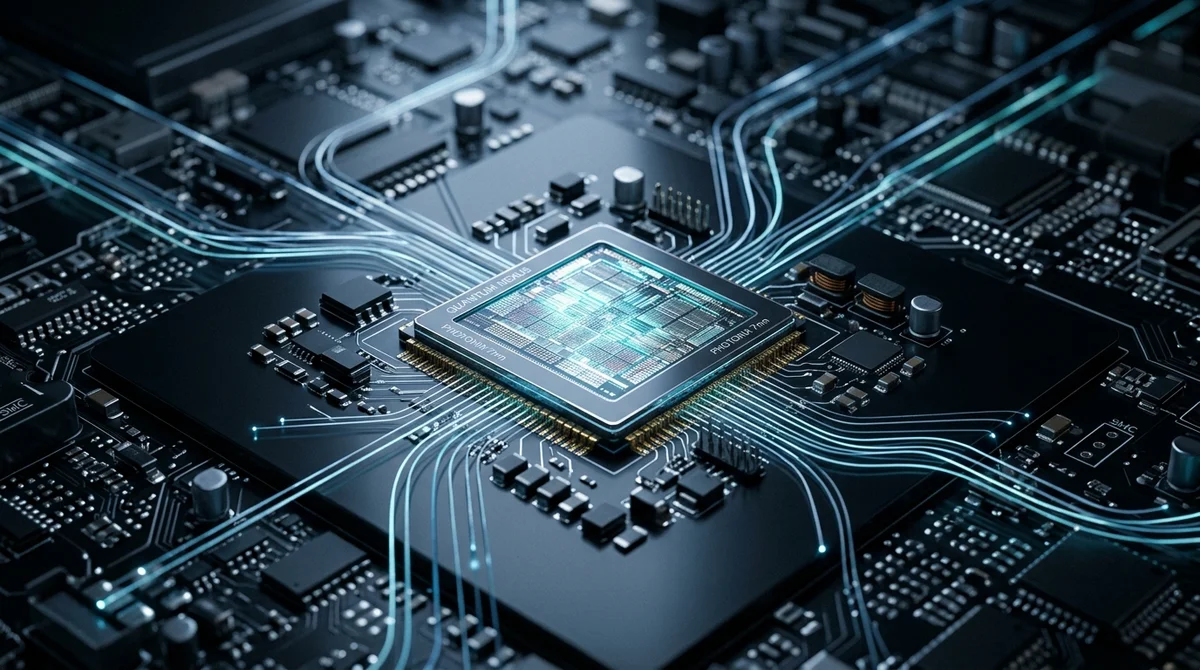
Arm did something that few expected: a company that spent three decades selling processor architecture licenses has entered the market for ready-made AI chips. Among the first buyers of the new hardware are Meta, OpenAI, Cerebras, and Cloudflare. Arm was founded in 1990 in Cambridge and built one of the most successful technology businesses on an unusual model: it doesn't manufacture hardware itself, but sells the right to use its architecture to all comers.
Today, processors with Arm architecture power iPhones and Android smartphones, Apple's M-series chips, a significant portion of cloud providers' server infrastructure, and billions of embedded devices worldwide. According to the company, over 30 billion chips using its architecture shipped in 2023 alone. Moving into manufacturing its own chips represents a fundamental shift in business model.
On one hand, Arm gains access to higher margins: a finished chip manufacturer earns significantly more than a license seller. On the other, the company begins competing directly with those who use its architecture themselves: Qualcomm, MediaTek, Samsung, and Apple. Arm simultaneously sells IP to all of them.
This is a delicate balance that will require management skill. The choice of first customers speaks volumes. Meta is actively building its own AI infrastructure and reducing dependence on NVIDIA.
OpenAI is seeking alternatives to expensive H100 chips for training and inference of its models. Cerebras specializes in AI chips and is one of the sector's fastest-growing startups. Cloudflare is rolling out AI capabilities on edge servers across the globe.
All four are companies that need high-performance and energy-efficient chips for AI tasks today. The details of the new chip have not yet been fully disclosed. What is known is that it is an AI CPU—a central processor with optimized blocks for neural network computations.
This fundamentally distinguishes the product from NVIDIA's GPU-oriented solutions or Google's specialized TPUs. The CPU approach may prove in demand where edge inference is needed, mixed AI and regular computational workloads, or predictable power consumption profiles—parameters especially important for edge infrastructure operators like Cloudflare. This step fits into a broader trend: the largest technology companies are seeking to control the entire value chain—from architecture to finished hardware.
Apple has been doing this with M and A series chips for years. Google builds TPUs for its own needs. Amazon develops Trainium and Inferentia.
Microsoft experiments with its own AI accelerators. Now Arm joins this list. For the market, this means increasing fragmentation of the AI chip ecosystem.
NVIDIA still dominates with over 80% of the GPU market for AI tasks, but alternative players are growing—and they are coming from unexpected places. Arm, with its architectural authority, industry connections, and experience designing energy-efficient processors, is a potentially serious competitor. The main question: can the company maintain the trust of its old licensees while it becomes their rival in the finished chip market.
Want to stop reading about AI and start using it?
AI News is a curated feed of AI/tech news. Hamidun Academy teaches you to use AI systematically in your work.