Kentucky Family Declines AI Company's $26 Million Offer for Farm Data Center
A major AI company offered a Kentucky farming family $26 million for their land to build a data center. The family declined. Against the backdrop of a…
AI-processed from TechCrunch; edited by Hamidun News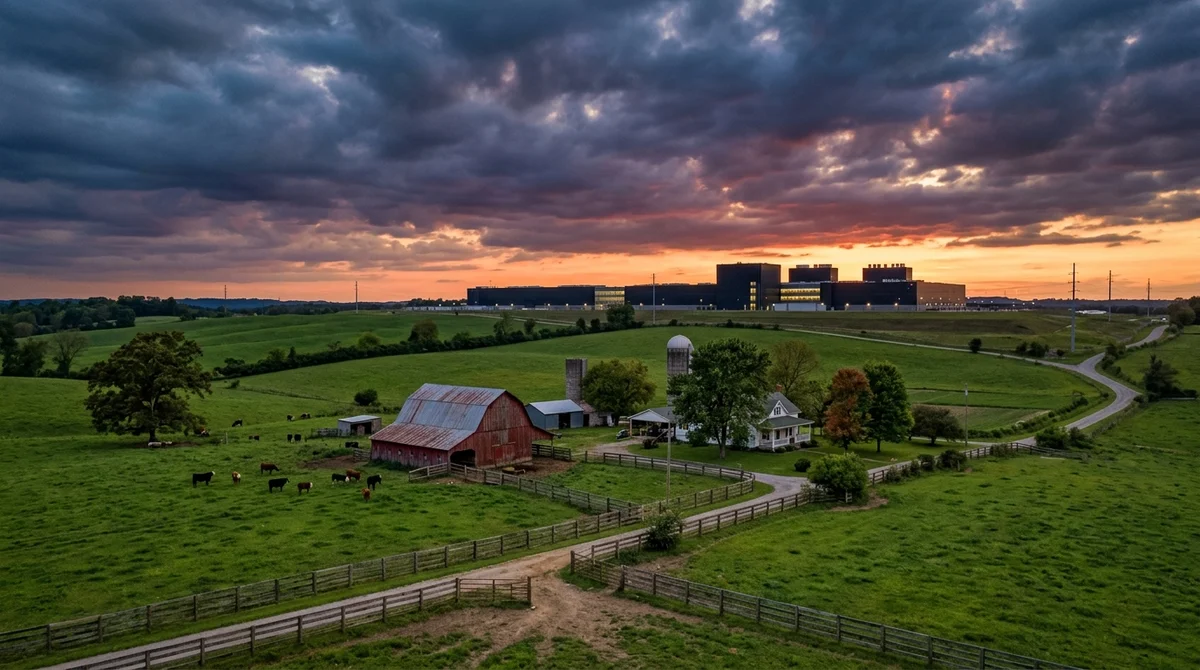
One family from the American state of Kentucky received an offer that seemed impossible to refuse: a major AI company was willing to pay 26 million dollars for the right to build a data center on their farm. The family declined — and this story instantly spread through the media as a symbol of resistance to the technological boom sweeping rural America. The details of the deal remain closed.
Neither the company name nor the exact farm location are disclosed in public sources — only sparse information that the family owns a plot of land ideally suited for infrastructure needs. Sufficient area, reliable access to the power grid, and probably proximity to water resources — without them, cooling thousands of server racks would be simply impossible. It is telling that the company was willing to offer such a sum without public auction: this means the plot was genuinely needed exactly there.
The story emerged against the backdrop of a massive competition that receives far less public attention than language models and chatbots themselves — a competition for land. The largest technology companies — Microsoft, Google, Amazon, Meta and others — have announced investments in data centers totaling hundreds of billions of dollars over the coming years. Physical infrastructure for training and running AI requires huge plots of land, stable power supply, and access to water for equipment cooling.
Agricultural regions turn out to be among the most attractive targets: low population density, fewer construction restrictions, affordable electricity prices, and distance from expensive urban development. Companies are actively buying land in Virginia, Iowa, Texas, Ohio, and other states. According to analysts' forecasts, in the US alone, by 2030, facilities with a combined capacity of tens of gigawatts are planned to be introduced — this is thousands of new data centers across the country.
Offers to landowners often exceed the market value of plots by several times. 26 million dollars is a sum sufficient to provide for several generations of a family. And yet the refusal raises a broader question: what exactly do local communities lose when they agree to such deals?
Critics of technological expansion point out that data centers consume colossal amounts of water and electricity — some facilities require millions of liters per day — create relatively few permanent jobs for locals, and irreversibly change the character of the territory. Farmland converted into an industrial facility cannot be turned back into agricultural land. On the other hand, supporters of placing technological infrastructure in rural areas point to tax revenues for municipal budgets, temporary construction jobs, and investments in local infrastructure — roads, power lines, broadband internet.
A number of American states deliberately reduce taxes and simplify approval procedures to attract large companies. For depressed rural areas, a data center could be one of the few sources of stable tax revenue. The Kentucky family's story is not the first of its kind and certainly not the last.
As the AI industry increases its demand for computing power, pressure on landowners will only grow. The question of who and under what conditions decides what is built next to a farm or village becomes increasingly political. In several states, legislative initiatives regulating the placement of digital infrastructure facilities are already being discussed: requirements for distance from residential areas, limits on water consumption, mandatory public hearings.
Rejecting 26 million is not simply a private decision of one farming family. It is a reminder that behind every request to a language model stand physical objects, real land, and real people — those whom no one asked if they wanted to live next to server halls.
Want to stop reading about AI and start using it?
AI News is a curated feed of AI/tech news. Hamidun Academy teaches you to use AI systematically in your work.