Bernie Sanders proposed freezing data center construction for AI safety
Bernie Sanders introduced a bill in the U.S. Senate calling for a moratorium on data center construction until lawmakers develop AI safety standards…
AI-processed from Wired; edited by Hamidun News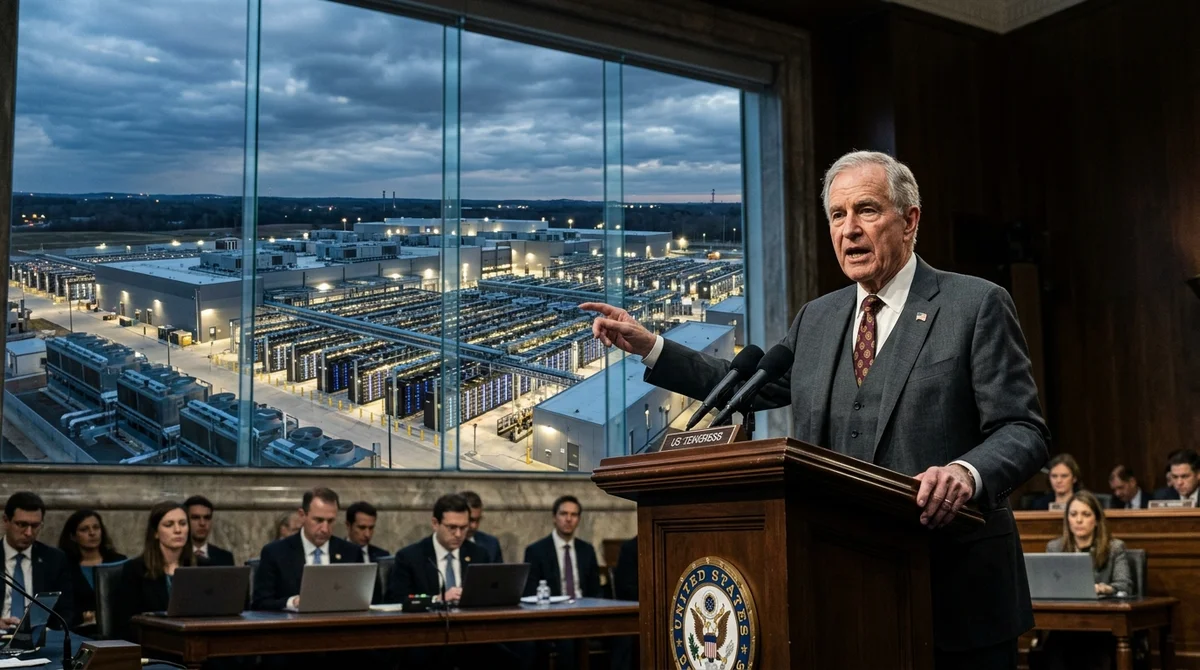
American senator Bernie Sanders has introduced a bill that would impose a temporary ban on construction of new data centers in the USA. The main goal is to give Congress time to develop AI safety standards before infrastructure for it is deployed on an even larger scale. Sanders made this statement on Tuesday, emphasizing that this is not about halting progress, but about a prudent pause.
According to him, the moratorium would allow lawmakers to 'ensure that AI is safe' before data center construction continues at an accelerated pace across the country. The senator has long been skeptical of the uncontrolled expansion of technology corporations—and now has decided to target precisely the infrastructure front. In the coming weeks, congresswoman Alexandria Ocasio-Cortez plans to introduce a similar bill in the House of Representatives.
The coordinated actions of these two left-liberal politicians signal the formation of a united front: they want to make the physical expansion of AI infrastructure dependent on the adoption of legislative safety standards. The initiative emerges against the backdrop of an unprecedented construction boom. Microsoft, Google, Amazon, and Meta have announced combined investments in data centers worth hundreds of billions of dollars—in just 2024–2025, dozens of major facilities have been laid down in the USA.
Annual electricity consumption by American data centers is already comparable to the consumption of entire nations. In a number of states, they compete for capacity with residential districts and industrial enterprises—and this is precisely what has become the political trigger. The exact wording of the bill—in particular, the duration of the moratorium and mechanisms for lifting it—has not yet been disclosed.
Nevertheless, the idea itself of regulating not algorithms or datasets, but physical infrastructure—servers, power capacity, networks—is non-trivial for American politics. Until now, regulatory attention has focused on the software level of AI, not on the 'hardware' that powers it. Critics have already called the bill unrealistic: halting construction projects tied to multi-year contracts with contractors and equipment suppliers is extremely difficult even with the political will to do so.
The tech industry is predictably expected to oppose it—delays in capacity deployment would weaken the competitive position of American companies in the global AI market, where China remains the main competitor, actively building its own facilities. Nevertheless, the appearance of this document marks a real shift. A year ago, most lawmakers viewed AI as an unquestionably positive force for growth.
Now more and more voices are calling for a slowdown and assessment of the consequences—for safety, ecology, and the balance of power. Sanders's bill, even with minimal chances of passage in the current Congress, sets the tone for discussion and creates pressure on the sector. For companies conducting construction in the USA, it is important to monitor developments: even if the moratorium does not pass, the accompanying debates may accelerate the introduction of new environmental and energy requirements for AI infrastructure facilities.
Want to stop reading about AI and start using it?
AI News is a curated feed of AI/tech news. Hamidun Academy teaches you to use AI systematically in your work.