Kentucky grandmother turned down an AI company: the real world is resisting data center expansion
An 82-year-old woman from Kentucky turned down an AI company that offered her $26 million for land for a data center. The company is still trying to rezone…
AI-processed from TechCrunch; edited by Hamidun News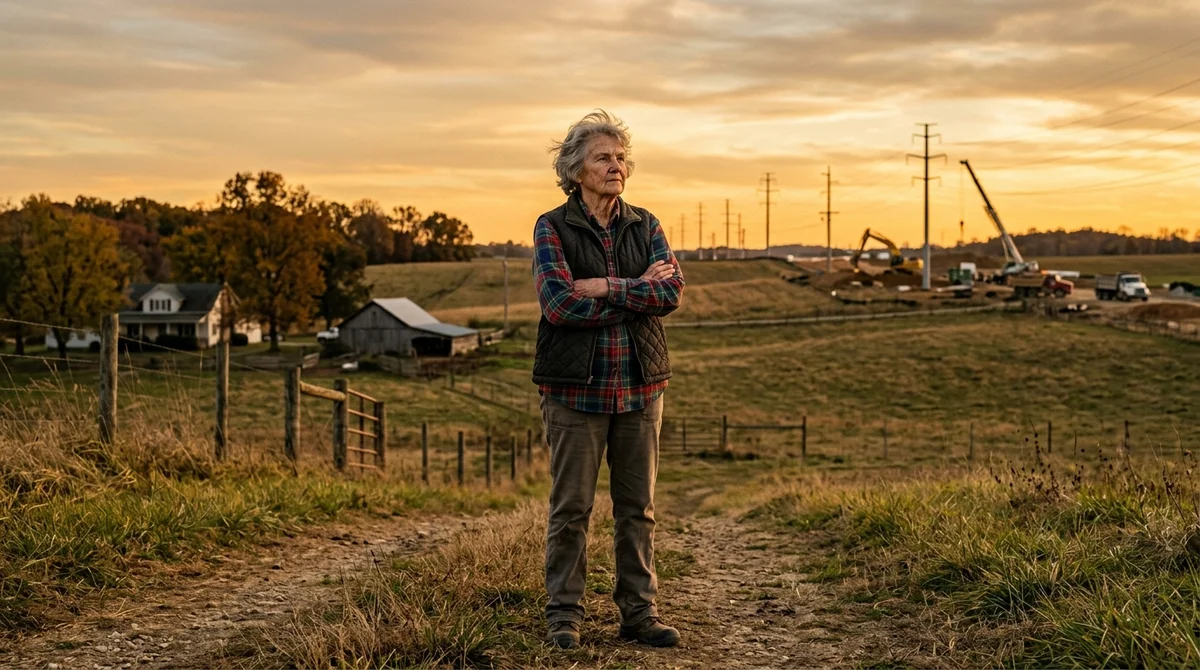
A Technology Company Faces Reality: A Kentucky Grandmother's $26 Million "No"
Technology companies are accustomed to solving problems with money. But an 82-year-old Kentucky resident demonstrated that $26 million is not always a sufficient argument. When an unnamed AI company offered the elderly woman to buy her land for data center construction, she refused.
Not from ignorance, not from confusion — deliberately. The land remained with its owner. The company, however, did not back down: now it is pursuing rezoning of around 2,000 acres in the same area to build infrastructure nearby.
This story is not a curiosity. It is a symptom of a broader process: the rapid expansion of AI infrastructure has collided with resistance from the real world. Data centers consume enormous volumes of water and electricity, occupy agricultural and residential land, and transform the appearance of entire regions.
Local residents, farmers, and courts are increasingly asking uncomfortable questions: who decided that a server would stand here instead of a field? Against this backdrop came news from two major market players. OpenAI is closing Sora — its service for generating video from text descriptions.
The project was presented with great fanfare in early 2024 and sparked a wave of discussions about the future of visual content. Now it is being shut down — at least in its current form. The reasons are not officially disclosed, but the closure underscores: even the loudest AI announcements do not guarantee a viable product.
Meta, meanwhile, faced a court rejection in a case the company clearly expected to win. The details of the lawsuit are not revealed in a brief report, but the fact itself is telling: regulators and courts in the US and Europe are consistently introducing restrictions on major technology platforms. The gap between the pace at which AI companies build and launch products and the speed at which legal systems manage to respond is gradually narrowing.
All three stories are united by one logic. The first years of the AI boom were marked by "seize the market, sort it out later." Companies bought land, launched products, attracted investors — and it seemed there were no external brakes.
Now brakes are appearing. It's an elderly woman who says "no" to $26 million. It's a court that says "no" to Meta.
It's users and regulators asking questions about Sora. Such pressure does not necessarily mean a slowdown in the AI industry. Rather, it means maturation: the transition from a phase of "anything is possible" to a phase of "prove that this is necessary and safe."
Companies that learn to work with this resistance — through dialogue, transparency, compromise — will win in the long term. Those who continue to push with money and administrative resources will lose in courts and lose reputation.
Want to stop reading about AI and start using it?
AI News is a curated feed of AI/tech news. Hamidun Academy teaches you to use AI systematically in your work.