Wikipedia tightens rules: AI-written texts face stricter scrutiny in article writing
Wikipedia is tightening its rules on texts written with the help of AI. The platform has long been dealing with a wave of automatically generated content: it…
AI-processed from TechCrunch; edited by Hamidun News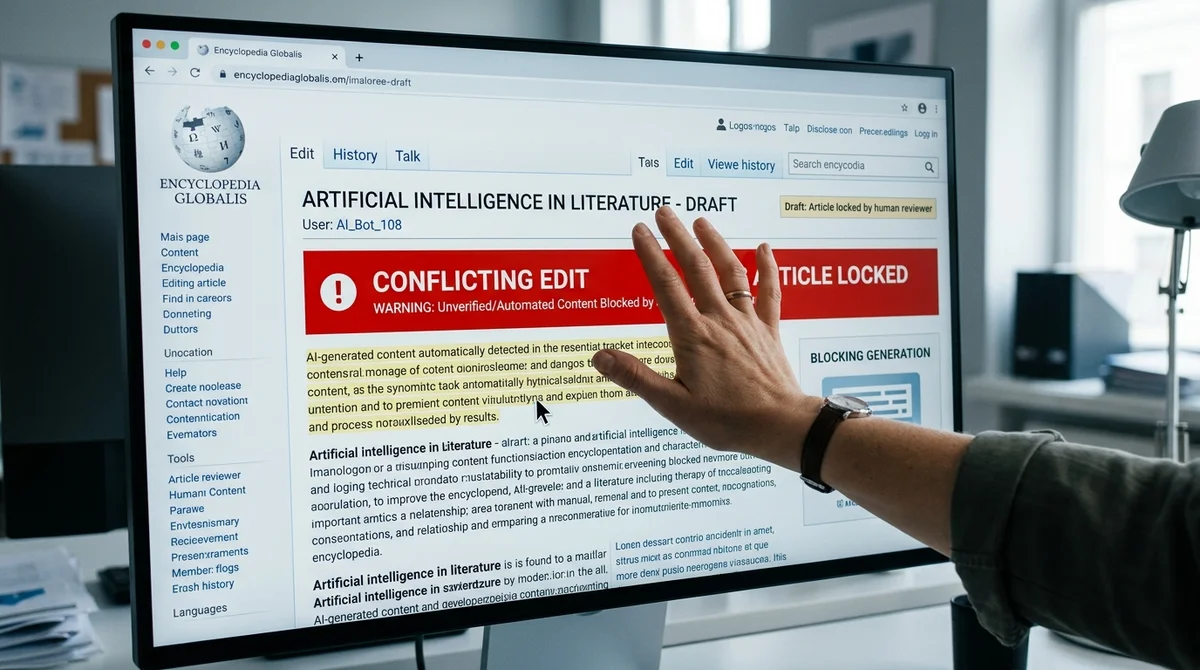
Wikipedia, the world's largest free encyclopedia, has announced a tightening of its policy regarding texts written with artificial intelligence. The platform has long grappled with a wave of AI-generated content and is now moving to stricter control measures.
The problem did not emerge yesterday. Since the widespread adoption of ChatGPT and other language models, volunteer editors at Wikipedia have increasingly discovered articles written or substantially revised with AI.
Such content violates several key principles of the encyclopedia: the requirement for source verifiability, the prohibition on original research, and the neutral point of view policy.
AI-generated texts often contain factual errors, non-existent references, and confident assertions without supporting sources — what the community calls hallucinations.
Wikipedia operates on the principles of a volunteer editor community. Tens of thousands of active participants worldwide make edits, fact-check, and monitor content quality. The emergence of AI tools has overloaded this system: the volume of potentially questionable content has surged sharply, while the community's resources for verifying it have remained the same.
Some editors describe the situation as an arms race — AI generates text faster than humans can verify it.
Wikimedia Foundation's AI policies continue to evolve. Different language editions of Wikipedia are implementing their own rules: some require explicit disclosure of AI use in writing, others completely prohibit publication of AI-generated drafts without substantial editorial revision. English Wikipedia — the largest edition with more than 6.8 million articles — is at the forefront of these discussions, though no consensus has yet been reached.
The Foundation is refraining from a strict centralized ban for now, allowing communities to develop their own standards.
Critics of stricter rules point out that AI can be a useful tool for initial article structure or translating materials into less common languages. Proponents of stricter control insist: Wikipedia's primary value is reliability, and any compromise on this undermines the trust of an audience exceeding 1.7 billion unique users monthly.
Similar issues are faced by other major platforms. Stack Overflow temporarily banned AI-generated answers, academic journals implemented restrictions on ChatGPT in scientific papers, and news agencies developed editorial policies for automatically generated content.
In this sense, Wikipedia is not alone — it is simply one of many key nodes on the internet trying to adapt to this new reality.
The situation matters for another reason as well: Wikipedia is one of the primary sources of data for training language models themselves. If its quality degrades due to flooding with AI-generated content, subsequent generations of AI systems will suffer as well.
Researchers are already warning of the model collapse effect — when AI is trained on AI-generated texts, the quality of output gradually deteriorates.
Wikipedia's struggle with AI-generated content is a microcosm of the broader issue of trust in information in the age of generative AI. How can an open, editable-by-all platform remain trustworthy when the barrier to creating convincing-sounding but potentially erroneous text has nearly disappeared?
There is no answer that satisfies everyone yet — and Wikipedia will continue to find its way through trial and error for a long time to come.
Want to stop reading about AI and start using it?
AI News is a curated feed of AI/tech news. Hamidun Academy teaches you to use AI systematically in your work.