Apple turns 50: the company plans to keep selling the iPhone half a century from now
Apple is marking 50 years — and already thinking about the next half-century. Company executives told WIRED about their AI-era strategy: the iPhone will…
AI-processed from Wired; edited by Hamidun News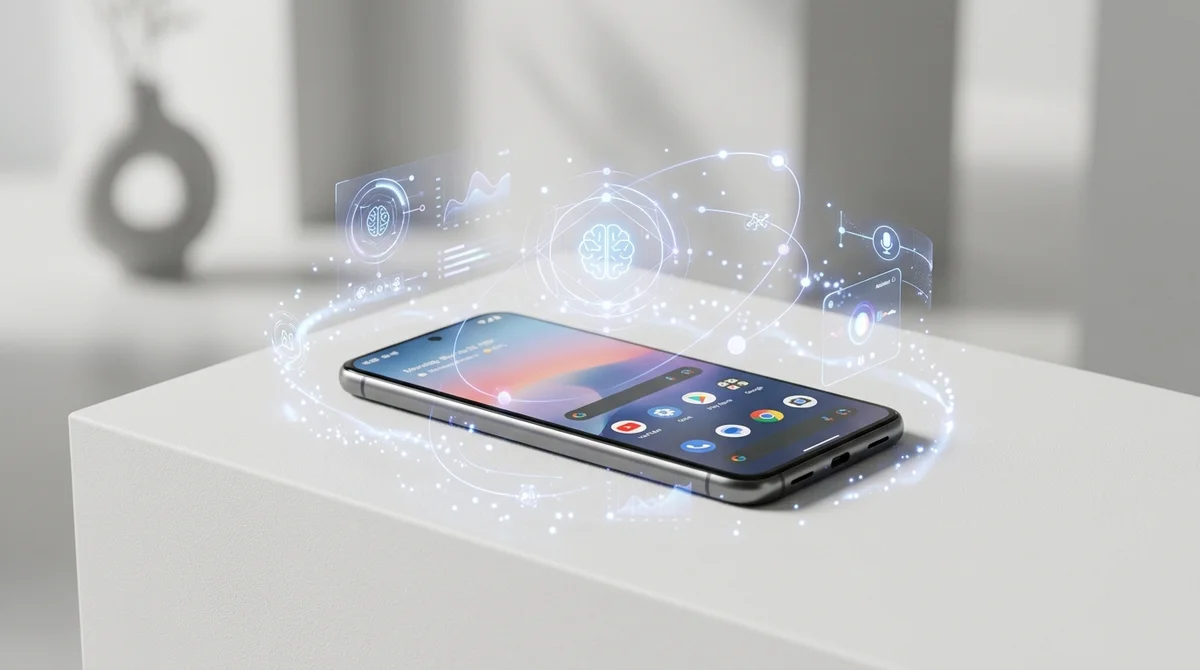
Apple is celebrating 50 years — and the company is already thinking about what the next half-century will look like. In a jubilee interview with WIRED, Apple executives spoke in detail for the first time about their strategy for the AI era. The main takeaway: the iPhone isn't going anywhere.
The smartphone will remain the center of the ecosystem — there will simply be new layers around it. Founded on April 1, 1976 by three engineers from Silicon Valley, Apple has traveled from a garage startup to the most valuable company in history with a market cap exceeding three trillion dollars. Today, its ecosystem unites more than two billion active devices worldwide.
The iPhone remains the flagship product — it accounts for more than half of revenue. The AI revolution has posed an uncomfortable question for Apple: what if voice assistants, smart glasses, or brain-computer interfaces replace the smartphone as the main point of access to the digital world? The company's answer is confident: this won't happen.
At least not in the next ten to twenty years. Executives describe Apple's strategy as evolution, not revolution. Artificial intelligence won't replace the iPhone — it will become a new layer on top of it.
Apple Intelligence, launched in 2024, is already built into iOS and macOS: it rewrites texts, creates images, summarizes emails, and controls applications through an updated Siri. The company calls this the beginning of a years-long transformation. Apple deliberately avoids a direct race with OpenAI and Google in the chatbot space.
The bet is on three competitive advantages: privacy (most computing is performed directly on the device without sending data to the cloud), deep integration with its own M and A series chips, and complete control over the ecosystem — from the processor to the App Store. Apple Watch, AirPods, Vision Pro, and future augmented reality glasses are positioned not as replacements for the iPhone, but as extensions of its capabilities. Spatial computing is the company's next bet, but it too is built around the smartphone, not instead of it.
For the market, this is an important signal: Apple openly acknowledges that the AI era is not a threat to it, but rather a tool for retaining its audience. The average iPhone ownership duration has increased to four years — ecosystem users leave less frequently. Integrated AI should make this transition even less attractive.
By its centennial — in 2076 — Apple, judging by its leadership's statements, still intends to sell iPhones. Or whatever will bear that name by then. The bet on ecosystem continuity rather than discrete breakthroughs — that's the main strategy of one of the most valuable companies in history.
Want to stop reading about AI and start using it?
AI News is a curated feed of AI/tech news. Hamidun Academy teaches you to use AI systematically in your work.