NeurIPS reverses controversial policy after protests by Chinese AI researchers
NeurIPS — the world's leading AI conference — announced a change to its participation policy that sparked mass protests among Chinese researchers. The…
AI-processed from Wired; edited by Hamidun News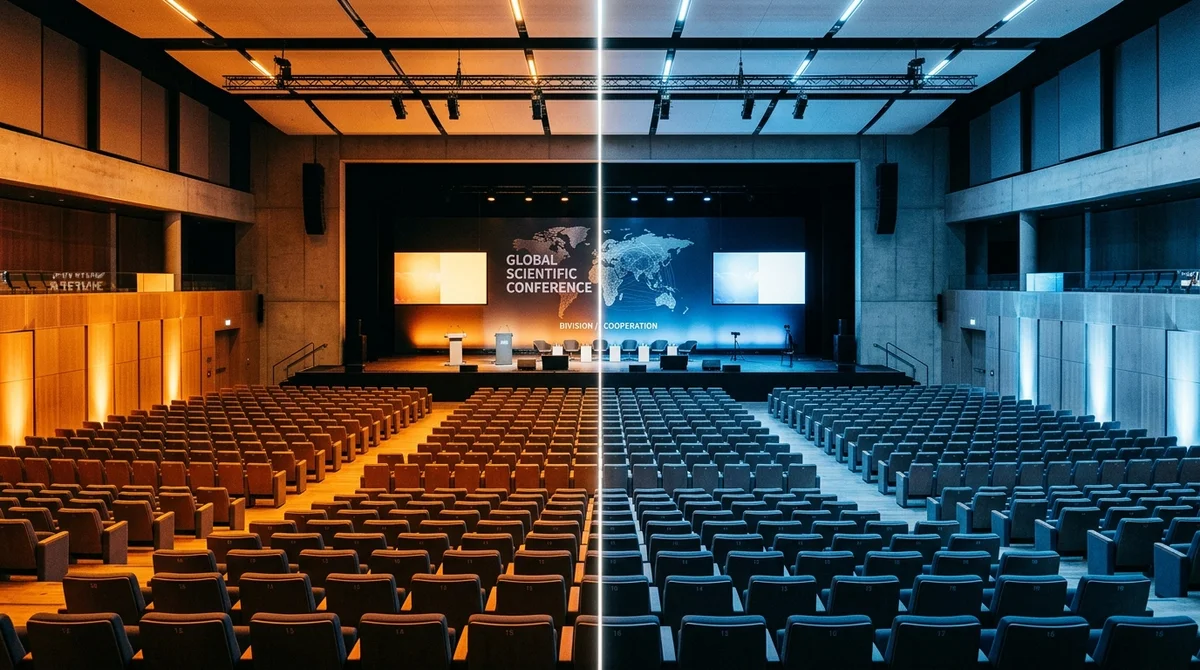
NeurIPS, the world's leading conference on artificial intelligence, found itself at the center of a scandal: a policy change announced by organizers sparked a wave of criticism from Chinese scientists and was reversed within days. NeurIPS (Conference on Neural Information Processing Systems) annually gathers tens of thousands of researchers from the world's leading universities and corporations. The conference is considered the gold standard in academic AI: publication of an accepted paper here is comparable in significance to appearing in Nature or Science in other sciences.
Chinese participants — affiliated with Tsinghua, Peking University, Shanghai AI Lab, and leading technology companies in the country — constitute one of the largest national contingents among authors and reviewers. Details of the specific policy change are sparse in public materials from Wired, but the reaction is telling: a wave of protests spread across X, WeChat, and academic forums. Researchers expressed concern that the new rules effectively restricted participation by Chinese specialists — based on affiliation or citizenship rather than scientific merit.
Some authors stated they were prepared to boycott the conference or withdraw already-submitted applications. NeurIPS organizers responded quickly — the decision was reversed within days. The committee explained that the change had been introduced with good intentions, but was poorly communicated and generated misinterpretations.
The official statement emphasized that the conference is committed to the principle of open science regardless of participants' national origin. The incident, however, is symptomatic of a broader trend. American export restrictions on semiconductors, "blacklists" from the U.
S. Department of Commerce, constraints on academic exchange, and visa barriers are gradually reshaping the architecture of the global AI community. Conferences find themselves in an ambiguous position: they want to remain neutral scientific venues, but cannot ignore regulatory risks for sponsors and member organizations operating under American jurisdiction.
The context of the technology race plays a separate role. After the success of DeepSeek R1 and V3 in early 2025, it became clear: Chinese laboratories are capable of creating world-class models with significantly fewer computational resources. This changed the perception of China — from "follower" to legitimate competitor.
Against this backdrop, voices calling for restricting scientific exchange with Chinese institutions are growing stronger, citing dual-use risks. All of this raises a painful question for the global AI community: can academic science remain truly international when its major achievements directly influence the military and economic potential of states? Conferences like NeurIPS, ICML, and ICLR have so far maintained openness — but each such incident tests this consensus for strength.
The reversal of the controversial rule looks like a victory for common sense in the short term. But the fundamental contradiction — between the principles of open science and geopolitical interests — remains. The next such incident could be resolved differently.
Want to stop reading about AI and start using it?
AI News is a curated feed of AI/tech news. Hamidun Academy teaches you to use AI systematically in your work.