OpenAI shut down the Sora video generator after six months — what is behind the decision
OpenAI shut down the Sora video generator just six months after its public launch. The service invited users to upload photos of their own faces…
AI-processed from TechCrunch; edited by Hamidun News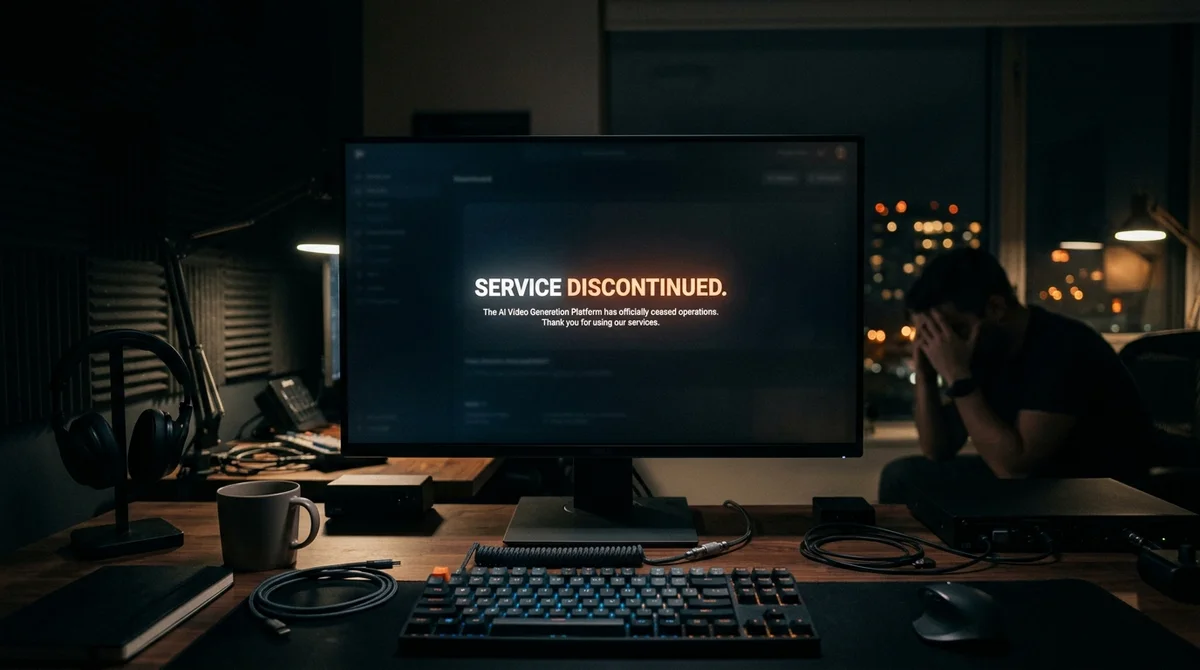
OpenAI unexpectedly shut down Sora — its tool for generating videos from text prompts — just six months after its public launch. The decision immediately sparked a wave of suspicions: could the shutdown be part of a carefully planned scheme to collect biometric data? The suspicions were not unfounded.
Shortly before the shutdown, Sora actively encouraged users to upload photographs of their own faces — to create personalized avatars in videos. For many, this became the primary red flag: the company had accumulated a massive collection of biometric data, and now quietly shut down the service. Where this data goes — a question OpenAI has never answered clearly in public.
Sora launched publicly in December 2024 and made a strong impression on the market. The quality of generated videos significantly exceeded competitors: the model could create multi-second videos with cinematic lighting, realistic physics, and coherent narrative. The service was perceived as the next stage of the AI revolution — a logical continuation after ChatGPT and DALL-E.
Media widely reported on threats to Hollywood, advertising agencies, and video production as a whole. However, behind this facade lay harsh operational reality. Video generation is fundamentally more resource-intensive than text or images.
Each video requires dozens of times more computational power than a ChatGPT query. According to independent analysts, the cost per video through Sora was so high that it made mass monetization of the service practically impossible — even with paid subscriptions. According to TechCrunch, it was precisely this economic infeasibility that became the real reason for shutdown — not the controversial biometric collection.
OpenAI failed to build a financial model in which Sora would recover infrastructure costs within reasonable timeframes. User interest in the service existed, but actual audience willingness to pay for AI video turned out to be significantly lower than the company expected. Against the backdrop of growing competition, this gap only widened.
Competitive pressure did indeed intensify. Runway ML, Pika Labs, Google Veo 2, as well as Chinese services Kling and Wan Video actively seized the market, offering comparable or superior quality at lower prices. For OpenAI, which positioned Sora as a premium-tier product, this was a painful blow to market positioning and negotiating leverage with corporate clients.
The question of biometric data, however, did not disappear. Uploading one's own face is the transfer of a biometric identifier into the hands of a third party. In several U.
S. states — Illinois, Texas, Washington — and a number of European jurisdictions, biometric collection without explicit consent is regulated by law. Shutting down the service without a public statement about the future of uploaded photographs is at minimum a serious reputational mistake, and in some cases may qualify as a violation of applicable law.
For the entire industry, this case is an important indicator. Even OpenAI, with its engineering potential and multi-billion-dollar funding, could not make AI video generation a profitable business model in six months. This points to a fundamental mismatch between current infrastructure costs and market willingness to pay.
The real winners in the AI video segment will likely emerge when GPU computing costs decline several times more. Until that point, profitability remains an open question.
Want to stop reading about AI and start using it?
AI News is a curated feed of AI/tech news. Hamidun Academy teaches you to use AI systematically in your work.