ScaleOps raised $130 million for automated Kubernetes optimization in the AI era
ScaleOps raised $130 million in a Series C round. The platform addresses two acute problems of the AI era: GPU shortages and bloated cloud bills. The product…
AI-processed from TechCrunch; edited by Hamidun News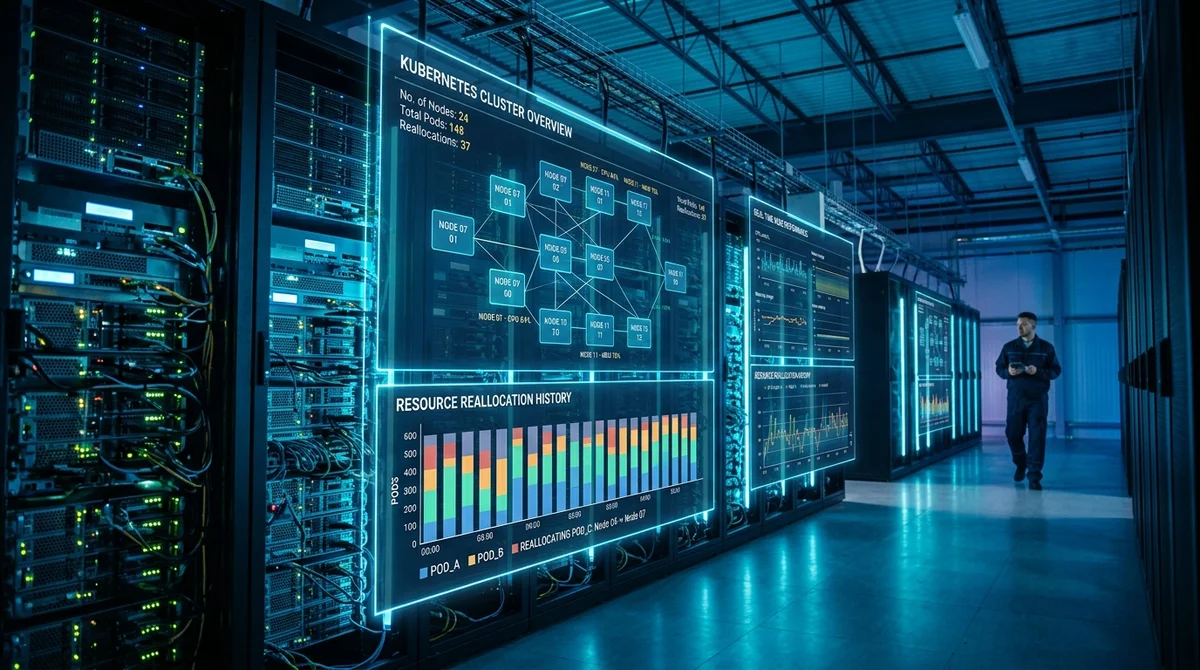
ScaleOps raised $130 million in a Series C round. The funding will go toward scaling the platform, which automatically optimizes Kubernetes infrastructure in real-time—without DevOps engineers' involvement. Behind the investment is a bet on one of the major structural deficits of the AI era: the gap between what companies pay for compute and what they actually use.
Over the past decade, Kubernetes has become the de facto standard for running containerized applications in the enterprise sector. Most large companies manage thousands of pods across hundreds of clusters. But despite the technology's maturity, resource management in these clusters remains archically manual.
DevOps engineers manually set CPU and memory limits with headroom—otherwise unforeseen traffic spikes will crash production. As a result, a significant share of paid compute resources sits reserved and unused. Cloud bills grow while actual load utilization remains low.
ScaleOps is built on the thesis that this gap can be closed automatically. The platform continuously tracks actual resource consumption by each workload and dynamically recalculates limits—without restarting services or team involvement. This allows unused capacity to be returned to the pool and redirected where load is actually growing.
For a typical corporate cluster, the cost of unoptimized resource distribution amounts to hundreds of thousands of dollars annually; for large tech companies, it runs into the millions. The AI boom has made this problem more acute while simultaneously expanding the startup's potential market. Companies running LLM inference or fine-tuning their own models face a fundamentally different load profile: sharp peaks followed by idle periods, random spikes when batch size or concurrent request count changes.
GPU accelerators sitting idle for even a few hours a day—that's money literally burning away. GPU shortage meanwhile hasn't gone away: you can't quickly purchase additional capacity, and the only real way to get more performance is to learn to use what you already have more efficiently. Raising $130 million at Series C is a signal of company maturity.
A round of this size requires proven product-market fit, sustainable enterprise ARR, and a clear scaling formula. Investors are betting that as AI workloads grow in the enterprise sector, automatic infrastructure optimization platforms will become as standard a part of the technology stack as monitoring or CI/CD. The FinOps tools market for Kubernetes is valued at several billion dollars and continues to grow—competition is intensifying along with awareness of the scale of infrastructure waste.
GPU shortage and rising cloud budgets are not a temporary anomaly but a structural feature of the current AI era. Companies that learn to extract maximum value from each reserved core will gain a competitive advantage that can't simply be bought—it must be built. ScaleOps is building the tool for exactly that, and $130 million means the industry has already started paying for it.
Want to stop reading about AI and start using it?
AI News is a curated feed of AI/tech news. Hamidun Academy teaches you to use AI systematically in your work.