Samsung Galaxy S26 Gets AI Photo Editor Capable of Rewriting Any Memory
Samsung updated Photo Assist in Galaxy S26 — now AI edits photos based on text prompts: different sky, remove crowd, reimagine the entire frame. Google took…
AI-processed from The Verge; edited by Hamidun News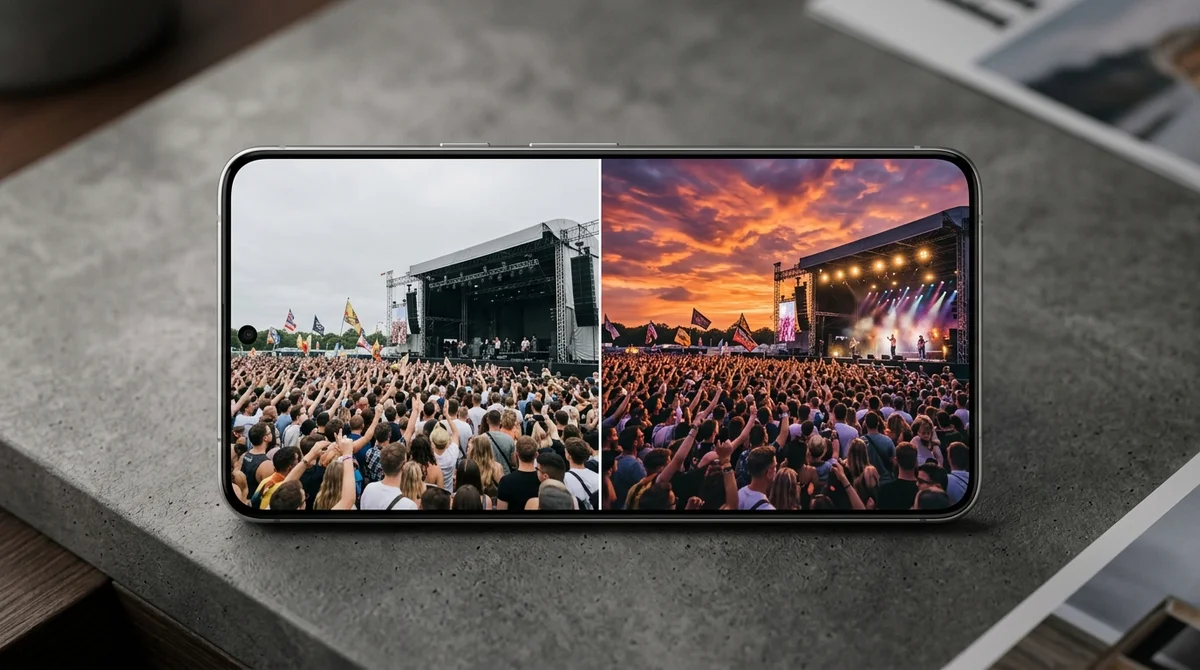
Samsung presented an updated Photo Assist in Galaxy S26 — a tool that allows you to edit photographs using artificial intelligence with simple text requests. Want to remove a random passerby, change the sky, or add an object that wasn't in the shot? Just write what you need. The company is following a path that Google already laid with Pixel 9 — and faces the same questions about the boundaries of editing and responsibility.
The story didn't start with Samsung. Google was the first to implement AI tools in the Photos editor — cautiously at first: brighten the sky a bit, remove tourists from the background. These features looked harmless and even helpful. But the company went further and added a mode with arbitrary text requests. That's where things got complicated.
It turned out that the restrictions built into the system are easy to bypass. Users started creating images of helicopter crashes, explosions, and other scenes that never existed. We're not talking about artistic freedom here — these are photographs that look like documentary snapshots of real events. Google found itself in an awkward position: a tool designed as an assistant turned into a machine for producing plausible fakes.
It's in this context that Samsung enters with its Photo Assist on Galaxy S26, presented at Unpacked in early 2026. The feature allows for large-scale changes to photographs: changing backgrounds, adding or removing objects, reimagining the entire shot. The company apparently studied Google's experience — but the question is how effectively Samsung will handle the problem that the competitor is still struggling with.
The problem here is systemic, not technical. Any powerful editing tool inevitably raises the question: where does processing end and falsification begin? Removing an accidental pole from a frame is one thing. Adding a person to the shot who wasn't there is something else entirely. And the boundary between these two actions is blurred, and no filters can draw it for the user.
Samsung and Google are not the only ones working in this direction. Apple, Snapchat, Adobe, and dozens of other companies are implementing similar tools. The market is moving toward a world where any photograph is potentially the result of AI editing, and photo authenticity becomes a conditional concept. This is not an apocalyptic prediction — it's already happening.
Technology companies are responding to this problem differently. Some implement watermarks for AI content, others add metadata about changes, still others try to train models to recognize attempts to create harmful content. But all of these measures are palliative: a skilled user will bypass them, and the average consumer won't even know about them.
What does this mean in practice? Photographs from a smartphone are no longer records of reality — they become statements about reality that the author can edit at their discretion. Galaxy S26 with the updated Photo Assist is another step in this direction. Convenient, powerful, well integrated into the Samsung ecosystem. And at the same time raising the same question for users that Pixel 9 did two years ago: where does your responsibility end for what you create?
Want to stop reading about AI and start using it?
AI News is a curated feed of AI/tech news. Hamidun Academy teaches you to use AI systematically in your work.