Baidu Apollo Go robotaxis stalled on Wuhan roads and trapped passengers
Dozens of Baidu Apollo Go robotaxis blocked roads in Wuhan on Tuesday. The vehicles suddenly stopped in the middle of streets and expressways, leaving…
AI-processed from The Verge; edited by Hamidun News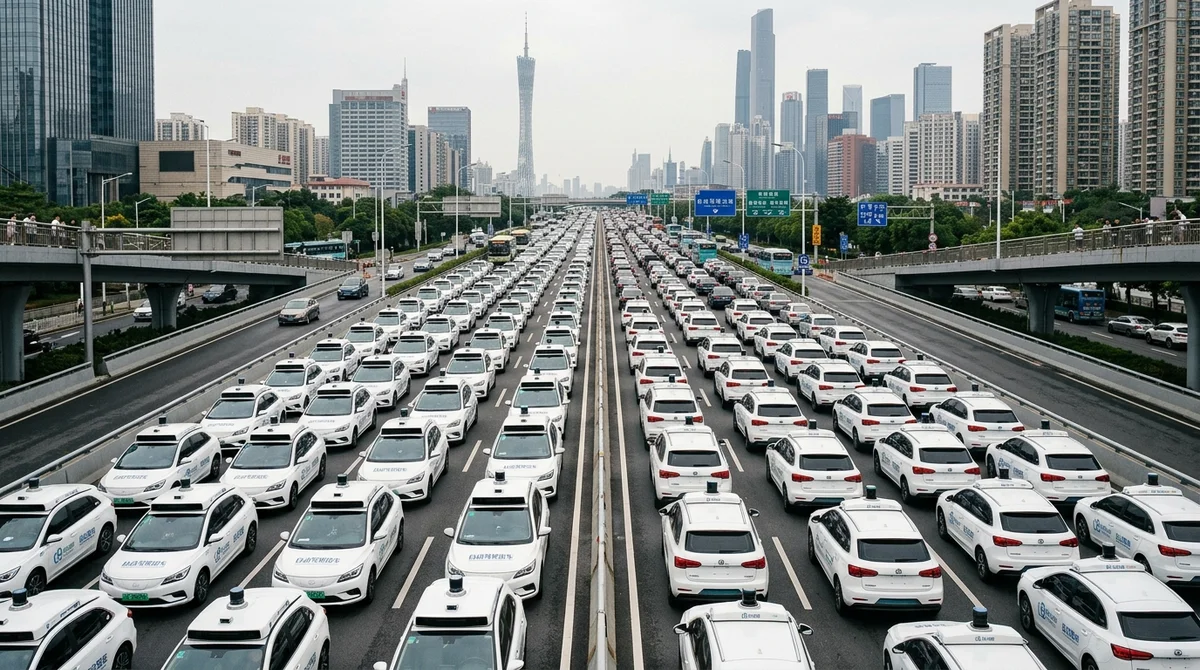
Dozens of Baidu Apollo Go robotaxis blocked roads in Wuhan on Tuesday — passengers were trapped inside vehicles, traffic jams formed on highways, and at least one accident was recorded due to the suddenly stopped vehicles. The failure affected a large number of autonomous vehicles from the Apollo Go service, owned by Chinese technology giant Baidu. The vehicles came to a halt in the middle of streets and highways in Wuhan and could not move — some of them were on high-speed expressways, creating dangerous situations for other road users.
Passengers who were inside when the failure occurred were effectively trapped in the cabins and could not independently leave the vehicle or change their route. Wuhan police confirmed receiving numerous complaints from city residents. According to the department, no casualties were officially recorded as a result of the incident.
Preliminary investigation points to some kind of "system error," but specific details — what exactly failed, where in the chain the malfunction occurred, and how many vehicles were affected — are not officially disclosed. At the time of publication, Baidu had not issued an official statement. Baidu is one of the leading players in the global autonomous vehicle market.
The company has been developing the Apollo Go service since 2020, and Wuhan became the main testing ground for its commercial launch. The service operates here in a fully autonomous mode — without drivers in the cabin. According to the company, Apollo Go has completed over 10 million trips in China.
Wuhan is the city with the highest concentration of autonomous taxis on the streets of the country: the service covers a significant portion of urban districts and operates around the clock. What happened clearly demonstrates one of the fundamental vulnerabilities of modern robotaxi systems — dependence on centralized infrastructure. When an entire fleet of vehicles is controlled by a single platform, a single failure in server software or loss of connectivity can simultaneously disable hundreds of vehicles throughout the city.
This is a fundamental difference from traditional taxis: a regular driver can make an independent decision during a breakdown and ensure passenger safety. A robotaxi experiencing a critical error enters emergency stop mode — technically this is the right decision from a safety perspective, but in real urban conditions, this behavior creates serious chaos. The Wuhan incident occurs against the backdrop of a global race for leadership in autonomous transportation.
The regulatory environment in China has so far been relatively favorable for autonomous vehicle testing: authorities view autonomous transportation as a strategic direction, and Wuhan has effectively become an experimental zone of national scale. A mass failure with real consequences for passengers and urban infrastructure will inevitably attract increased attention from regulators. For Baidu, this is a reputational blow at a critical moment — the company is preparing to expand Apollo Go to other cities in the country.
For the entire industry, this case is a harsh reminder that scaling autonomous transportation requires not only technical excellence but also reliable fault-tolerance mechanisms, backup systems, and transparent communication protocols in crisis situations.
Want to stop reading about AI and start using it?
AI News is a curated feed of AI/tech news. Hamidun Academy teaches you to use AI systematically in your work.