Kathleen Kennedy became the voice of skepticism at Runway AI Summit — despite the broader hype
Runway held an AI summit for Hollywood's elite: participants compared AI to the invention of fire and the printing press — all this a week after OpenAI de…
AI-processed from Wired; edited by Hamidun News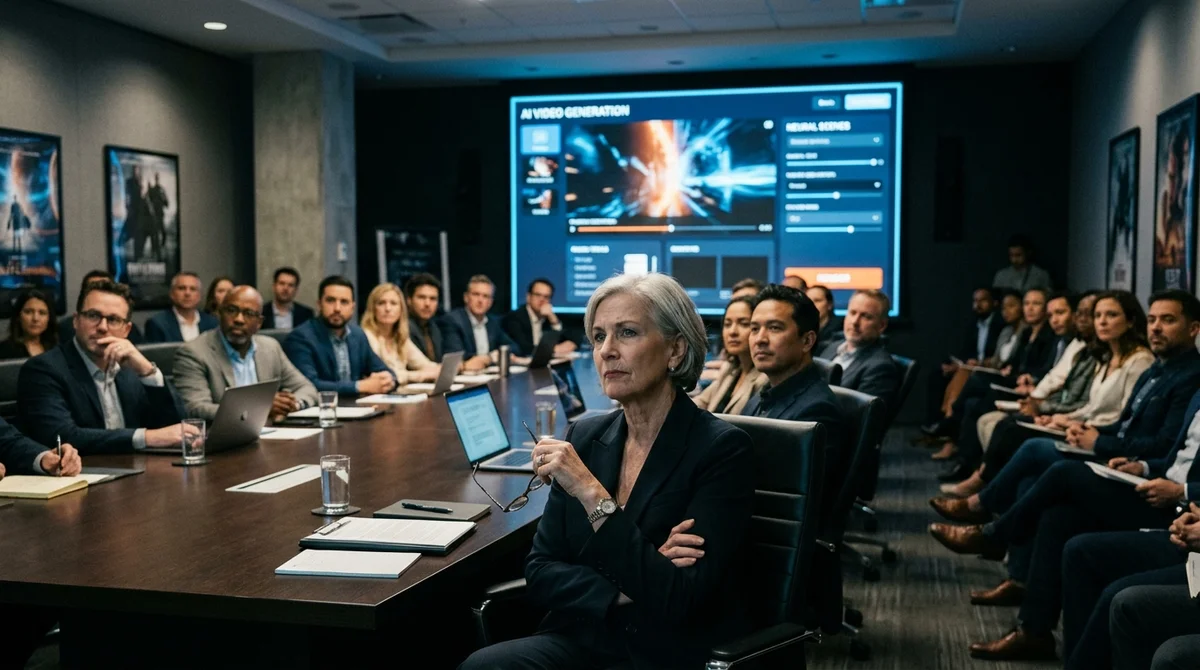
Hollywood held its ground against the temptation to admit defeat. At the Runway AI Summit held in April 2026, producers, directors, and technologists compared artificial intelligence to the invention of fire and the emergence of the printing press—literally a week after OpenAI de facto shut down Sora, one of the most anticipated AI tools for cinema. Runway, a New York-based company specializing in generative video for professional production, annually gathers Hollywood's elite at its summit.
This time, the tone was set by technology advocates: despite recent setbacks in the industry, the audience's mood remained almost religious. AI is not just a tool, speakers insisted, it is an era shift comparable to fundamental human inventions. Against this backdrop of optimism, Kathleen Kennedy—president of Lucasfilm and producer of the "Star Wars" series—stood out particularly.
According to Wired, she was one of the few participants who publicly expressed skepticism. Kennedy posed uncomfortable questions: about creative identity, about who owns the content produced by algorithms, and what exactly is lost in the process of automating creative labor. In an industry where most prefer to remain silent or applaud, her position rang unexpectedly clear.
Context makes the situation even more revealing. Sora—OpenAI's video generator—debuted in February 2024 with the promise of transforming film production. The company positioned the tool as a way to create realistic video scenes from text descriptions—without a film crew, without sets, without costly pre-production.
However, in early April 2026, it became known that the project was closed or frozen for an indefinite period. At the Runway summit, this fact was apparently not discussed. Runway itself continues to position itself as a partner of Hollywood, not its replacement.
The company is betting that generative AI expands a director's toolkit rather than pushing them out the door: it accelerates concept development, creates animatics, helps visualize ideas at early stages. The summit featured case studies from studios that have already integrated generative tools into their production process—albeit at the level of supporting tasks. Nevertheless, beneath the facade of optimism lies unresolved tension.
The screenwriters' and actors' strikes of 2023, partly sparked by fears of AI, concluded with agreements limiting the application of technologies. The question of rights to training data—who owns the texts, images, and voices on which models were trained—remains unsolved. Each new tool reopens this dispute.
What is happening at the Runway AI Summit reflects a broader pattern: technology companies continue to work on Hollywood while studios choose their strategy. Some accelerate experiments, others wait. Runway builds a bridge between Silicon Valley and the entertainment industry—and while major players wind down high-profile projects, smaller companies occupy the freed space, convincing the industry that the hype train hasn't left the rails yet.
Want to stop reading about AI and start using it?
AI News is a curated feed of AI/tech news. Hamidun Academy teaches you to use AI systematically in your work.