Physical AI in Japan: Labor Shortage Drives Robots from Labs into Manufacturing
Japan is turning physical AI from laboratory experiment into working reality. An acute labor shortage — by 2030 the country will face a deficit of more than…
AI-processed from TechCrunch; edited by Hamidun News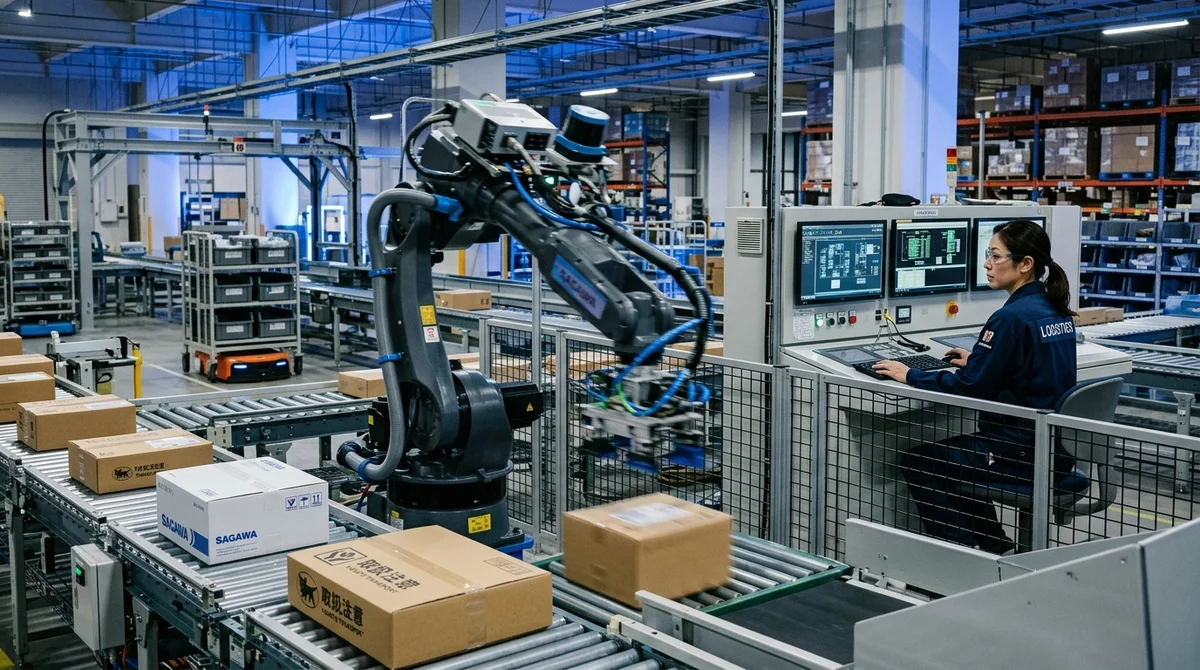
Japan is demonstrating to the world that physical AI is ready to move beyond pilot projects. A demographic crisis, accumulating over decades, has become a catalyst for large-scale deployment: Japanese companies are transitioning robotic systems from testing benches to real production facilities, warehouses, farms, and elderly care institutions—places where people are increasingly reluctant to go. Japan's labor market is experiencing a structural deficit that cannot be closed by traditional methods.
The population is aging at record pace: by 2030, the country is projected to lose more than 11 million workers. Young people are increasingly unwilling to take on physically demanding or low-status positions, and the country's immigration policy has historically limited the influx of foreign labor. The result is chronically unfilled vacancies in manufacturing, logistics, cleaning, and elderly care that remain open year after year.
Against this backdrop, Japan's largest corporations—from automakers to logistics network operators—have accelerated the transition from testing to industrial deployment of robots. Physical AI here means not just mechanical manipulators on a conveyor line, but adaptive systems with computer vision, sensory feedback, and the ability to work in unstructured environments: in warehouses with variable layouts, in agricultural fields with unpredictable conditions, in residential spaces alongside live people. Roboticization is accelerating simultaneously across multiple industries.
In logistics, autonomous loaders and sorting robots process millions of shipments daily, replacing night shifts for which it is impossible to recruit personnel. In agriculture, robots for harvesting strawberries, apples, and tea reduce dependence on seasonal migrants. Local startups in the field of remotely operated robotics are already working in retail and industrial packaging.
In elderly care, exoskeletons and assistant robots help medical staff lift patients, reducing occupational injuries and extending the careers of employees. The government is actively supporting the transition. The relevant ministry subsidizes robot deployment at small and medium enterprises, simplifies certification, and develops standards for human-machine collaboration.
The regulatory environment, which in other countries often hinders automation, becomes a competitive advantage for Japan's national industry. It is noteworthy that the Japanese context radically changes the familiar narrative around roboticization. In most countries, the discussion revolves around fear: robots will take away jobs.
In Japan, the question is posed differently: who, if not robots? Technology fills vacancies that have remained unfilled for years—not because of low wages, but because there simply are no willing candidates. This softens public resistance: unions are less hostile, regulators act more flexibly, companies invest more boldly.
Japanese experience becomes an important precedent for the entire developed world. A similar equation—an aging population plus a shortage of manual labor—will face Germany, South Korea, China, and several other economies in the coming decade. What once seemed like technological exotica is becoming basic production infrastructure.
The question is no longer whether physical AI is ready for the real world. Japan has answered that. The question now is different: how quickly will others be able to scale what the Japanese are already deploying on an industrial scale.
Want to stop reading about AI and start using it?
AI News is a curated feed of AI/tech news. Hamidun Academy teaches you to use AI systematically in your work.