Google released an offline dictation app for iOS with Gemma support
Google quietly released an iOS voice dictation app powered by its own Gemma models — completely offline, with no data sent to servers. The app appeared in…
AI-processed from TechCrunch; edited by Hamidun News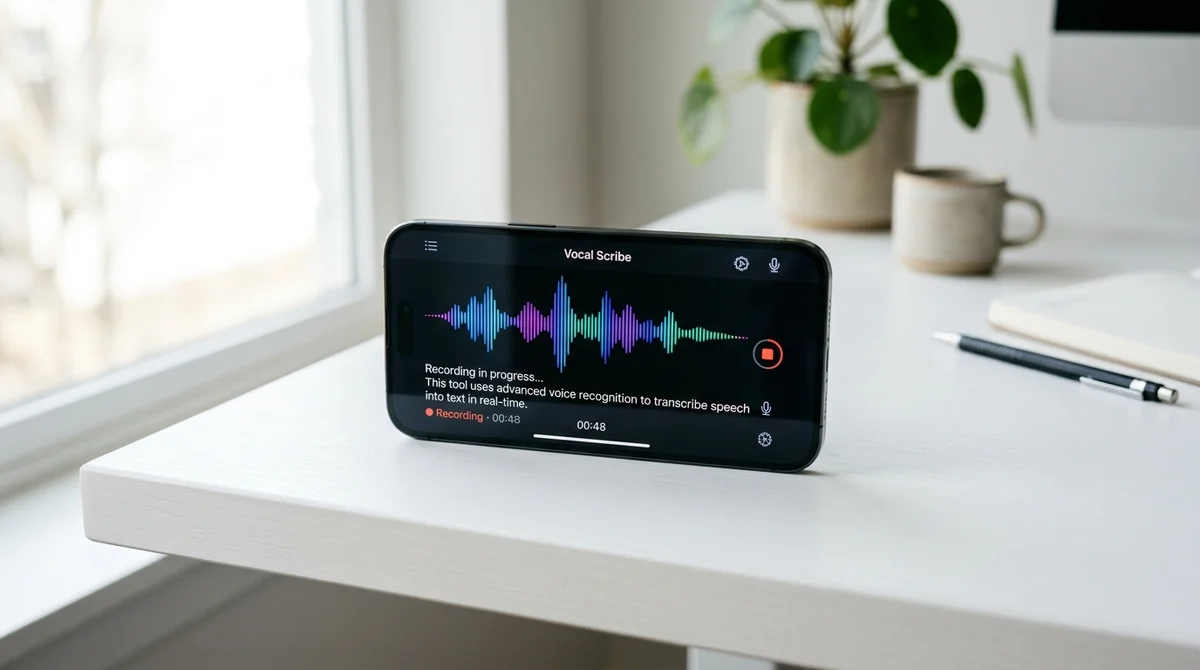
Google has released a voice dictation app for iOS that operates entirely offline — without sending data to servers. This is an atypical move for a company whose business model is built on cloud data processing, and marks the first public product using Gemma directly on the user's device in real-time. The app quietly appeared in the App Store without a press release or major announcement.
It positions itself as a tool for voice-to-text input in any application: you speak — the text immediately appears wherever your cursor is directed. The key differentiator from competitors is complete autonomy: speech recognition occurs directly on the device, no internet connection is required. Under the hood, Gemma models are at work — Google's open-source language models, which the company began releasing in 2024.
Gemma was originally designed with mobile devices and edge equipment in mind: they are more compact than the main Gemini models, yet powerful enough for tasks without global context. Voice dictation is a typical use case for such models: the task is computationally constrained, yet benefits from the minimal latency that local execution provides. Google's direct competitor, as they point out, is Wispr Flow.
This is a popular AI dictation app that has won over an audience of specialists who prefer voice-based work. Wispr Flow focuses on transcription quality and integration with work tools, but historically depends on cloud processing. Google's entry with an offline alternative calls into question one of the competitor's key architectural decisions.
Offline mode offers concrete practical advantages: working on an airplane, in the subway, in areas with poor coverage — all of this becomes possible without losing functionality. For corporate users, it's also a privacy matter: data never leaves the device, which is critical when working with confidential materials. This argument alone could prove decisive for the enterprise audience, which has always been curious about where employee voice recordings go.
Notably, the app launched without a marketing campaign. This is either a market test before a wider rollout, or part of a strategy to promote Gemma as a platform for developers — the app clearly demonstrates what can be built with on-device models. In any case, the quiet App Store release turned out to be louder than many official announcements: media picked up the story precisely because Google doesn't usually do things this way.
Offline AI on mobile devices is ceasing to be exotic and becoming an industry standard. Apple Intelligence, Samsung Gauss, now Gemma in dictation — major players are consistently moving computation directly onto the device. Competition will shift from cloud infrastructure to the quality of the models themselves and the depth of operating system integration.
Google made exactly that move.
Want to stop reading about AI and start using it?
AI News is a curated feed of AI/tech news. Hamidun Academy teaches you to use AI systematically in your work.