Anthropic Unites Apple, Google and 45+ Companies to Defend AI from Cyber Attacks
Anthropic created Project Glasswing — a coalition with Apple, Google and 45+ organizations for joint AI cybersecurity testing. The new Claude Mythos Preview…
AI-processed from Wired; edited by Hamidun News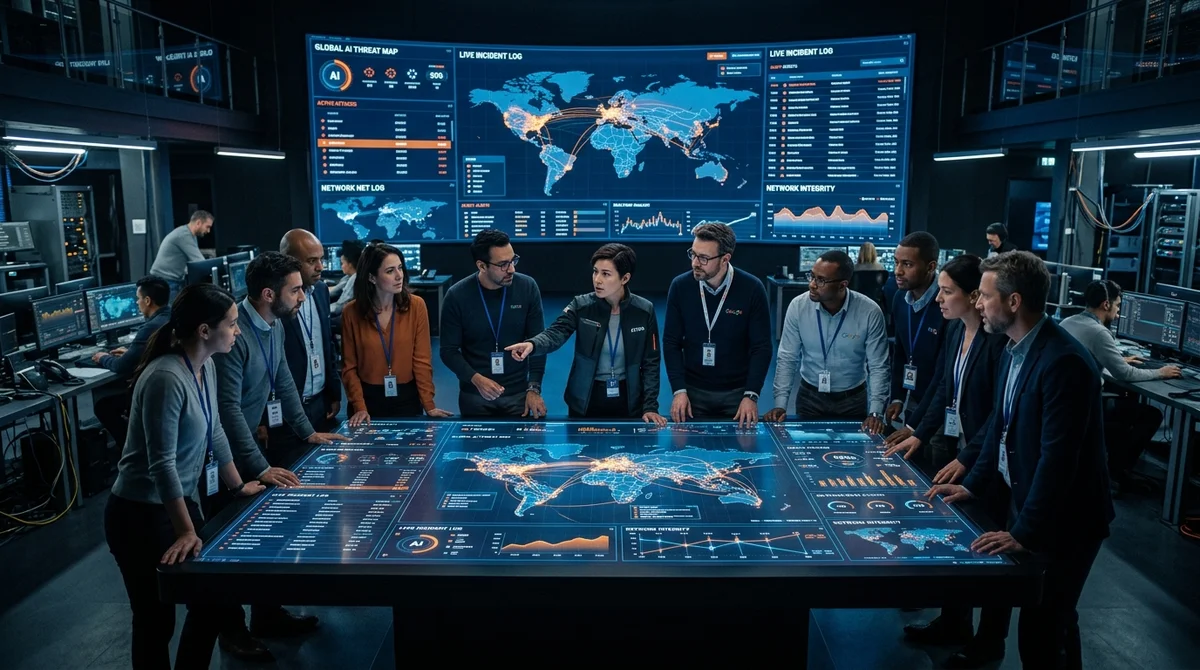
Anthropic has announced the launch of Project Glasswing — a large-scale industry coalition that includes Apple, Google, and more than 45 other companies and organizations. The goal of this partnership is to jointly understand what modern AI systems are capable of in the context of cybersecurity and develop practical approaches for both offensive and defensive applications of advanced artificial intelligence. The coalition has been created amid growing concerns within the industry: according to many experts, the development of offensive AI capabilities is noticeably outpacing the development of defensive tools.
Claude Mythos Preview — a new specialized model from Anthropic developed specifically for information security tasks — will serve as the coalition's key tool. Unlike commercial versions of Claude, Mythos Preview was created for in-depth work with vulnerabilities: automated identification of weaknesses in software systems, analysis of malicious code, and assessment of how far an advanced AI system can go during a targeted attack on digital infrastructure. At the same time, coalition participants will test how the same capabilities work in defensive mode — for anomaly detection, incident response, and proactive system protection.
The composition of participants itself speaks to the seriousness of the moment. Apple and Google — direct competitors of Anthropic in the large language model market — have agreed to work together on the same project shoulder-to-shoulder. Such collaboration is rare in the technology industry, where market share competition is zero-sum.
Cybersecurity turned out to be one of the few areas where inter-industry competition temporarily gives way to a common threat: AI system vulnerabilities do not respect corporate boundaries, and the consequences of potential attacks affect the entire digital ecosystem. At the heart of the project's logic lies a troubling but increasingly obvious observation: modern AI systems can easily automate tasks that five years ago required a qualified specialist and weeks of work — systematic vulnerability discovery, writing functional exploits, modeling targeted attacks. Some researchers have already documented cases where AI agents successfully completed basic hacking tasks and found zero-day vulnerabilities in real software.
As models become more powerful and their accessibility increases, this threshold will continue to lower. Project Glasswing is an attempt to measure the real scale of the threat in advance, before malicious actors begin to use these capabilities to their full extent. For Anthropic, the initiative also has clear strategic dimensions.
The company has consistently built its reputation on the principle of responsible AI development, regularly pointing to safety as its top priority. Project Glasswing transforms declarations into concrete action: instead of researching risks in a closed laboratory, Anthropic invites the entire market — including competitors — to collaborate. This strengthens the company's position as a platform for developing industry standards and norms in AI safety, where Anthropic clearly aspires to leadership.
Technical details about Claude Mythos Preview remain undisclosed. Anthropic does not reveal the architecture, parameter count, or comparative benchmarks. All that is known is that this is a separate specialized version, not part of the commercial Claude lineup, and that coalition participants will receive controlled access to it for their own research.
The results of the collaborative work are planned to be used to create practical recommendations and, possibly, cross-industry standards for the application of AI in cybersecurity. Project Glasswing marks an important shift in how the technology industry approaches the problem of AI and security. The question of whether AI systems can become tools for attacks has already been answered: in the hands of sufficiently motivated actors, they can and already have.
The open question now is different: will the industry manage to develop reliable defense mechanisms before these threats escalate into a systemic crisis for global digital infrastructure.
Want to stop reading about AI and start using it?
AI News is a curated feed of AI/tech news. Hamidun Academy teaches you to use AI systematically in your work.