The US Army is developing its own VICTOR chatbot for soldiers' combat missions
The US Army is developing its own military chatbot, VICTOR. The system is trained on real military data and is designed to provide soldiers with…
AI-processed from Wired; edited by Hamidun News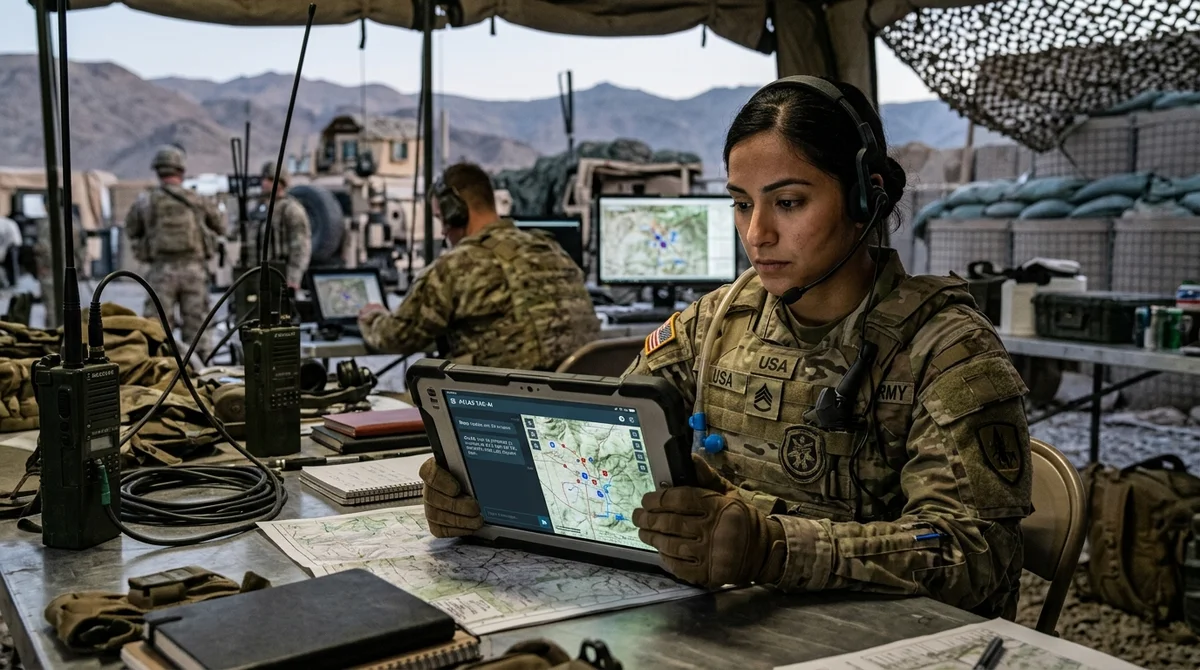
The US Army is building its own military AI chatbot called VICTOR — a system trained on real Army data and capable of providing soldiers with critical information directly during task execution. This is reported by Wired. VICTOR is being developed as an alternative to commercial language models — ChatGPT, Copilot, and others, which the military has already informally turned to, but which are not trained on specialized military data and are not intended for use under conditions of operational secrecy.
The Army needs a system that knows military doctrines, tactical guidelines, order formats, and logistical protocols — not in general form, but with the precision suitable for real-world application. The idea is to give every soldier access to a tool capable of quickly answering questions like: what protocol applies in a specific scenario, how to correctly fill out a report, where to find the necessary section of a field manual. Essentially — a digital assistant with the institutional knowledge of the Army, available at any moment.
The project is being conducted within the Pentagon against the backdrop of a broader wave of military AI integration: the Army, Air Force, and other US structures are actively experimenting with generative AI for logistics, operational planning, intelligence analysis. In 2024, the Department of Defense issued a directive allowing cautious use of commercial AI tools, however, for tasks involving real operational data, there remained a need for closed, verified systems. VICTOR is exactly such a system.
It does not simply use a ready-made model with a military prompt, but is trained on a corpus of data reflecting real Army practice: field manuals, operational orders, reports, internal instructions. This fundamentally changes the quality of answers: the model does not interpret military terminology "by meaning," but knows it the way a military professional does. At the same time, the development of such a tool involves obvious risks.
Hallucinations of language models in civilian tasks are an inconvenience. In a combat context, an inaccurate answer could cost lives. That is why the emphasis is placed on verified sources and narrow specialization: VICTOR should not "know everything" — it should know precisely what the soldier needs here and now.
For now, the project is at the development and testing stage, with no public data on deployment timelines or scope of application. But the fact that the Army is investing in its own language model, rather than renting resources from Microsoft or OpenAI, indicates a shift in approach: the military no longer wants to depend on civilian AI providers where the stakes are highest.
Want to stop reading about AI and start using it?
AI News is a curated feed of AI/tech news. Hamidun Academy teaches you to use AI systematically in your work.