Poke launches access to AI agents via SMS — no apps or technical knowledge needed
Startup Poke has removed the main barrier to AI agents — complexity. Agents can now be managed through regular SMS: send a task and the agent carries it out…
AI-processed from TechCrunch; edited by Hamidun News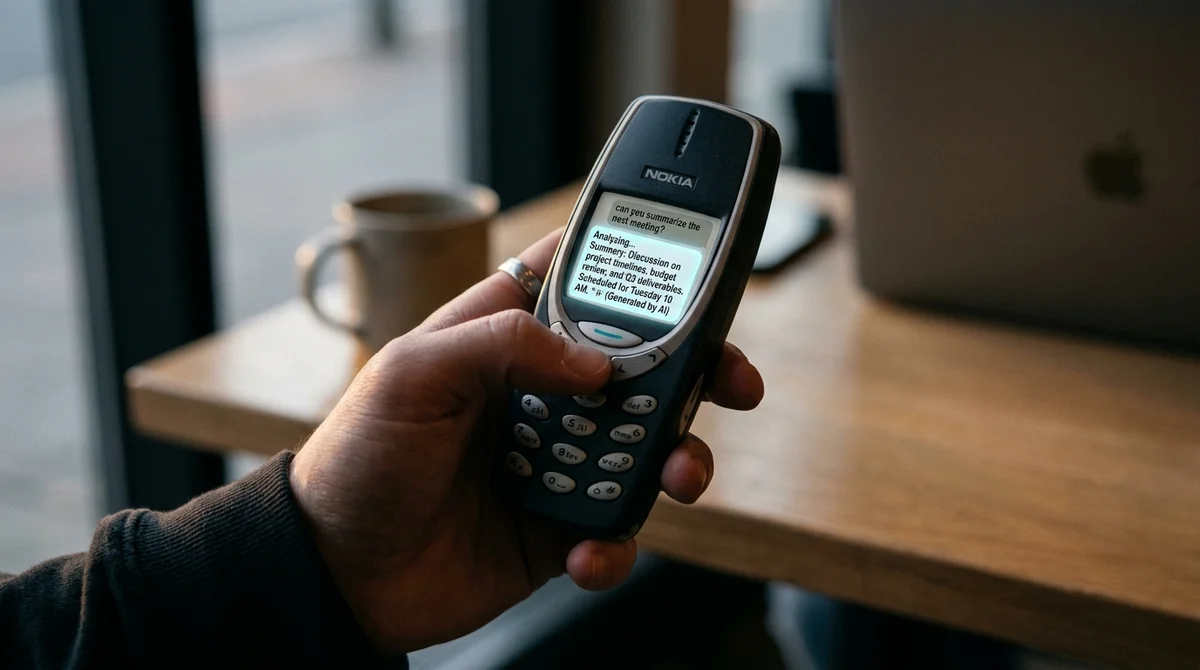
Poke is a startup that challenged one of the main problems with AI agents: too high a barrier to entry. Most people don't want to deal with settings, API keys, or new chat interfaces. They simply want the task to be completed.
Poke offers a radically simple solution: manage AI agents through an ordinary text message — without applications, without registration, without technical knowledge. The concept is disarmingly simple. A user writes a message — the agent executes it.
Want to book a table, write a brief report, process data, or set a reminder for your team? Just type and send. No installations, no training tutorials, no permission settings.
In essence, Poke makes an AI agent as accessible a tool as an alarm clock or SMS reminder. Poke takes the interface that every mobile phone owner knows — SMS — and connects it to the power of modern AI agents. This is a fundamental shift in how AI reaches the end user.
Major players — OpenAI, Anthropic, Google — have competed for years in creating increasingly intelligent agents, but the interfaces to them remained tied to browser chats or software APIs. Poke removes this barrier completely. A text message is the most universal interface in the history of mass communications: it's used both in Silicon Valley and in a village without stable internet.
Technical complexity is hidden behind the simplicity of user experience. The Poke system takes an incoming message, determines the user's intent, selects the appropriate agent or chain of agents, performs the task, and returns the result — all without a single additional action from the user. Automation can include working with calendars, databases, external services — everything depends on connected integrations.
For business, this means the ability to implement AI tools for employees who will never open ChatGPT, but know how to write messages. Field teams, warehouse workers, employees without constant access to a computer — all of them become potential users of AI automation. The market size that Poke is targeting is impressive.
Over 5 billion people worldwide use SMS messages — compared to approximately 100 million active ChatGPT users. If AI agents get SMS as the main interface, the barrier to entry for most of humanity effectively disappears. This is especially relevant for developing markets, where smartphones are not available to everyone, but SMS works on any phone from the last three decades.
Poke fits into a broader trend of invisible AI — when artificial intelligence is embedded in already familiar communication channels rather than requiring a transition to a separate application. WhatsApp bots, voice assistants in phone calls, Email AI — it's all movement in one direction: bring AI to where the user already is, rather than making the user go to AI. An open question is monetization and security.
Text messages are an environment with minimal context and increased risk of abuse. How Poke manages authentication, limits agent authority, and protects user data — for now remains behind the scenes. But the very fact of the appearance of such a product changes the problem statement: not how to teach billions of people to use AI, but how to bring AI to where these billions already are.
Want to stop reading about AI and start using it?
AI News is a curated feed of AI/tech news. Hamidun Academy teaches you to use AI systematically in your work.