Unitree launches humanoid robot R1 internationally via AliExpress for $4,370
Unitree is bringing the R1 humanoid robot to the international market via AliExpress for just $4,370. It is one of the most affordable humanoid robots for a…
AI-processed from Wired; edited by Hamidun News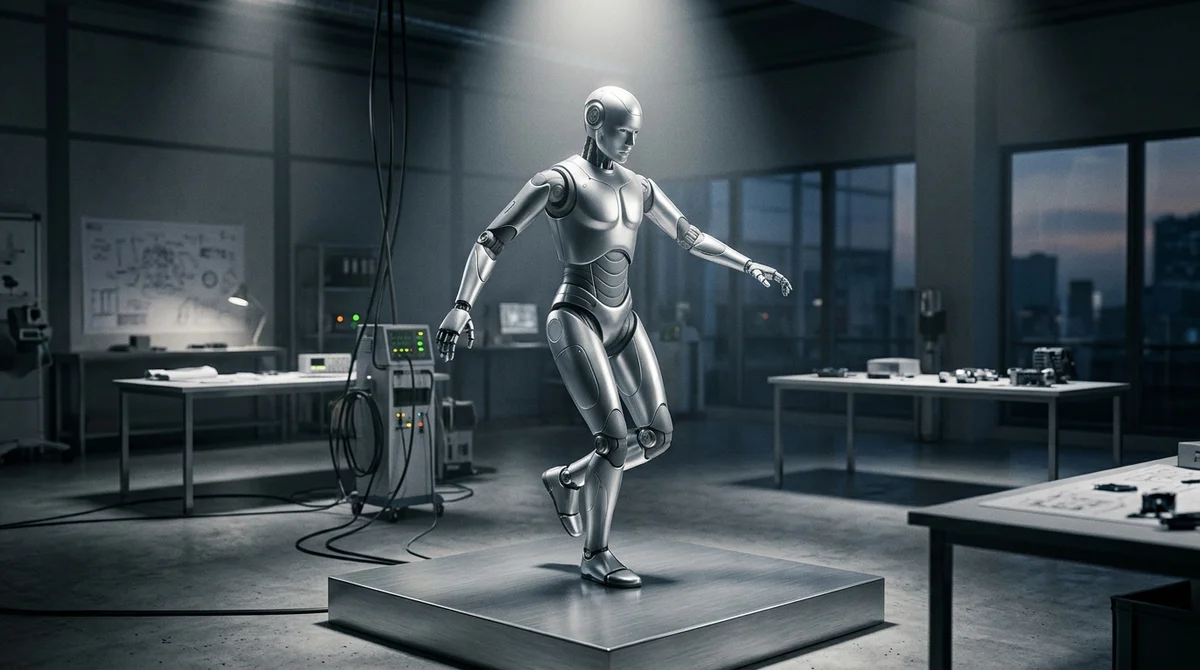
Chinese company Unitree is bringing its humanoid robot R1 to the international market through the AliExpress marketplace. The price tag is $4,370. For the humanoid robot segment, this represents a historically low entry barrier: just a few years ago, platforms in this class were accessible only to large corporations and research laboratories with multi-million-dollar budgets.
Now R1 can be found in the catalog alongside gadgets and spare parts. Unitree is consistently implementing an affordable robotics strategy. Their four-legged Go1 and Go2 robots conquered the developer and university market precisely because of their price-to-performance ratio: with specifications comparable to Boston Dynamics, they cost several times less.
With R1, the company applies the same logic to the humanoid segment. American competitors — Figure AI, Agility Robotics, Tesla with Optimus — either do not sell their robots publicly at all, or work exclusively through corporate partnerships and pilot programs. The key technical feature of R1 is acrobatic capability.
Unitree claims the robot can perform movements that were previously available only to significantly more expensive prototypes. Demonstration videos show confident gait, dynamic movements, and recovery from balance loss. The full list of supported maneuvers has not yet been disclosed, but the emphasis on physical dexterity was clearly chosen as a competitive advantage over slower and more cautious Western counterparts.
The significance of placing it specifically on AliExpress is hard to overstate. This marketplace is associated with consumer goods — phone cases, LED strips, household tools. Unitree deliberately chooses this channel to send the market a signal: the humanoid is no longer a product for select laboratories.
Boston Dynamics Spot — a four-legged, non-humanoid robot — costs around $75,000. Tesla Optimus has not yet entered public sales. R1, at a price of $4,370, breaks the established price narrative and opens the market to a fundamentally different audience.
Yet a central question remains unanswered: what should you do with a humanoid robot in real life? Neither Unitree nor other manufacturers have yet proposed a convincing use case beyond warehouses, factories, or research laboratories. For home use, robots in this class are too complex to maintain and limited in autonomy.
For industrial applications — they are not yet reliable enough and require constant supervision. R1, despite its affordability, does not solve this equation. However, the low price creates conditions where a broad developer community can experiment independently and, possibly, discover use cases not obvious to major manufacturers.
Unitree R1's arrival on AliExpress is a sign that humanoid robots are moving along the same mass-market curve as consumer drones or desktop 3D printers: from niche, expensive devices to products accessible to enthusiasts and startups. Early drones cost hundreds of thousands of dollars and were used exclusively for military purposes. Today, for $300 you can buy a camera with autopilot and GPS stabilization.
The question is not whether humanoids will become mainstream — the dynamics suggest they will. The question is whether a clear use case will emerge by then — or the first R1 buyers will be pioneers who discover for themselves what this robot is for.
Want to stop reading about AI and start using it?
AI News is a curated feed of AI/tech news. Hamidun Academy teaches you to use AI systematically in your work.