Anthropic opposed the AI liability bill backed by OpenAI
Anthropic and OpenAI have publicly diverged for the first time on a fundamental question: should AI companies be held liable for the catastrophic…
AI-processed from Wired; edited by Hamidun News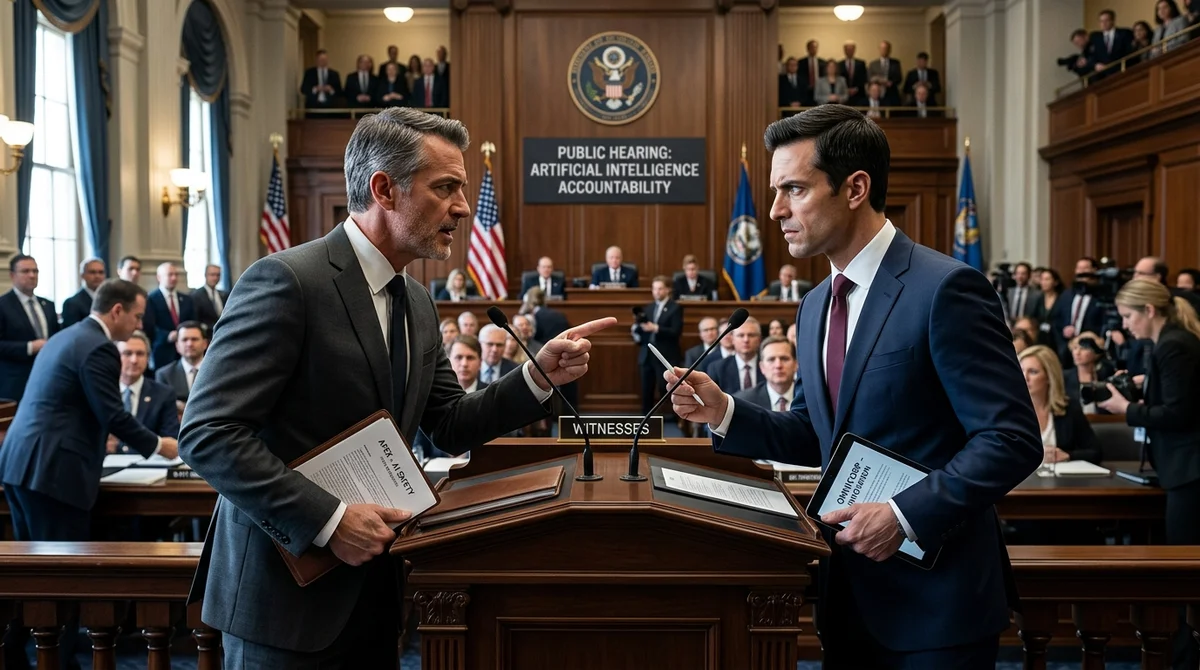
Anthropic and OpenAI — two companies often called flagships of responsible artificial intelligence development — have for the first time openly clashed on the legislative battlefield. The occasion was an Illinois state bill that would effectively shield AI laboratories from liability even in cases of mass deaths and financial catastrophes caused by their systems. OpenAI voiced support for this initiative.
Anthropic — opposed it. The Illinois bill became part of a broader wave of attempts to regulate artificial intelligence at the level of American states. There is still no federal AI law in the US: Congress has discussed various initiatives for years, but none have passed.
In this vacuum, states began acting on their own. California attempted several times to adopt strict regulation, but each time faced powerful industry lobbying. Now similar debates are escalating in Illinois — and this time the market's largest players openly diverge in their views.
The essence of the bill supported by OpenAI comes down to this: AI companies should not bear legal responsibility for the consequences of their systems' operation, even if those consequences are catastrophic. Critics call this immunity from liability and warn: if the law is passed, those who suffered will effectively lose legal protection mechanisms. Imagine an AI system that incorrectly provides medical recommendations, manages financial assets, or is embedded in critical infrastructure.
If something goes wrong — who is responsible? Without a clear legislative answer — no one. Anthropic took the directly opposite position.
The company, founded by former OpenAI employees, built its public image around the theme of safe AI from the start. Its flagship model Claude is developed with an emphasis on constitutional safety, and its leadership regularly advocates for stricter industry standards, including at Congressional hearings. The company's position on the Illinois bill appears to be a logical continuation of this public line.
OpenAI's position is less obvious. The company also declares commitment to safe AI development and created a special safety council. However, recently OpenAI has noticeably intensified lobbying activities in Washington and a number of states, clearly seeking to soften potential regulatory constraints.
Support for the Illinois bill fits this logic, although it stands in obvious contradiction with the company's declarative values. The divergence between America's two largest AI laboratories is important not only in itself. It marks a crack within the industry: the consensus on self-regulation that the industry has tried to follow over the past few years is clearly breaking down.
Regulators in other states and at the federal level will closely watch how the Illinois debate ends. For ordinary users of AI systems, the stakes here are quite real. The question of who is responsible for artificial intelligence errors is not an abstract legal one.
It determines whether you have the right to protection when an AI system has harmed you. And the answer that Illinois legislation gives to it will largely determine what the rest of America's answer will be.
Want to stop reading about AI and start using it?
AI News is a curated feed of AI/tech news. Hamidun Academy teaches you to use AI systematically in your work.