Indian startup Emergent launches Wingman — an AI agent for WhatsApp and Telegram
Indian startup Emergent launched Wingman — an AI agent that works directly in WhatsApp and Telegram. Users manage tasks and automate routine work through…
AI-processed from TechCrunch; edited by Hamidun News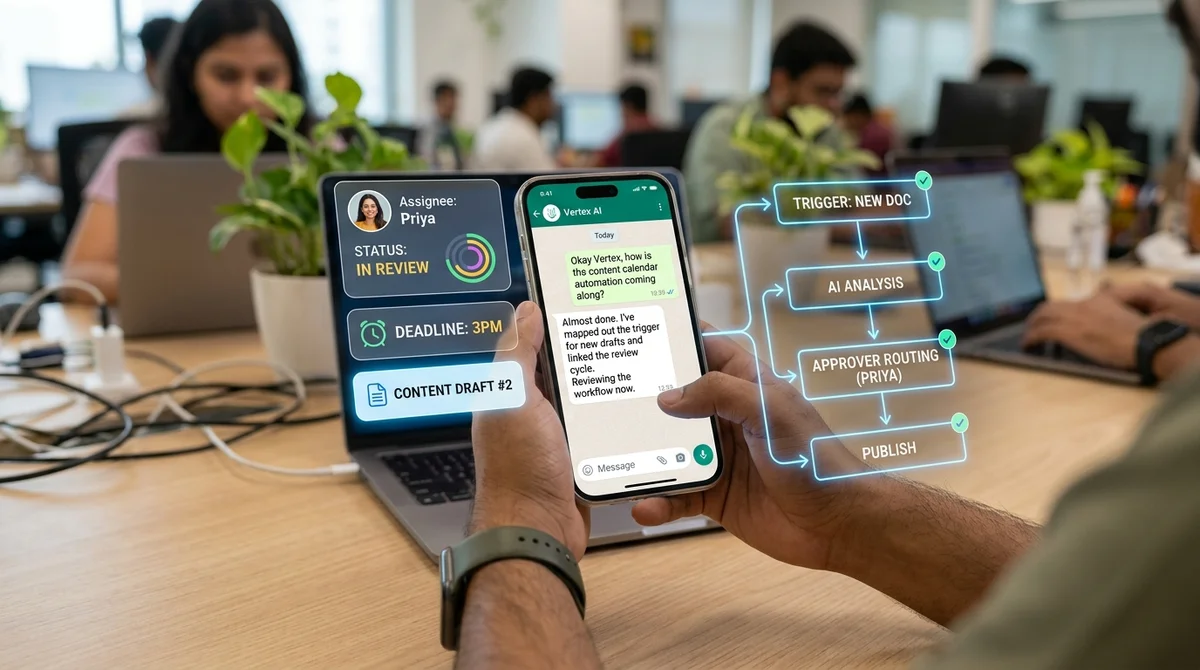
Indian startup Emergent, which emerged from the vibe-coding wave, has taken its next step: the company has launched Wingman — an AI-agent operating directly within WhatsApp and Telegram. Users can manage tasks and automate everyday processes through regular chat, without installing any additional applications. This move positions Emergent in the space of autonomous AI-agents — one of the most rapidly developing segments of the technology market in 2026.
What is Wingman
Wingman is a conversational AI-agent embedded in the planet's most popular messengers. Instead of switching to a separate interface, the user writes to Wingman directly in WhatsApp or Telegram — and the agent executes the task: schedules meetings, searches for information, automates work workflows, manages reminders.
The choice of precisely WhatsApp and Telegram is a strategically deliberate decision. WhatsApp has more than two billion active users, Telegram — over nine hundred million. For a vast number of people in India, Southeast Asia, Latin America, and the Middle East, these messengers are the primary point of interaction with the digital world. Emergent is not trying to change habits — it integrates into what already works.
Emergent and vibe-coding
Emergent grew out of the vibe-coding direction, in which a user describes a needed product or feature in words, and AI generates code and delivers a working result. This approach allows people without technical background to create their own applications and automations — this is the next level of no-code: not visual blocks, but free conversation with the system.
For India, this is especially relevant. The country is one of the world's largest suppliers of IT specialists, but within it are tens of millions of small entrepreneurs and professionals who want digital tools without diving into programming. Wingman is an attempt to become this tool for a mass audience.
Competition with OpenClaw and agent platforms
The mention of OpenClaw in a TechCrunch headline — an intentional signal: Emergent is entering space where autonomous agent platforms already operate. OpenClaw and similar solutions allow creating agent chains: AI itself plans the sequence of steps, invokes the necessary tools, and returns the result without manual management.
Emergent's difference is in the entry point. Most agent platforms are oriented toward developers: APIs, SDKs, configurable workflows. Wingman bets on the end user, who needs nothing configured — only to write a task in the messenger. This is both a competitive advantage and a zone of risk. The barrier to entry is minimal, the audience is enormous. But earning trust in an agent acting on the user's behalf in a personal messenger will require gradual effort: data security and action transparency issues will be critical for scaling.
What this means
The launch of Wingman reflects a broader trend: the next battle of AI-products unfolds not over the best interface, but over embedding in existing user behavior. Not a new application — but an agent where the user already is.
India confidently occupies its place in the global AI-ecosystem. Startups like Emergent demonstrate: the market is not limited to Silicon Valley, and the most interesting growth points lie at the intersection of new technologies and familiar platforms with billion-user audiences.
Want to stop reading about AI and start using it?
AI News is a curated feed of AI/tech news. Hamidun Academy teaches you to use AI systematically in your work.