OpenAI Updated Codex: Desktop Management, Image Generation, and Task Memory
OpenAI released a major update package for its Codex agent development system. It can now manage applications on the Mac desktop, run in the background…
AI-processed from The Verge; edited by Hamidun News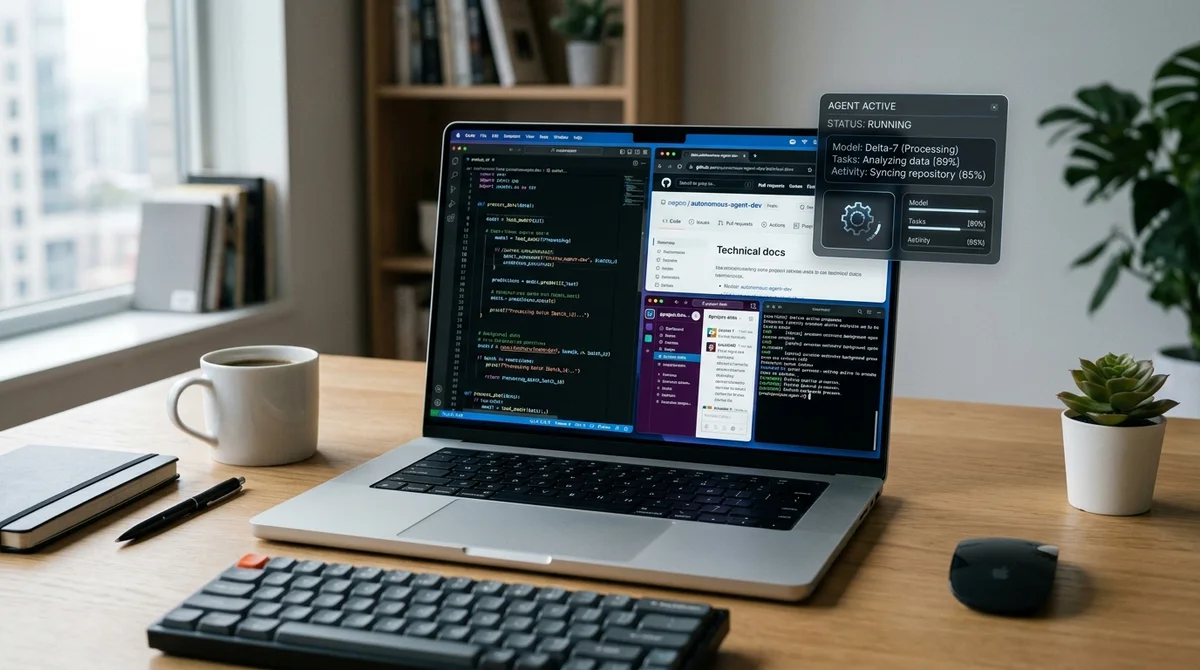
OpenAI has updated Codex — an agent system for development automation — by adding the ability to manage desktop applications, generate images, and maintain memory of past tasks. The update package was released amid intensifying competition with Anthropic and is directly positioned as a response to Claude Code's growing dominance. Prior to this update, Codex operated primarily in a browser environment and executed tasks in isolated containers — without direct access to what was happening on the user's screen.
Now the system has gained full access to the macOS desktop: the agent can open, manage, and interact with any installed applications — from Xcode to Figma, from Slack to the native terminal. A key point: Codex operates in the background and does not seize control of the interface while the user is occupied with another task. Multiple agents can act in parallel and independently, each solving its own subtask.
The context of this update is important. According to The Verge, OpenAI has redistributed significant resources specifically to compete with Claude Code from Anthropic. The latter has gained exceptional popularity among professional developers — thanks to precise execution of complex terminal instructions, deep understanding of the architecture of large codebases, and the ability to conduct work on real projects without constant manual oversight. The new Codex package is OpenAI's direct attempt to close this functional gap. The company has explicitly designated a priority: make Codex a tool that developers choose by default, rather than by habit.
Expanding the agent to the desktop is a logical step for any tool claiming the role of a full-fledged developer assistant. A developer rarely works only in a code editor: you need to run a test in a browser, check the visual result in a design tool, switch to the terminal, verify logs, open documentation. If the agent sees this entire context — not just the contents of files in the repository — it can make more informed decisions and execute tasks with fewer interruptions from the user.
The updates also include built-in image generation directly in the Codex interface and long-term memory: the agent remembers the results of past sessions, project context, and team preferences. This addresses one of the main pain points when working with agents — the need to explain the project architecture, code style, and adopted conventions anew each time. Memory is not just a convenience: agents without context tend to repeat the same mistakes and lose sight of the task when switching between sessions.
Codex as a product has a long history. The first version appeared in 2021 and became the technical foundation for GitHub Copilot — a tool that essentially created the market for AI assistants for developers. OpenAI then relaunched it as a standalone agent tool. The current update adds a layer of computer control, previously implemented in Operator — the company is consolidating disparate technologies into a single product. For developers, this means one agent capable of working with both code and GUI, and with memory of the project.
It is still unclear how stable desktop management works in real, non-trivial conditions. OpenAI acknowledges that some capabilities are at an early stage. The demonstrations look convincing, but the real test is complex scenarios: simultaneous debugging across multiple windows, testing with visual verification, working with legacy applications without an open API.
The race for agent tools for development has reached a new level. Claude Code, Cursor, Devin, Windsurf — all major players are shaping their response to one question: who is capable of executing a development task from beginning to end with minimal human intervention, without breaking what already works? The answer will be seen not from announcements, but from practice in the coming weeks.
Want to stop reading about AI and start using it?
AI News is a curated feed of AI/tech news. Hamidun Academy teaches you to use AI systematically in your work.