Musk v. Altman Court Case: Jury to Assess OpenAI's Fidelity to Its Mission
The Musk v. Altman lawsuit heads toward a final verdict: the jury must decide whether OpenAI has abandoned its founding mission — to develop AGI for the…
AI-processed from Wired; edited by Hamidun News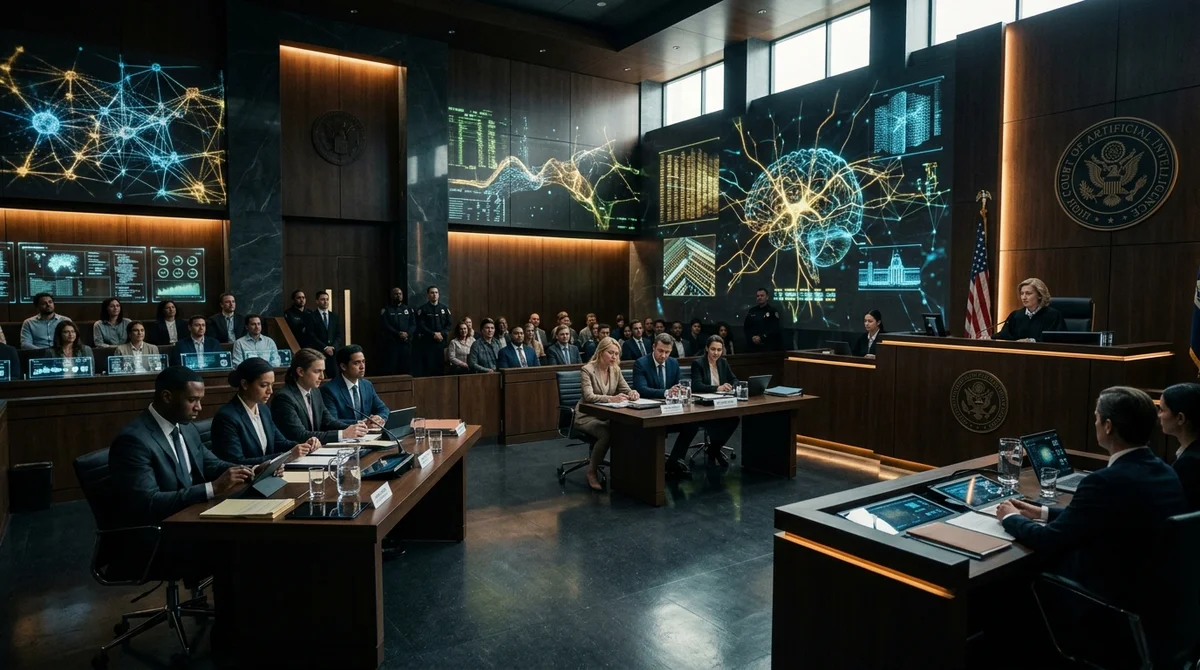
The Musk v. Altman case is entering the final stretch. Jurors will soon have to answer a question that touches on the very nature of the most influential company in artificial intelligence: did OpenAI betray its fundamental mission — to ensure that AGI, artificial general intelligence, serves the benefit of all humanity, not the interests of investors?
The conflict's backstory traces back to 2015, when Elon Musk and Sam Altman, together with other scientists and entrepreneurs, founded OpenAI as a nonprofit organization. The concept was fundamentally different from a typical startup: no shareholders, no profit race, only open research for the benefit of society.
Musk personally donated tens of millions of dollars to the company's development and actively participated in its management for several years.
In 2018, Musk left the board of directors. The official reason was a conflict of interest with Tesla, which itself was developing autonomous driving systems and its own AI. According to other accounts, it was a personal conflict with Altman over control of the company's strategy. In any case, Musk's departure opened the door to a transformation that he now calls a betrayal.
In 2019, OpenAI established a commercial subsidiary with so-called limited profit — meaning investors can receive returns, but only up to a certain cap. At the same time, Microsoft invested $1 billion in the company. By 2023, Microsoft's investment had reached $13 billion.
In early 2023, ChatGPT reached 100 million users in two months — a record that no product had ever achieved in internet history. Musk qualifies this very transformation as a breach of contract.
In his complaint, he argues that Altman convinced him to invest resources by making specific promises about nonprofit and open-source operations. De facto, OpenAI's transformation into a tightly integrated Microsoft partner operating on closed proprietary models is, in his view, a gross violation of what the founders had agreed upon.
The defense flatly disagrees. Altman and his team insist: Musk himself actively participated in internal discussions about monetization strategies and even proposed at one point to put himself in charge of the company with expanded authority. They also point to economic reality: training GPT-4 cost hundreds of millions of dollars in computational resources. Without the Microsoft partnership, there simply would not have been the funds for research at the scale that allowed OpenAI to become an industry leader.
From their perspective, the mission has not been betrayed — it has been adapted to the harsh reality of the AGI race.
The stakes are difficult to overstate. If jurors support Musk's position, the court could impose restrictions on OpenAI's commercial activities or demand company restructuring. Musk himself is seeking a ban on OpenAI's full commercialization and compensation for the alleged breach of contract.
One cannot overlook the obvious conflict of interest. Musk is the founder and owner of xAI, a company developing the competing language model Grok. Legal weakening of OpenAI would objectively benefit him as an entrepreneur. Critics argue that the lawsuit is less a human rights action than a competitive battle disguised as litigation.
Musk's supporters counter: personal motives do not diminish the validity of the question itself about adherence to the original mission.
Whatever the verdict, this case has already changed the conversation about accountability in the AI world. It has raised questions about how real and legally binding are the public promises for humanity's benefit that every major company in the industry proclaims today. The jury's answer may become a precedent by which not only OpenAI, but everyone building a business on beautiful missionary declarations, will be judged.
Want to stop reading about AI and start using it?
AI News is a curated feed of AI/tech news. Hamidun Academy teaches you to use AI systematically in your work.