Tesla Expands Robotaxi to Dallas and Houston — Service Extends Beyond Austin
Tesla launched robotaxi in Dallas and Houston. The company published a 14-second video showing electric vehicles driving without drivers or operators…
AI-processed from TechCrunch; edited by Hamidun News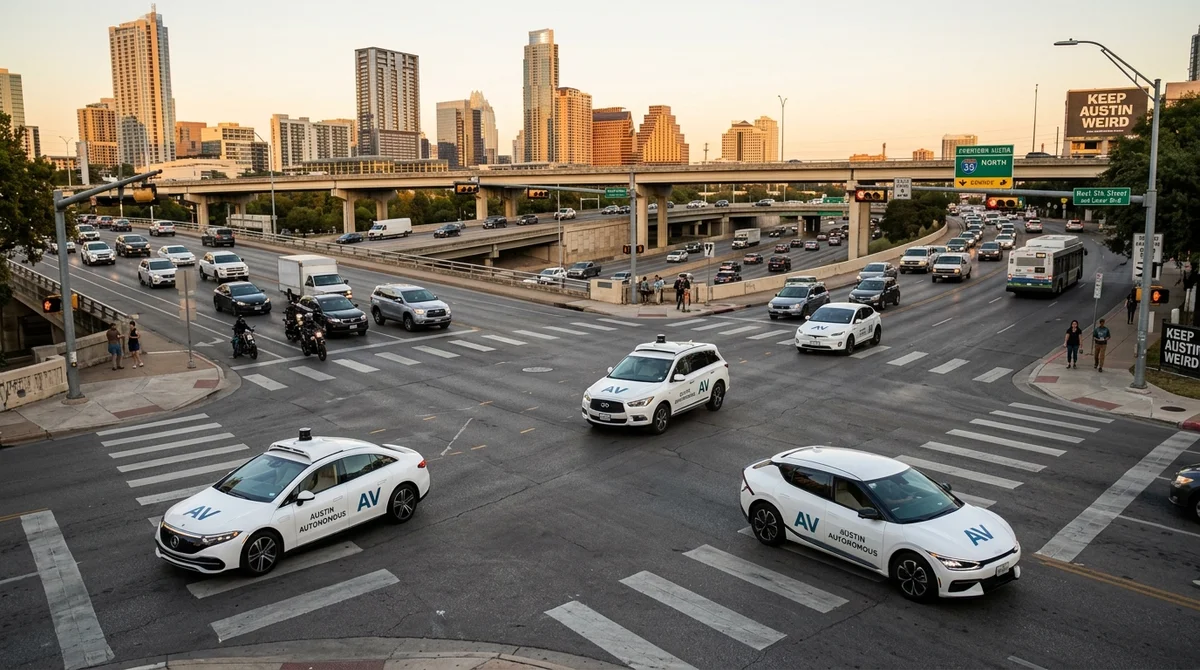
Tesla is expanding its robotaxi service to Dallas and Houston. The company announced this in an official social media post, publishing a 14-second video showing electric vehicles moving through city streets without drivers or operators in the cabin. This is the second and third city after Austin — and the first time Tesla is launching the service simultaneously on two new markets.
Until now, Tesla's robotaxi has operated exclusively in Austin, where the company conducted limited commercial service testing. The launch in Dallas and Houston marks a transition from the pilot phase to actual scaling. Houston is the fourth largest city in the USA with a population of about 2.
3 million people, Dallas is the eighth with approximately 1.3 million. Both metropolises are characterized by dense vehicular traffic and relatively favorable regulatory environment: Texas does not require manufacturers to obtain special permission for commercial deployment of autonomous vehicles, making it an attractive testing ground for such experiments.
Tesla's video clearly demonstrates the company's key distinction from major competitors: no safety drivers in the cabin. Waymo — the market leader — has also removed operators from its robotaxi in San Francisco, Los Angeles, and Phoenix, but this required years of development and expensive equipment: lidars, high-precision radars, and hundreds of cameras per vehicle. Tesla follows a fundamentally different approach — cameras and neural networks only, no lidar.
The company claims that this architecture scales significantly more efficiently and cost-effectively than competitors' sensor stacks. Tesla's specialized Cybercab autonomous vehicle was announced in late 2024 — without a steering wheel or pedals, exclusively for autonomous use. However, the current commercial service in Texas operates on production Model 3 and Model Y vehicles with Full Self-Driving activated.
Technically, FSD requires driver readiness to intervene, but Tesla effectively allows commercial operation without a human behind the wheel. This raises legal questions that regulators are only beginning to work through. The FSD system continues to attract attention from US regulators.
NHTSA has initiated several investigations based on complaints about unpredictable braking, object recognition errors, and traffic accidents involving vehicles with active FSD. Tesla responds by appealing to the accumulated mileage of its vehicles and reduced accident rates when using the system, however independent verification of this data remains a subject of dispute. The autonomous transportation market is becoming increasingly competitive.
Waymo processes hundreds of thousands of rides per month and systematically expands its geographic reach. Amazon Zoox is developing its own self-driving electric vehicle. Cruise (GM) has gradually resumed operations after a high-profile incident in San Francisco in 2023.
Tesla is entering this market late, but with a powerful structural asset: millions of already-sold vehicles daily collecting real road data for training the company's neural networks. The launch in Dallas and Houston is a practical test of Tesla's entire strategy. Successful operation without operators in two major metropolises with intense traffic will strengthen the company's position before regulators and investors.
A serious incident, on the other hand, risks slowing not only Tesla's ambitions but the development of the entire autonomous transportation industry in the USA. In the long term, robotaxi could become for the company no less important a direction than the production and sale of electric vehicles.
Want to stop reading about AI and start using it?
AI News is a curated feed of AI/tech news. Hamidun Academy teaches you to use AI systematically in your work.