Medical Student Made Thousands Selling Fake AI-Generated Conservative Girl
A medical student admitted to earning thousands by selling photos and videos of a non-existent young MAGA-style conservative — a character entirely generated…
AI-processed from Wired; edited by Hamidun News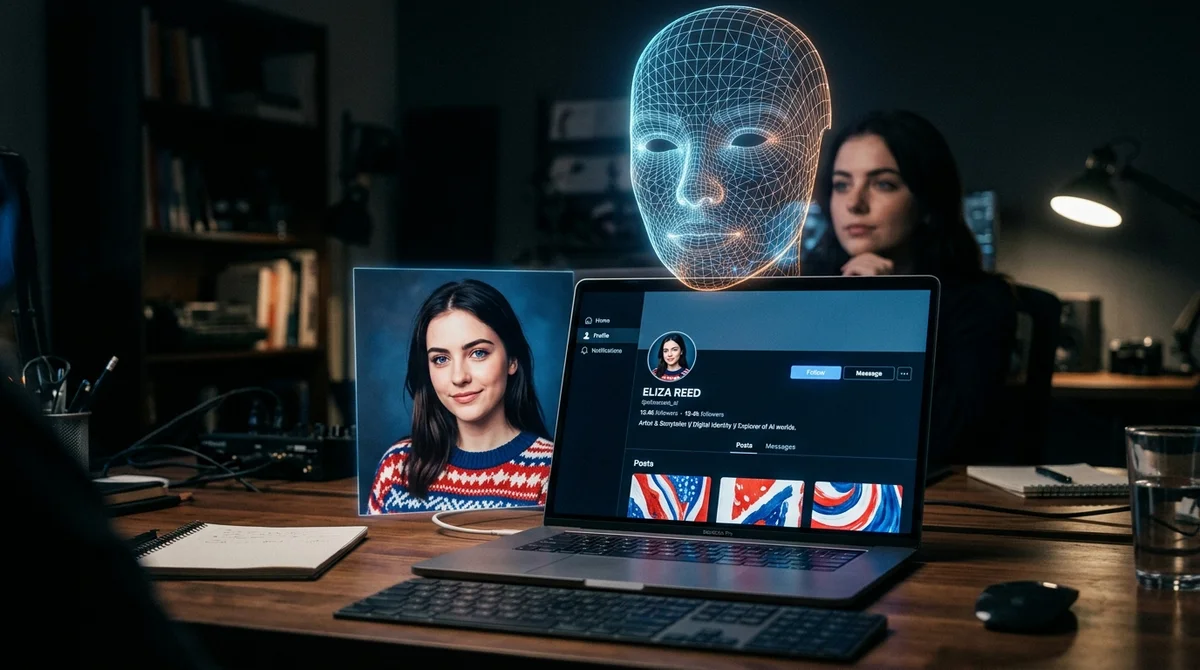
A medical student in the US has admitted to earning thousands of dollars selling photographs and videos of a young woman who does not exist. Her image—a politically active conservative in the MAGA style—was created entirely using generative AI tools. The scheme works because buyers don't know they're paying for an illusion.
The mechanics of the fraud are simple. A person creates a detailed character with a name, backstory, and political views, then uses neural networks to generate photos and videos that look convincing. The finished content is sold on adult platforms and through private subscriptions — following a model that real content creators have long used. The buyers, predominantly men with right-conservative views, believe they are supporting a real girl.
The medical student himself, who wished to remain anonymous, described his audience as "very stupid" people. According to him, he invested minimal effort: AI tools did most of the work. Revenue reached thousands of dollars with a relatively small audience. The student makes no attempt to hide his cynicism: he needs the audience as a source of income, not as a community of like-minded supporters.
This is not an isolated case. Journalists at Wired discovered that similar schemes are spreading rapidly. Multiple operators deliberately use the archetype of a young patriotic American woman—a Trump supporter, MAGA activist—precisely because this image generates particular trust within a specific audience. Political identity is built into the product as part of the bait.
The phenomenon reflects several alarming trends simultaneously. The barrier to entry for this type of business has fallen to nearly zero: modern generative tools allow the creation of convincing images without any technical skills. A few hours of work with publicly available platforms is enough to produce a ready-made character with appearance, voice, and personality. Trust within politically homogeneous communities becomes a vulnerability. People are more willing to pay those who share their values — even if that person doesn't exist. The sense of kinship lowers critical perception and increases willingness to make financial investments. Scammers understand this and exploit it.
The legal framework for combating such fraud remains extremely vague. Selling AI-generated photos is not in itself a crime in most US states. Issues only arise when the content contains explicit scenes or when operators clearly promise personal interaction with a non-existent person. But even then, law enforcement remains inconsistent.
The psychological dimension of this scheme is equally important. Men who pay for such content are not simply buying photos. They are paying for the illusion of connection with a like-minded woman, for the feeling that someone shares their political and cultural views. The AI character exploits not just their wallets, but their need for community belonging.
Disinformation researchers warn that such schemes can be used not merely for profit. A convincing AI account with a loyal audience can influence political sentiment, promote narratives, and manipulate opinion — without any transparency about its nature. The difference between commercial fraud and a political operation in this case is minimal.
While lawmakers attempt to formulate rules for regulating deepfakes and synthetic media, the market for AI characters is already functioning and scaling. The medical student in this story is just one of many who have discovered a simple formula: creating a non-existent person with the right views is cheaper than working with a real content creator. And some forms of trust sell exceptionally well.
Want to stop reading about AI and start using it?
AI News is a curated feed of AI/tech news. Hamidun Academy teaches you to use AI systematically in your work.