YouTube expands deepfake protections: Hollywood stars will be able to remove AI clones
YouTube is expanding its deepfake detection tool to Hollywood celebrities. The likeness detection feature automatically scans the platform, finds…
AI-processed from The Verge; edited by Hamidun News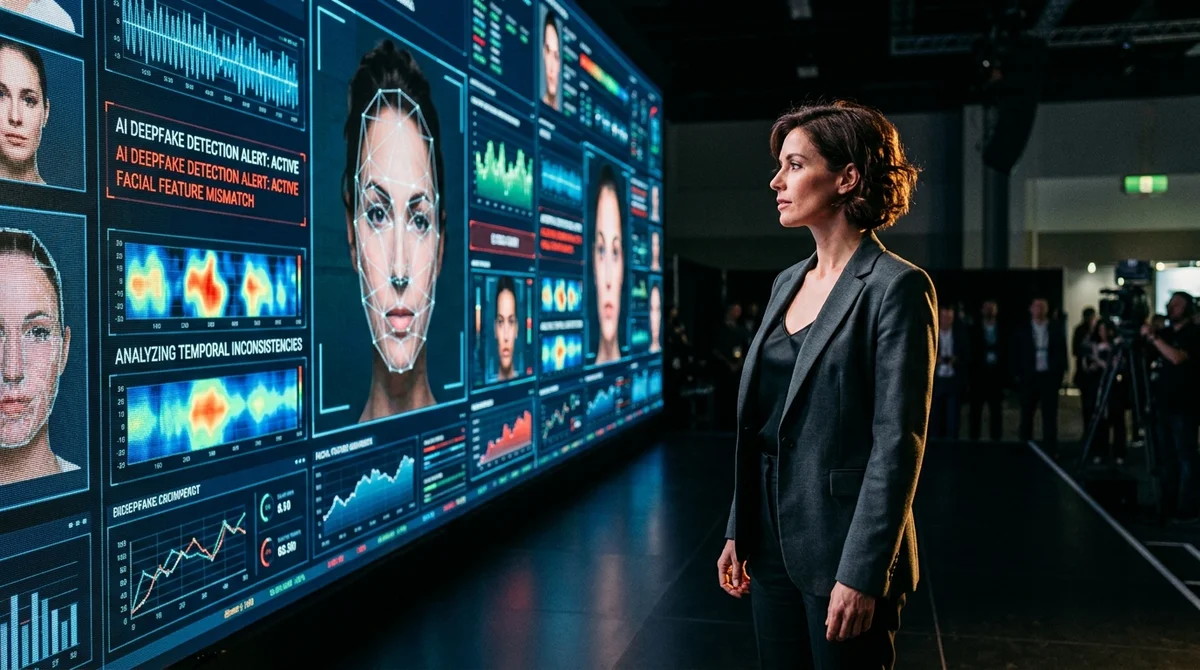
YouTube has announced an expansion of its deepfake detection tool to Hollywood celebrities — meaning hundreds of thousands of AI-generated videos featuring their faces will soon disappear from the platform. The feature is called likeness detection. It automatically scans all of YouTube for content created with artificial intelligence featuring registered public figures in the program.
A celebrity sees a list of videos imitating their appearance or voice in their account and can either monitor the situation or submit a removal request. An important nuance: each request is reviewed manually and evaluated according to YouTube's privacy policy. Not everything will be approved — parodies, satirical videos, and content clearly marked as fiction may remain on the platform.
YouTube specifically emphasizes that the mechanism works not as an automatic ban, but as a control tool.
The program rolled out in phases. In autumn 2025, YouTube began testing likeness detection with ordinary content creators — bloggers and influencers. In March 2026, the program expanded to politicians and journalists: people especially vulnerable to disinformation campaigns using deepfakes. Now it's Hollywood's turn — actors, musicians, athletes, and other pop culture stars.
Why is this important right now? Over the past two years, the number of deepfakes on video platforms has grown exponentially. Hollywood celebrities found themselves at particularly high risk: their faces and voices are easily accessible for training models, and audiences for such videos are in the millions. After a wave of scandals in 2024, when several celebrities discovered explicit deepfakes of themselves, lawyers began mass appeals to platforms. YouTube responded slowly — each case was reviewed manually and took weeks. Now celebrities have a systematic monitoring tool, not just the right to complain.
Technically, likeness detection relies on video recognition and metadata analysis. YouTube does not disclose specific details about the models; however, the system is trained to distinguish real archived video from synthetically created content. Details about the tool's accuracy have not yet been published, but judging by previous program expansions, false positives should be minimal.
YouTube is becoming the first major video platform to provide public figures with a proactive deepfake fighting tool. Previously, only reactive mechanisms existed — filing a complaint after the content already went viral. The new approach reverses the situation: a celebrity learns about a deepfake before it accumulates millions of views.
The question of scalability remains open. YouTube is a platform with over 800 million videos, and new content is uploaded at a rate of 500 hours per minute. How quickly the system will be able to process this flow — time will tell. But the very appearance of the tool sets a new standard: TikTok, Instagram, and other platforms are now under pressure to offer something similar.
Want to stop reading about AI and start using it?
AI News is a curated feed of AI/tech news. Hamidun Academy teaches you to use AI systematically in your work.