Anthropic Assessed the Risks of Pentagon Sanctions
Anthropic said in a lawsuit that possible inclusion on the Pentagon supplier blacklist could cause the company multibillion-dollar damage. This is not just abou
AI-processed from 3DNews AI; edited by Hamidun News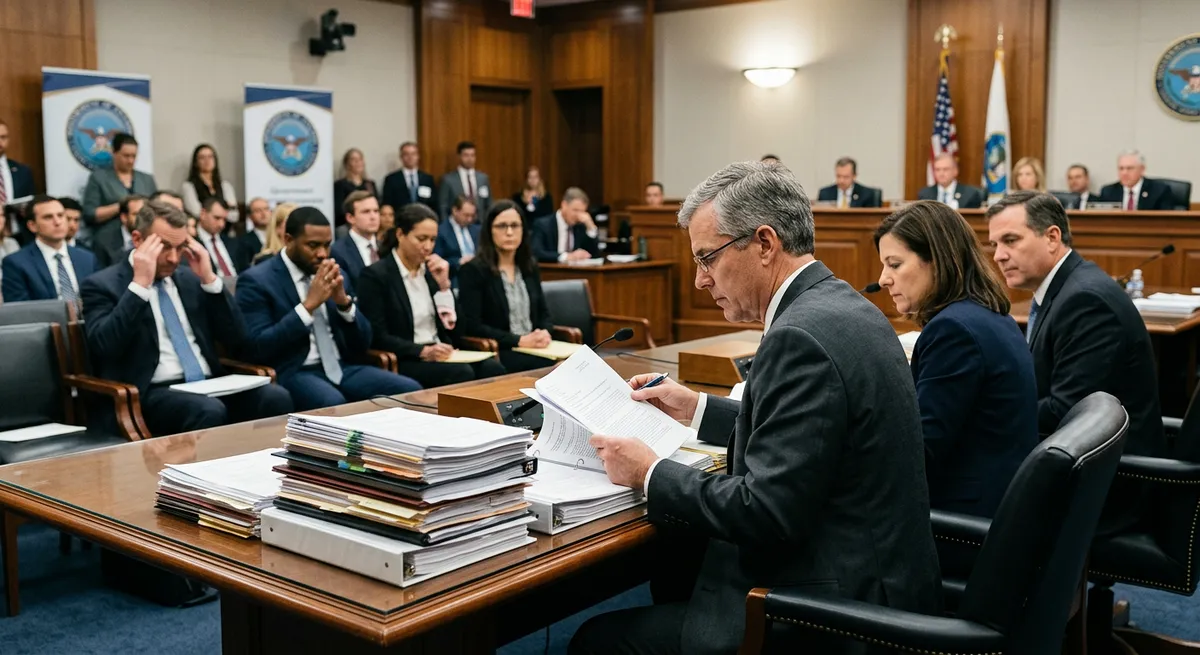
Anthropic Assesses the Risks of Pentagon Sanctions
The case with Anthropic's court filing became a rare instance when the real price of reputational and regulatory risks for a major AI company manifested not in market presentations, but in legal language. In its lawsuit, the company essentially made clear: potential inclusion on the Pentagon's supplier blacklist threatens not merely inconvenience or isolated loss of business, but multi-billion dollar damage with far-reaching consequences. And it is precisely this contrast — between the usually carefully calibrated public rhetoric and the far harsher assessment in court — that makes the situation instructive for the entire artificial intelligence industry.
At first glance, it appears to be a private episode related to risks of working with an American defense contractor. But in reality, this story is far broader. For the largest AI developers, access to government contracts in the United States long ago ceased to be an optional source of revenue. Today it is one of the key markers of business maturity, trust from the state, and a company's ability to integrate into the critical infrastructure of the next technological cycle. The Pentagon, the intelligence community, and other federal structures are becoming not merely clients, but institutional validators of technologies. If a company loses the ability to work in this market, it loses not only money but also status.
This is precisely why Anthropic's talk of multi-billion dollar damage appears quite rational, even if such assessments have not previously sounded so sharply in public discourse. In the defense and government segment, what matters is not only the volume of already concluded contracts, but the entire horizon of future agreements, pilot projects, joint development, and access to data, infrastructure, and procurement chains. Inclusion on the list of unreliable suppliers can automatically close certain doors and make others significantly less accessible.
For a company that is in an active growth phase and competing for a place among the leaders of generative AI, this means pressure on multiple fronts: the predictability of future revenue falls, attracting strategic partners becomes more complex, and the assessment by investors begins to account not only for technological potential but also for political-legal vulnerability.
The difference between what technology companies tell clients and investors and what they write in court is in itself nothing unusual. Public communications are almost always built around resilience, risk management, and confidence in prospects. Court documents, by contrast, are created to show as starkly as possible the scale of possible harm. But in the case of Anthropic, this difference is particularly striking because it exposes the fundamental dependence of AI business on relations with the state. While the market discusses models, computational power, and competition between labs, in reality the question of who gains access to federal funds, defense infrastructure, and institutional trust from Washington becomes no less important. Anthropic's court rhetoric merely makes this dependence visible.
For the company itself, such recognition carries a dual effect. On the one hand, it strengthens its position in the dispute: if potential damage truly runs into the billions, then legal protection from an unfavorable decision acquires an existential character. On the other, such formulations may serve as a market signal about how deeply the business model of major AI developers is tied to government contracts. This is important at a moment when the industry increasingly positions itself as a universal provider of solutions for the private sector, science, education, and the mass user. Court proceedings reveal the less glossy side: in the upper segment of AI, competitiveness is increasingly intertwined with the ability to serve national security tasks.
The consequences of this story extend far beyond one company. For investors, it serves as a reminder that the assessment of AI assets cannot be built only on growth rates and model quality. It must inevitably include regulatory risks, relations with government structures, and the probability of sanctions restrictions. For competitors, it is a signal that the competition for defense and federal contracts will intensify, and compliance with government requirements will become as important a factor as the talent of research teams and access to chips. For the state itself — confirmation that mechanisms for admitting or barring suppliers are becoming a powerful tool for shaping the entire AI market landscape.
In a broader sense, the Anthropic case shows how the nature of the technology industry is changing. Not long ago, major IT companies could afford distance from the defense agenda, or at least maintain the appearance of such distancing. Now the era of generative AI makes the state one of the central arbiters of growth.
Anthropic's court warning about multi-billion dollar losses is not merely an attempt to strengthen its arguments in the proceedings. It is a symptom of a new reality in which access to government contracts is becoming for AI companies not an additional advantage but a critical condition for long-term sustainability. And the more frankly companies speak about this in courts, the harder it will be to maintain the illusion that the future of artificial intelligence is determined only by the market and innovation.
Want to stop reading about AI and start using it?
AI News is a curated feed of AI/tech news. Hamidun Academy teaches you to use AI systematically in your work.