Anthropic sues the Pentagon over sanctions
Anthropic has filed two lawsuits against the U.S. Department of Defense, challenging its designation as a 'supply chain risk'. The company argues the decision i
AI-processed from Guardian; edited by Hamidun News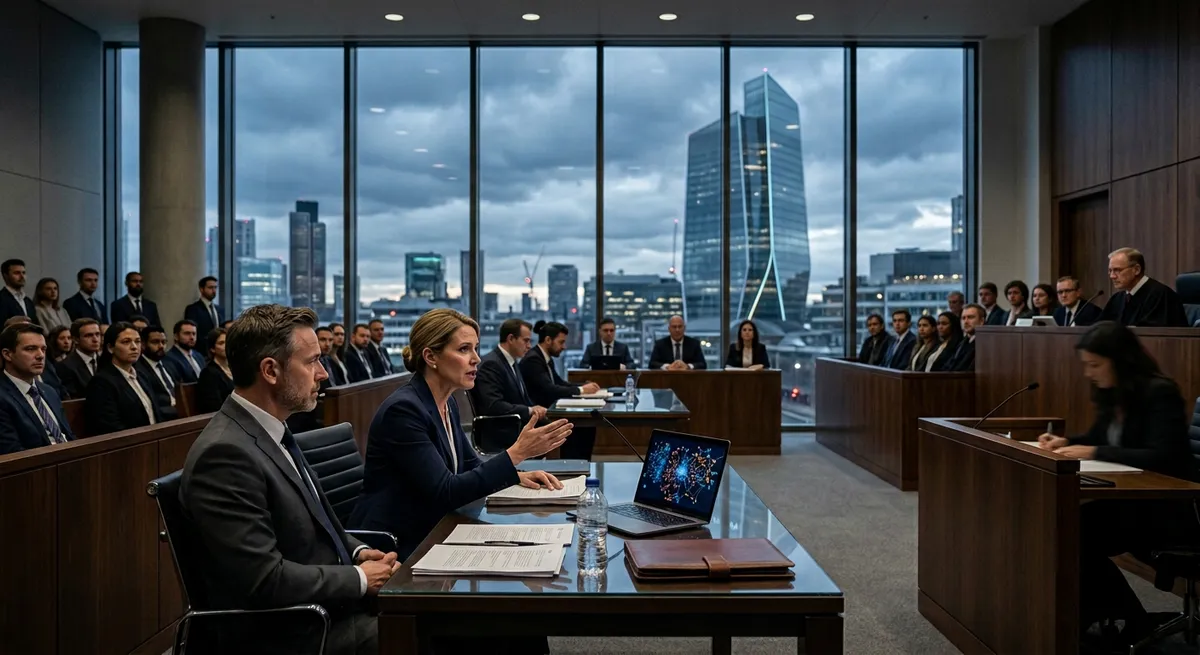
Anthropic, one of the world's leading developers of artificial intelligence systems and creator of the Claude language model, has taken an unprecedented step by filing two lawsuits against the U.S. Department of Defense.
The trigger was the Pentagon's decision to designate the company as a "supply chain risk" — a tool that has never before been applied to an American firm and which effectively requires all government contractors to sever any business relationships with Anthropic. The company considers this decision unlawful and contends that it violates its rights guaranteed by the First Amendment to the U.S.
Constitution. The lawsuits were filed simultaneously in the federal court of the Northern District of California and in the Court of Appeals for the District of Columbia, demonstrating the seriousness of the company's intention to fight for its position on all available legal fronts.
The roots of the conflict trace back to a months-long standoff between Anthropic and the military department, which centered on a fundamental question: should artificial intelligence developers have the right to impose restrictions on the military use of their technologies? Anthropic has consistently attempted to implement protective mechanisms that would prevent the use of its models for mass surveillance of citizens domestically, as well as for creating fully autonomous lethal weapon systems. This position, which fits squarely within corporate ethics and widely discussed principles of responsible AI development, met with fierce resistance from the Pentagon, which viewed such restrictions as unacceptable interference with national security interests.
The decision to designate the company with the status of 'supply chain risk' was formally made last Thursday and effectively constitutes a form of blacklist. This mechanism was created to protect government procurement from unreliable suppliers, but until now has been applied exclusively to foreign companies, typically those linked to rival states. Using it against an American firm, and not for any technical deficiencies or security violations, but essentially for attempting to uphold ethical standards, sets a troubling precedent. Anthropic rightly points out that such actions are punitive in nature and constitute punishment of the company for exercising its constitutional right to free speech and expressing its position on technology usage.
The consequences of this confrontation extend far beyond the fate of a single company. If the Pentagon's decision holds up in court, any AI developer wishing to impose ethical restrictions on the application of their products risks finding themselves in a similar situation. This could lead to the artificial intelligence industry splitting into two camps: companies willing to unconditionally serve military needs without any conditions, and those forced to completely withdraw from working with the government sector, losing a significant portion of potential revenue.
For Anthropic, whose business model relies substantially on corporate and government clients, the requirement to sever all ties with government contractors represents a serious economic threat. In essence, the Pentagon is using market pressure as a coercive lever, forcing the company to choose between principles and commercial survival.
This conflict exposes a fundamental contradiction that was bound to emerge as artificial intelligence becomes a strategic technology. On the one hand, Western governments have spent decades promoting the idea of corporate social responsibility and urging technology companies to consider the consequences of their development. On the other hand, when this responsibility comes into conflict with the military interests of the state, it turns out that the space for ethical maneuvering is far narrower than assumed. Anthropic's position in this dispute echoes a long-standing discussion within Silicon Valley that began with Google's Project Maven in 2018, when thousands of employees protested the company's collaboration with the Pentagon on drone video analysis.
The outcome of the litigation is capable of determining the rules of the game for the entire industry for years to come. If the court sides with Anthropic, it will cement the right of technology companies to set conditions on the use of their products even when working with government and confirm that ethical restrictions are protected by the Constitution. If the Pentagon prevails, it will send a signal that in an era of geopolitical competition for technological supremacy, the state is willing to employ extraordinary pressure on companies unwilling to unconditionally subordinate their development to military objectives.
In any case, the Anthropic case against the Department of Defense has already entered history as the first major legal conflict in which the question of artificial intelligence ethics has moved from the theoretical plane into the courtroom.
Want to stop reading about AI and start using it?
AI News is a curated feed of AI/tech news. Hamidun Academy teaches you to use AI systematically in your work.