Google released SpeciesNet — an open-source AI model for wildlife protection
Google has made SpeciesNet publicly available — an AI model for automatically identifying animal species in camera-trap images. The model helps conservationists
AI-processed from Google AI Blog; edited by Hamidun News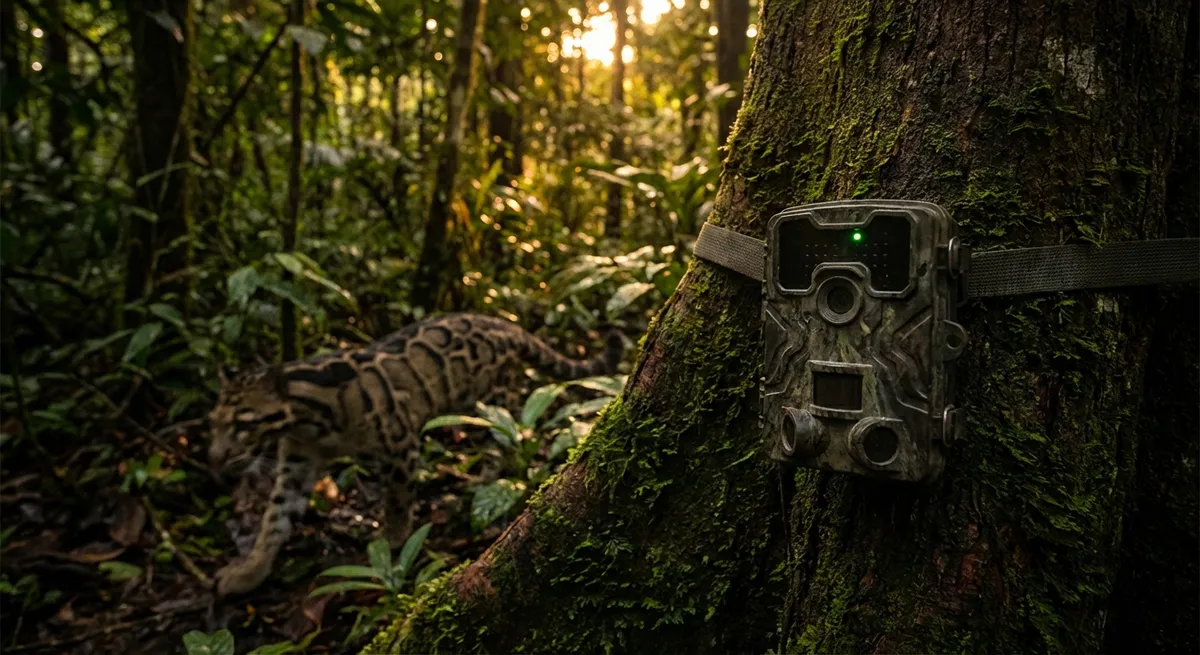
Every day, thousands of camera traps placed in forests, savannas and mountainous regions around the world capture millions of images. Most of them show emptiness, swaying grass or a random shadow. But hidden within this data stream are frames that could determine the fate of entire species: a rare snow leopard on a mountain pass, the last individuals of the Sumatran rhino, a previously unknown population of forest elephants. The problem is that ecologists simply don't have enough hands to review it all manually. This is exactly the task that SpeciesNet takes on — an artificial intelligence model from Google that the company released into open access.
SpeciesNet is a computer vision system trained to recognize animal species in images from camera traps. It sounds simple, but behind this formulation lies massive engineering work. Camera traps shoot in the infrared range, with poor lighting, at arbitrary angles. An animal may be partially hidden by vegetation, in motion, or even at the edge of the frame. Classical image classification algorithms perform poorly under these conditions. According to Google, SpeciesNet was trained on a huge array of labeled images from different ecosystems around the world, which allows it to work not only in ideal laboratory conditions but in real field settings — from the tropical forests of Borneo to the tundra of Alaska.
It's important to understand the context in which this model emerged. The biodiversity crisis long ago stopped being an abstract threat. According to the Intergovernmental Science-Policy Platform on Biodiversity and Ecosystem Services (IPBES), about a million animal and plant species are at risk of extinction. Monitoring populations is the first and necessary step toward their protection, but it requires resources that most conservation organizations simply don't have. One research project can generate tens of millions of images per year. Manual sorting of this volume takes months of work by entire teams of volunteers. AI models like SpeciesNet compress this process to hours, freeing up scientists' time for analysis and decision-making.
Google's decision to make the model open is not just a gesture of goodwill but a strategically important step. Ecosystems on different continents are radically different from each other, and a universal model will inevitably make mistakes in specific regions. Open source code allows local research groups to fine-tune SpeciesNet on their own data — for example, to adapt it for recognizing endemic species of Madagascar or rare predators of Central Asia.
This is fundamentally different from an approach in which organizations depend on a closed commercial API that may be restricted or discontinued at any time. For field stations in remote areas where internet connectivity is unstable or absent, the ability to run the model locally becomes not an advantage but a necessity.
SpeciesNet is far from the first attempt to apply machine learning to ecological tasks. The Wildlife Insights project, also supported by Google, has been providing a cloud platform for analyzing camera trap data for several years. Microsoft, with its AI for Earth, finances dozens of projects at the intersection of AI and nature conservation. The startup Conservation Metrics uses acoustic analysis to monitor birds and marine mammals. But it's precisely SpeciesNet's openness that could become the catalyst to unite fragmented efforts. When a community has a common foundational model, it becomes easier to share data, compare results, and build on top of it — from early warning systems for poaching to automatic mapping of migration routes.
However, there are questions that still don't have clear answers. How accurately does the model work with species that are underrepresented in the training sample? How does it handle low-resolution night shots, which make up a significant portion of camera trap data? Doesn't dependence on AI classification create a false sense of data completeness, when rare species are systematically missed by the algorithm? These questions don't diminish the project's value but remind us that technology is a tool, not a replacement for expertise.
In a broader perspective, SpeciesNet is an example of how large technology companies can create real public value through open AI projects. Not every application of artificial intelligence should come down to optimizing advertising metrics or generating content. Sometimes a neural network that can distinguish a clouded leopard from a Bengal cat in a grainy night image matters to the world more than the next chatbot. And the fact that Google decided not to monetize this model but instead hand it over to the scientific community deserves attention — regardless of what corporate motivations might have driven this decision.
Want to stop reading about AI and start using it?
AI News is a curated feed of AI/tech news. Hamidun Academy teaches you to use AI systematically in your work.