Descript and OpenAI: how to scale multilingual video dubbing
Descript has integrated OpenAI models for large-scale multilingual video dubbing. The system addresses one of localization’s hardest problems: it does not…
AI-processed from OpenAI Blog; edited by Hamidun News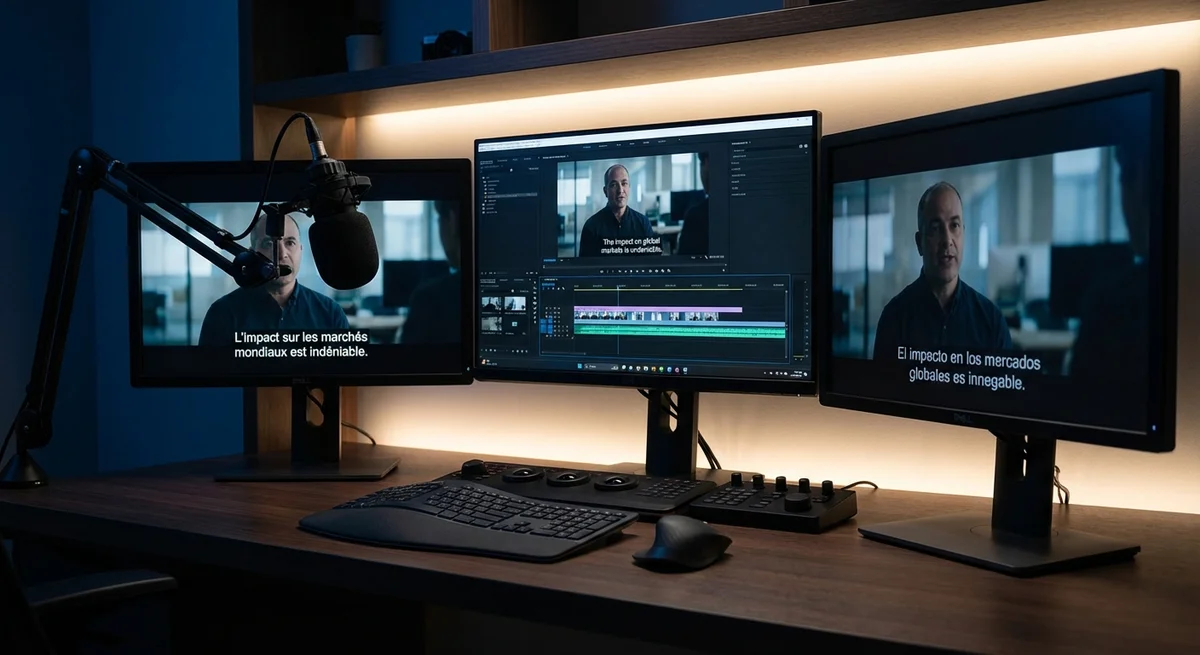
Language barriers remain one of the main obstacles to global video content distribution. Professional dubbing of one hour of video into one language can cost thousands of dollars and take weeks of work. Descript, known for its innovative video editor, has presented a solution that promises to overturn this economics: large-scale multilingual dubbing based on OpenAI models.
Descript has long established itself as one of the most technologically advanced tools for video and podcast work. The platform allows you to edit video through text — literally cutting words from the transcript, you cut the corresponding fragments from the video. Now the company has taken the next logical step: if you can edit speech as text, why not translate it just as easily? Integration with OpenAI models allows Descript to automatically dub videos into multiple languages, doing so at a level that seemed unattainable for machine translation just recently.
The key technical complexity of multilingual dubbing is not the translation itself. Modern language models handle translation reasonably well. The problem is that different languages have fundamentally different phrase lengths.
A simple sentence in English can be twice as long in German or three times shorter in Chinese. If you simply translate the text and voice it, the result will be catastrophically out of sync with the video: the speaker's lips will move when the sound has already ended, or vice versa — audio will continue over the next scene. This is why professional dubbing has always required manual text adaptation, where the translator sacrificed accuracy for timing.
Descript solves this problem at the algorithm level: the OpenAI system optimizes the translation simultaneously by two parameters — semantic accuracy and temporal synchronization with the original. In fact, the model seeks such a translation formulation that most accurately conveys the meaning and at the same time fits within the required duration.
For the content creation industry, this could become a turning point. YouTube creators, educational platforms, corporate training departments, marketing teams — they all face the need for localization, but far from all can afford a professional dubbing studio. Descript's automated solution democratizes access to multilingual localization. A content creator from Russia will be able to get a version of their video in English, Spanish, or Japanese within minutes. And conversely — English-language content will become more accessible to Russian-speaking audiences without waiting for enthusiasts to make an amateur translation.
It is important to understand the context of this partnership. OpenAI is actively developing an ecosystem of B2B applications of its models, and the Descript case is a telling example of how basic language models turn into specialized product solutions. OpenAI provides the foundation — powerful models for text generation and understanding, while partners like Descript build specific tools with deep domain expertise on top of them. This collaboration model is becoming a standard in the industry and explains why OpenAI's valuation continues to grow: the company monetizes not only ChatGPT subscriptions, but also API access for thousands of similar integrations.
Of course, the technology is not without limitations. Automatic dubbing is not yet able to convey all the nuances of acting, emotional intonations, and cultural references that require human understanding of context. For Hollywood blockbusters and premium content, professional dubbing actors will remain indispensable for a long time. But for a huge body of content — educational videos, webinars, podcasts, corporate presentations — the quality of automatic dubbing is already sufficient to be useful.
We are witnessing the formation of a new standard: video content will be created once and instantly adapted for a global audience. If Descript and OpenAI can bring the quality to a level indistinguishable from professional dubbing — and the pace of progress in language models suggests this is a matter of the coming years — the very concept of a language barrier in digital content could become a thing of the past. And this is perhaps one of the most tangible examples of how AI is changing not an abstract future, but the everyday work of millions of content creators today.
Want to stop reading about AI and start using it?
AI News is a curated feed of AI/tech news. Hamidun Academy teaches you to use AI systematically in your work.