City Detect raises $13 million for AI in urban safety and cleanliness
Startup City Detect has raised $13 million in a Series A round. The company is developing an AI platform that helps municipalities monitor the cleanliness and s
AI-processed from TechCrunch; edited by Hamidun News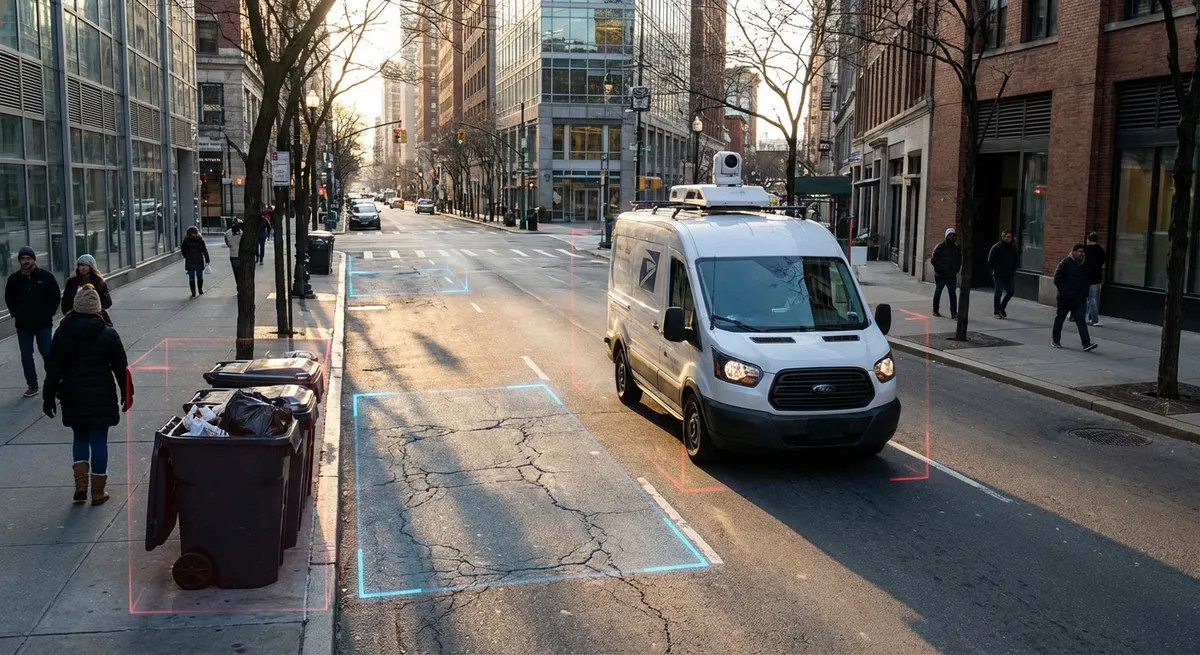
Thirteen million dollars — that's exactly how much investors are willing to bet on the idea that artificial intelligence can make cities cleaner and safer. Startup City Detect closed a Series A round and intends to scale its platform, which already operates in seventeen American cities, helping local authorities combat what urbanists call urban decay.
Urban decay is not an abstract threat, but rather a concrete chain of degradation. A broken window that no one repairs turns into an abandoned building. An illegal dump on a vacant lot attracts new garbage. A broken streetlight makes a street dangerous. For decades, municipalities relied on citizen complaints and scheduled inspections, but this approach is by definition reactive: problems are noticed when they've already grown to scales that are impossible to ignore. City Detect proposes a fundamentally different model — proactive problem detection at an early stage using computer vision and machine learning.
Technically, the City Detect platform works as follows: cameras installed on municipal transportation or city infrastructure continuously scan the streets. Computer vision algorithms analyze incoming images and automatically detect anomalies — from potholes and graffiti to overflowing garbage containers and damaged road signs. The system classifies problems by severity, geolocates them, and transmits the data to municipal services in a decision-ready format. Essentially, it's the city's digital eyes, which never tire and never miss a shift.
Dallas and Miami — two of the company's most prominent clients — represent illustrative case studies. Both cities face typical problems of fast-growing megopolises in the American South: rapid expansion of urban boundaries against limited resources of utilities. When a city grows faster than its ability to maintain itself, technological solutions become not a luxury but a necessity. The fact that City Detect already operates in seventeen cities speaks to real demand from municipalities, which are traditionally considered among the most conservative customers in the technology sector.
A $13 million round for a govtech startup is a significant sum, though not a record. The urban technology market is experiencing quiet but steady growth. According to various analytics agencies, the global smart cities market could exceed $1 trillion by 2030. However, unlike consumer AI products, where speed of audience capture is everything, in govtech the key barrier is trust. Municipalities make decisions slowly, require lengthy pilot projects, and are sensitive about privacy issues. Any video surveillance system with AI elements inevitably raises questions about citizen surveillance, and City Detect will have to constantly balance between effectiveness and ethics.
The privacy question is not frivolous here. Cameras that detect potholes and garbage are technically capable of detecting people as well. How exactly City Detect solves this problem — whether it anonymizes data at the device level, stores the video stream, or works only with metadata — is a question whose answer determines not only the company's reputation but also the prospects of the entire segment. European experience shows that public resistance to urban AI surveillance can be quite serious, and American cities, especially those with progressive city councils, are not immune to such discussions.
For the Russian context, City Detect's experience is particularly interesting. Domestic cities have long experimented with smart technologies — from Moscow's video analytics system to "Safe City" projects in the regions. However, most of these initiatives are focused on security in a narrow sense — facial recognition, law enforcement control. The idea of using AI for everyday monitoring of the urban environment's condition — street cleanliness, infrastructure integrity, timeliness of utilities maintenance — is implemented significantly less. Yet it is precisely the quality of the urban environment that directly affects residents' satisfaction and, as a consequence, the economic attractiveness of territories.
Thirteen million dollars — this is a bet that the future of urban management belongs to algorithms, not paper complaints. If City Detect can prove measurable economic effect — reducing repair costs through early problem detection, decreasing citizen complaints, improving municipal crew efficiency — the company could become the standard for municipalities worldwide. Cities, after all, were built for millennia without artificial intelligence. But keeping them in order without it is increasingly becoming more difficult.
Want to stop reading about AI and start using it?
AI News is a curated feed of AI/tech news. Hamidun Academy teaches you to use AI systematically in your work.