Diagnosis by Algorithm: Who Is Responsible When AI Makes a Mistake in Medicine
AI is moving ever deeper into clinical practice, from analyzing scans to shaping treatment plans. But the legal and ethical infrastructure is falling catastroph
AI-processed from Habr AI; edited by Hamidun News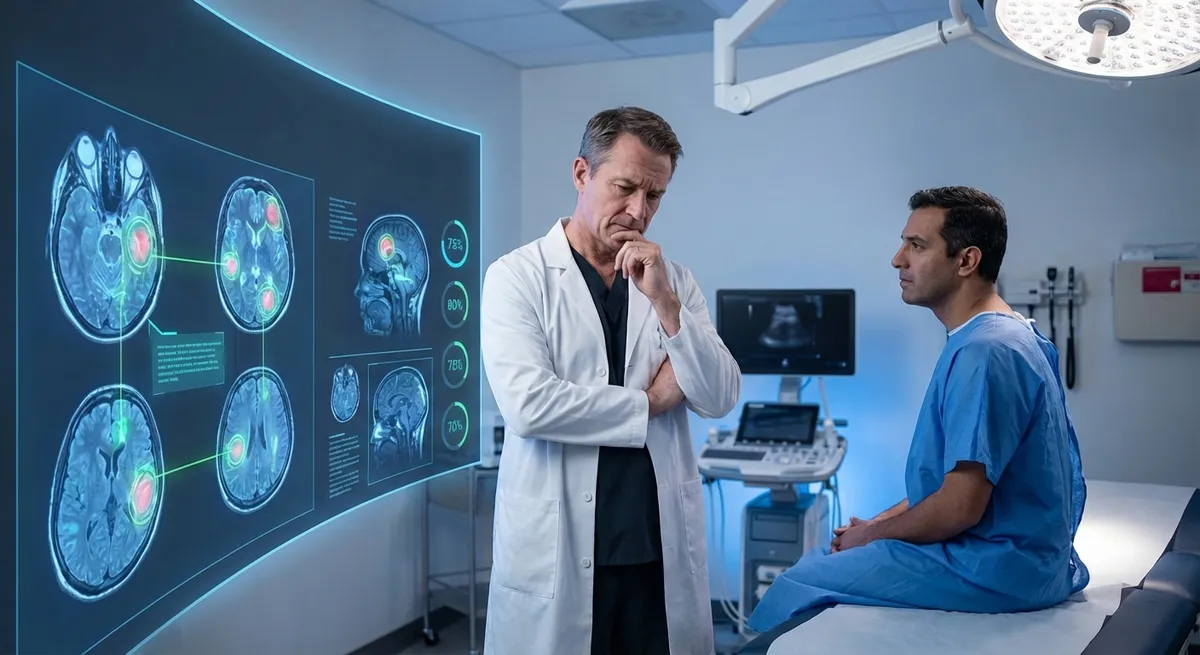
A quiet revolution is taking place in operating rooms and diagnostic facilities around the world. Machine learning algorithms read X-rays, analyze biopsy results, detect arrhythmias on electrocardiograms, and predict the probability of cancer development. According to the World Health Organization, by early 2026, more than 500 AI systems had received regulatory approval for clinical use in the United States alone. The technology works, and often works impressively. But behind the facade of technological optimism lies a question that the medical community, lawmakers, and developers have yet to find a convincing answer to: who is responsible when the algorithm makes a mistake?
The problem is not theoretical. In 2025, several high-profile cases in Europe and Asia demonstrated that AI assistants are capable of missing critical pathologies or, conversely, generating false positives that lead to unnecessary invasive procedures. In each of these cases, responsibility became diffused among several participants in the chain: the developer company claimed the system was merely a decision-support tool, the hospital cited product certification, and the doctor found themselves caught between their own expertise and a machine's recommendation that had proven more accurate than them in thousands of previous cases.
The root of the problem lies in the architecture of modern medical AI itself. Most clinical systems are built on the principle of a "black box"—deep neural networks make decisions whose logic cannot be fully explained even by their creators. When a radiologist looks at an image and issues a conclusion, they can argue every step of their reasoning. When an algorithm does the same, it produces a probability score and an attention heatmap, but not clinical justification. This creates a fundamental gap: the doctor is forced either to blindly trust the system or to conduct a complete independent assessment each time, which negates all the efficiency gains.
A separate facet of this problem is the so-called automation bias effect. Decades of research in aviation and industry have shown that people tend to rely excessively on automated systems, gradually losing their own critical evaluation skills. In medicine, this effect is potentially more dangerous than in any other field. Young physicians who work with AI assistants from their early years of training risk never developing the depth of clinical thinking that allowed their predecessors to catch rare pathologies that don't fit statistical patterns. An algorithm is trained on millions of typical cases, but medicine is largely an art of dealing with exceptions.
The regulatory landscape still resembles a patchwork quilt. The European AI Act, which came into force in phases, classifies medical AI systems as high-risk and requires transparency, but specific mechanisms for distributing responsibility remain blurred. In Russia, the Ministry of Health is actively promoting digitization of healthcare, but the regulatory framework for AI diagnostics is developing more slowly than the technologies themselves. The question of legal responsibility comes down to a classic dilemma: an AI system is not a legal subject, it cannot be held responsible, stripped of a license, or prosecuted in court.
The most mature approach to this problem is taking shape in the United Kingdom, where the National Health Service has developed a framework that divides responsibility into three levels. The developer is responsible for algorithm validation and safety. The medical institution is responsible for proper implementation and monitoring. The physician retains final clinical responsibility, provided they are given adequate tools for critical evaluation of AI recommendations. This is not a perfect solution, but at least a working framework that allows moving forward.
The industry must acknowledge an uncomfortable truth: the technological maturity of AI in medicine has far outpaced institutional readiness for its application. Algorithms already surpass average specialists in a number of narrow diagnostic tasks, but the healthcare system is more than just accuracy in pathology recognition. It is patient trust, legal protection, ethical standards, and human empathy that cannot be digitized. The future of medical AI is not in replacing the doctor, but in creating a new partnership model where boundaries of responsibility are defined as clearly as treatment protocols. Until that happens, every algorithmic diagnosis remains an experiment—technically brilliant, but legally and ethically vulnerable.
Want to stop reading about AI and start using it?
AI News is a curated feed of AI/tech news. Hamidun Academy teaches you to use AI systematically in your work.