Pentagon tested OpenAI models through Microsoft, bypassing military-use ban
According to Wired, the Pentagon ran experiments with OpenAI models through Microsoft Azure's cloud infrastructure while the company's explicit ban on military
AI-processed from Wired; edited by Hamidun News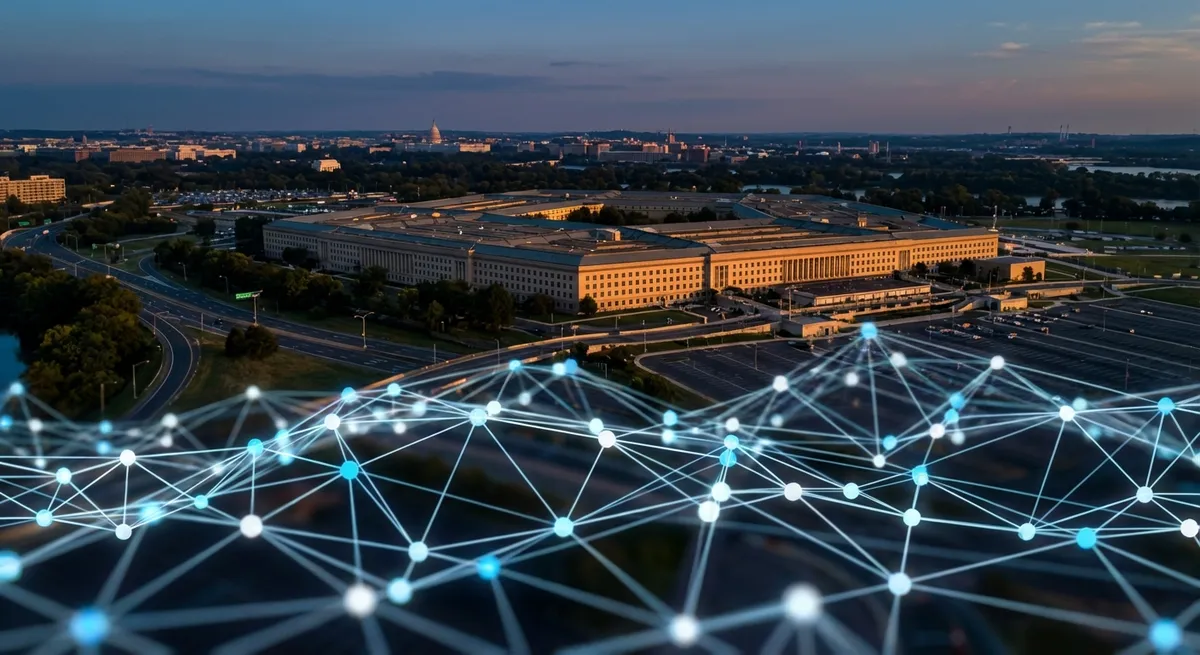
When OpenAI spelled out a ban on military use of its models in its early policy documents in black and white, it looked like a principled stance from one of the world's most influential AI companies. Now it turns out that the Pentagon found an elegant workaround long before the company officially revised its rules.
According to sources cited by Wired, the U.S. Department of Defense was conducting experiments with OpenAI's technologies, gaining access to them not directly, but through Microsoft's Azure cloud platform. The scheme was simple and at the same time formally impeccable: Microsoft, which has invested billions of dollars in OpenAI, has a licensing right to use the company's models in its own products and services. Azure provides corporate and government clients with access to these models within its cloud ecosystem. The Pentagon is a long-standing and major Microsoft customer. All links in the chain are in place, and none of them formally violates the letter of OpenAI's ban, which applied to direct use of its services for military purposes.
The context of this story is rooted in a fundamental contradiction embedded in OpenAI's very business model. The company, founded in 2015 as a non-profit research laboratory with a mission to ensure safe development of artificial intelligence for the benefit of humanity, gradually transformed into a commercial giant. The partnership with Microsoft, beginning with a one-billion-dollar investment in 2019 and growing into a multi-billion-dollar strategic alliance, became the engine of this transformation. But it also created a structural loophole: by transferring licenses for its models to Microsoft, OpenAI effectively lost complete control over who and how these models were subsequently provided to.
Technically, the Pentagon could use OpenAI's models through Azure for a wide range of tasks — from processing intelligence data and document analysis to planning logistical operations and scenario modeling. The U.S. military department has long shown interest in large language models as a tool for improving the efficiency of command structures. And although the exact nature of the experiments is not disclosed, the very fact of their conduct in circumvention of OpenAI's public policy speaks volumes.
In January 2024, OpenAI quietly changed its acceptable use policy, removing the explicit ban on military and defense applications. The company explained this decision as the need for a more nuanced approach, emphasizing that the ban on use to cause harm to people remains in force. Critics, however, saw in this the legalization of already existing practice — a kind of acknowledgment of a reality in which ethical constraints proved weaker than commercial interests and government pressure.
This story exposes a systemic problem that goes far beyond a single company. The modern AI industry is built on complex partnership and licensing relationships, where technologies from one developer are embedded in the products and platforms of dozens of other companies. In such an ecosystem, the ethical policies of an individual developer become declarations of intent rather than actual constraints.
If a model is accessible through a partner's API, a ban on certain types of use becomes a matter of trust, not technical control. Microsoft, for its part, has a long history of cooperation with the Pentagon and never shared the pacifist rhetoric of early OpenAI — the JEDI contract and its successor JWCC for tens of billions of dollars bear that out.
For the entire artificial intelligence industry, the lesson is transparent and discouraging. Ethical frameworks not backed by technical control mechanisms and legally binding agreements with partners remain good intentions. As long as AI companies build their ecosystems through licensing and cloud platforms, real control over the end use of technologies will inevitably be eroded. And the question of whether the world's most powerful AI systems should work for military departments finally moves from the realm of corporate ethics into the realm of geopolitics, where answers are determined not by startup missions, but by the logic of great power competition.
Want to stop reading about AI and start using it?
AI News is a curated feed of AI/tech news. Hamidun Academy teaches you to use AI systematically in your work.