Google integrates the Canvas workspace directly into search results
Google is expanding access to Canvas, an interactive workspace inside AI Mode in Search. The feature, originally introduced in the Gemini app for creating docum
AI-processed from The Verge; edited by Hamidun News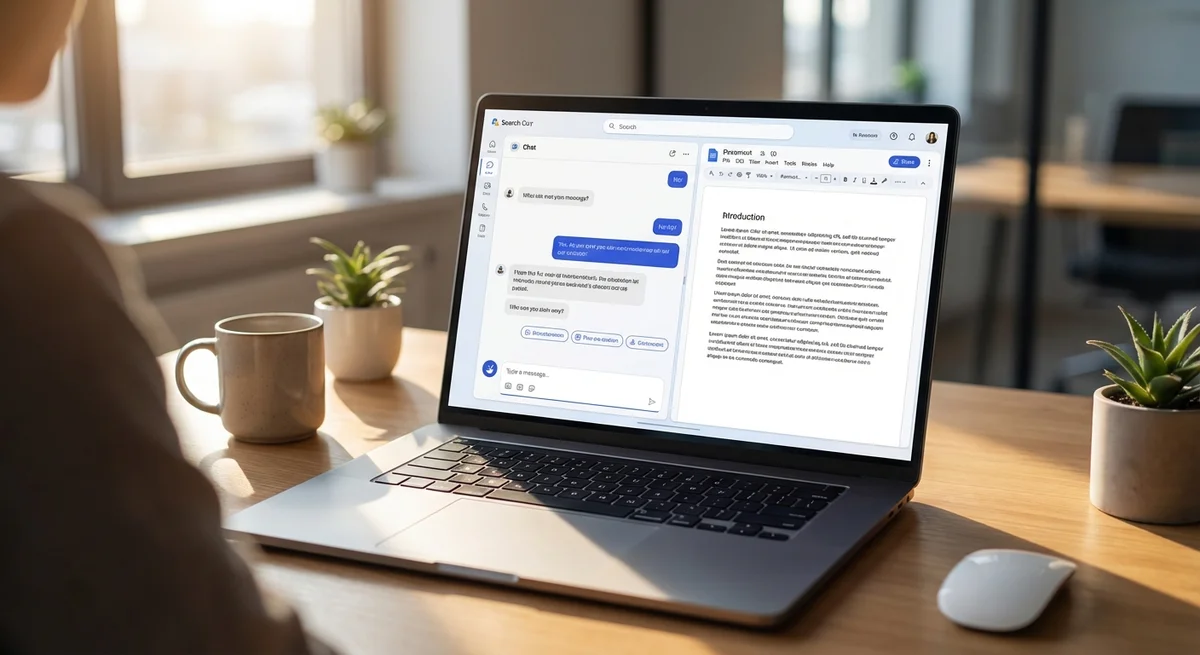
Google's search bar is gradually transforming into a full-fledged work environment. The company announced that Canvas — an interactive workspace with artificial intelligence support — is now available to all users of AI Mode in Search across the United States. This is not just another cosmetic update: Google is essentially blurring the boundary between information retrieval and processing, allowing users to both search for and work with information without leaving a single browser tab.
To understand the significance of this move, it's worth looking back at the beginning. Canvas first appeared inside Google's own Gemini AI assistant as a tool for creating documents and writing code in real-time. The idea was simple and elegant: instead of simply receiving text responses from a language model, users could work in a full-featured editor where AI acted as a co-author. Later, Google began testing Canvas in AI Mode — an experimental search mode where instead of traditional links, users receive comprehensive answers from Gemini. However, at first, capabilities were severely limited: Canvas in search could only visualize travel plans.
Now the restrictions have been lifted. Users can leverage Canvas in AI Mode for a wide range of tasks — from creative writing to programming. In practice, it works like this: you enter a query in the search bar, AI Mode generates an answer, and next to the chat, a separate panel opens — that very workspace where you can edit text, view generated code, or explore an interactive dashboard with information. The key advantage over a regular chat with AI lies in the fact that Canvas uses current data from Google Search. This means that created documents and plans are based not only on the language model's training data, but also on fresh information from the internet.
Strategically, this move fits into a large-scale transformation that Google is undergoing with its flagship product. The search giant has been methodically restructuring search around generative AI for over a year now. First came AI Overviews — brief answers generated by neural networks above regular search results. Then — AI Mode as a separate mode for deeper research queries. Now Canvas adds a productivity layer to this: search stops being an entry point from which users leave for other websites and becomes a place where users stay to work. For Google, this is critically important in an era when ChatGPT, Perplexity, and other AI tools threaten the very behavioral model on which the company's advertising empire is built.
For competitors, this move sets a new standard. OpenAI with ChatGPT and Microsoft with Copilot already offer the ability to create documents and code within their interfaces, but none of them possess such a powerful search backend as Google. The ability to simultaneously search for current information and immediately transform it into a structured document or work plan — this is a serious competitive advantage that is difficult to replicate without its own search infrastructure. Anthropic with Claude offers Artifacts — a conceptually similar tool for content creation alongside chat, but without integration with search on such a scale.
However, it's too early to talk about a revolution. Canvas in AI Mode is only available in the United States, and Google has not announced timelines for global expansion. For Russian and European users, this remains a feature that can only be observed in reviews. Additionally, questions remain about quality: how reliable are documents and code created by AI based on search data, and how will Google ensure information accuracy in a workspace where users might accept generated content as verified fact.
Nevertheless, the direction of movement is clear. Google is consistently transforming search from a reference tool into a work tool, and Canvas is perhaps the most illustrative step in this direction. If the search bar previously answered the question "what?", now it increasingly tackles the question "do it". This is a fundamental shift that will change not only user habits in the coming years, but also the very economics of the internet — because if people stop visiting websites to complete tasks, all that traffic will remain within Google's ecosystem.
Want to stop reading about AI and start using it?
AI News is a curated feed of AI/tech news. Hamidun Academy teaches you to use AI systematically in your work.