Raycast launches Glaze — a platform where vibe coding becomes truly simple
Raycast has introduced Glaze, a new platform for vibe coding that lets users create, use, share, and discover programs written with AI. The problem with existin
AI-processed from The Verge; edited by Hamidun News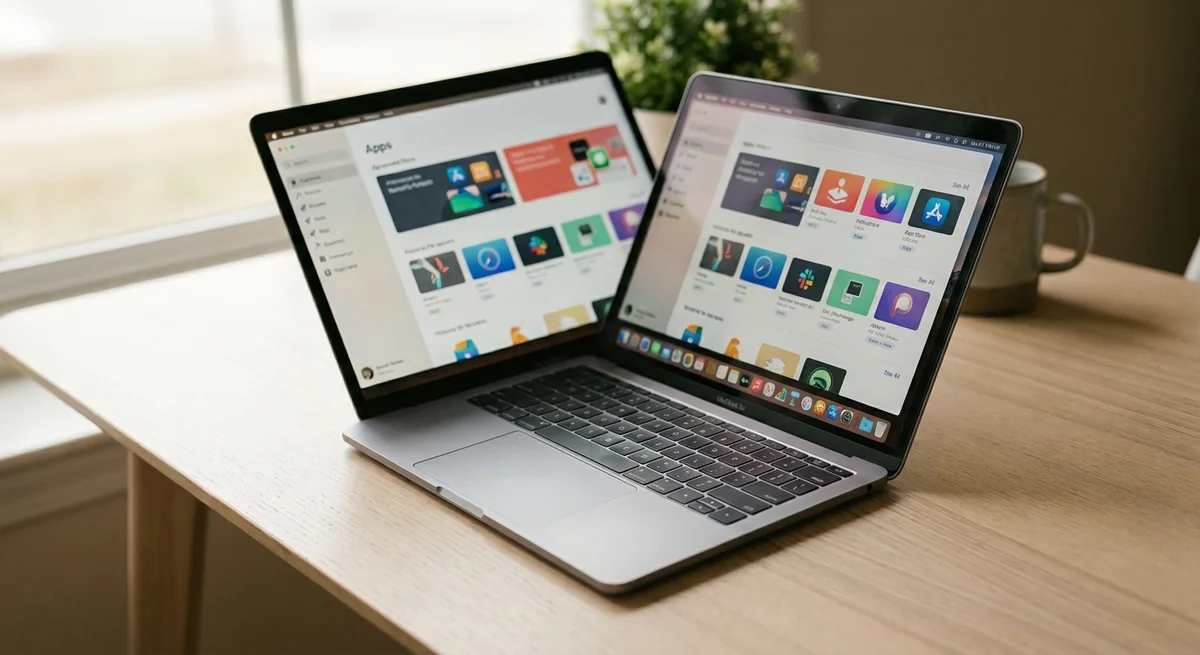
Vibe-coding — a phenomenon that over the past year has transformed from a curious experiment into a full-fledged movement. Millions of people without a single line of professional experience are creating applications, utilities, and services simply by describing their ideas to AI assistants. But there remains a chasm between "asking Claude to write code" and "getting a working program on your computer." It is precisely into this chasm that Raycast's new product aims — a platform called Glaze.
Raycast is a company well known to Mac users. Their eponymous launcher has long become a cult tool for advanced macOS users, replacing the standard Spotlight and transforming the search bar into a powerful command center. Now the team is betting that the next wave of user software will be created not by professional developers, but by ordinary people with the help of artificial intelligence. And these people need infrastructure that will free them from technical routine.
The problem that Glaze solves may seem insignificant at first glance, but in practice it is precisely what stops most vibe-coding enthusiasts. Tools like Claude Code, Cursor, or Copilot do indeed allow generating functional code from text descriptions. However, once the code is written, the user is left alone with the terminal, the file system, dependencies, the deployment process, and dozens of other technical details. For someone without development experience, each of these steps is a potential wall that stops enthusiasm. Glaze takes on all this "overhead": the platform offers a unified environment where you can create an application, run it, keep it in working order, and — what is particularly interesting — share it with others.
The Glaze Store became a key element of the ecosystem — a kind of catalog filled with programs created by other users through vibe-coding. This is a fundamentally new concept of software distribution. If the App Store is a showcase of professionally developed applications, then Glaze Store is more like a marketplace of user solutions created by people for people. Need a utility for a specific task that no large developer would ever implement? There's a good chance someone has already described such a task to an AI and uploaded the result to Glaze Store. Didn't find it — you can create it yourself and share it with the community.
It is important to understand the context in which this product appears. The industry is experiencing a moment when the barrier to entry for software creation is rapidly lowering. According to various surveys, a significant portion of code in technology companies is already being generated or substantially refined by AI. But until now, the main beneficiaries of this revolution have remained professional developers who use AI to accelerate their work. Glaze is an attempt to shift the focus to a completely different audience: designers, marketers, entrepreneurs, students — everyone who needs custom tools but is not ready to master the command line.
For now, the platform is available exclusively on macOS, which makes sense for Raycast with its deep integration into the Apple ecosystem. This is simultaneously a strength — Mac users get a native, polished experience — and a limitation that narrows the potential audience. However, given that Mac users have traditionally had a high proportion of creative professionals and early technology adopters, the choice of platform for launch looks strategically sound.
Of course, there are serious questions. The quality and security of code generated by AI remain a matter of discussion. When a non-professional creates an application and uploads it to a public catalog, who bears responsibility for potential vulnerabilities? How will Glaze Store be moderated? Will the platform be able to scale without turning into a dump of half-working prototypes? Answers to these questions will determine whether Glaze becomes truly a mass product or remains a niche toy for a technically savvy audience.
Nevertheless, the direction that Raycast is setting deserves attention. The company is essentially building the missing link between generative AI and everyday software use. If vibe-coding is a new way of creating programs, then Glaze claims the role of infrastructure for this new world. And if this bet pays off, we may find ourselves in a reality where every computer user is simultaneously both a consumer and creator of software. It sounds utopian, but that's exactly how predictions sounded about everyone being able to run a blog or shoot videos — and then WordPress and YouTube appeared.
Want to stop reading about AI and start using it?
AI News is a curated feed of AI/tech news. Hamidun Academy teaches you to use AI systematically in your work.