Qualcomm CEO calls 2026 a turning point for AI agents
Qualcomm CEO Cristiano Amon said at the MWC Barcelona conference that 2026 will be the year of AI agents. According to him, the coming wave of autonomous AI sys
AI-processed from Bloomberg Tech; edited by Hamidun News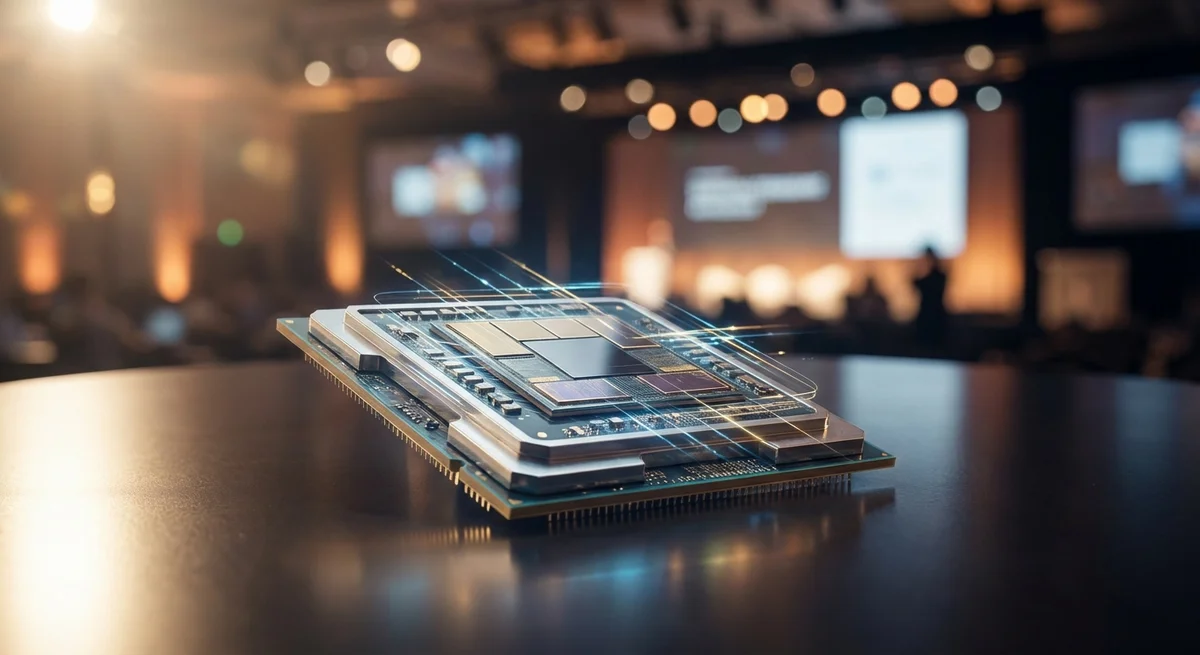
Qualcomm CEO Cristiano Amon took the stage at Mobile World Congress in Barcelona with a statement that sets the tone for the entire industry in the coming year: 2026 will be the year of AI agents. Not just chatbots, not just generative models, but fully autonomous systems capable of acting on behalf of the user in the digital world. Given Qualcomm's scale and influence on the mobile ecosystem, these words deserve serious consideration.
Mobile World Congress Barcelona traditionally serves as a platform where major technology companies outline their strategic priorities for the year ahead. While 2024 was dominated by the race to integrate generative AI into smartphones, and 2025 saw the first real results from running local language models on mobile processors, Amon is now marking the next evolutionary step. AI agents are software entities that don't just respond to requests, but independently plan actions, interact with applications and services, and make decisions within parameters set by the user. In essence, this is a transition from tool to digital assistant in the fullest sense of the word.
For Qualcomm, this forecast is not abstract futurism, but a direct reflection of business strategy. The company has methodically increased the AI capabilities of its Snapdragon processors over the past few years, betting on so-called edge AI — running models directly on the device without relying on the cloud. Snapdragon 8 Elite and its server counterparts are already capable of processing models with billions of parameters locally. Agent AI requires precisely this architecture: so that a digital assistant can react instantly to context, work with personal data without sending it to remote servers, and function even with unstable internet connectivity, computing must happen on the device.
The context of Amon's statement becomes even more significant when you look at what's happening around it. OpenAI, Google, Anthropic, and dozens of startups are actively developing agent frameworks. Microsoft is integrating Copilot agents into its ecosystem. Apple is expanding Apple Intelligence capabilities. But all these solutions need a hardware foundation, and this is where Qualcomm sees its key role. The company positions itself not as a developer of AI models, but as the creator of the platform on which these models and agents will run — from smartphones and laptops to cars and industrial devices. This is a strategically calculated position: rather than competing with software giants, Qualcomm seeks to become an indispensable link in the infrastructure.
It's important to understand that the transition to agent AI brings serious challenges. When a program acts autonomously — booking tickets, sending emails, making purchases — questions of security, privacy, and accountability become paramount. Who is responsible if an AI agent makes an erroneous transaction? How do we ensure that an agent isn't compromised by malicious actors? These questions don't yet have established answers, and the industry will solve them in parallel with the deployment of the technology. Qualcomm, for its part, emphasizes hardware security mechanisms built into processors, but this may prove insufficient without appropriate software and regulatory frameworks.
For the market, Amon's forecast means accelerating competition across multiple dimensions. Between chipmakers — Qualcomm, MediaTek, Apple, and Intel will compete for the best AI performance on devices. Between ecosystems — Android and iOS will offer competing implementations of the agent experience. Between cloud and edge — the balance between local and server-based computing for AI agents will define the architecture of next-generation applications. Smartphone manufacturers, in turn, get a new marketing narrative: where they once sold cameras and screens, the quality of the AI agent built into the device will now become the key selling point.
Qualcomm's CEO's statement at MWC is not simply corporate optimism. It's a signal that the infrastructure layer for agent AI is approaching maturity. Technology that two years ago was discussed in the future tense is now taking on concrete hardware form. The main question remains: are users ready to trust autonomous programs with real actions in their digital lives? We'll get the answer to that in 2026.
Want to stop reading about AI and start using it?
AI News is a curated feed of AI/tech news. Hamidun Academy teaches you to use AI systematically in your work.