OpenAI rushes to rewrite Pentagon contract after Altman admits it was "careless"
OpenAI is revising the terms of its contract with the U.S. Department of Defense (renamed the Department of War) after Sam Altman publicly acknowledged that the
AI-processed from Guardian; edited by Hamidun News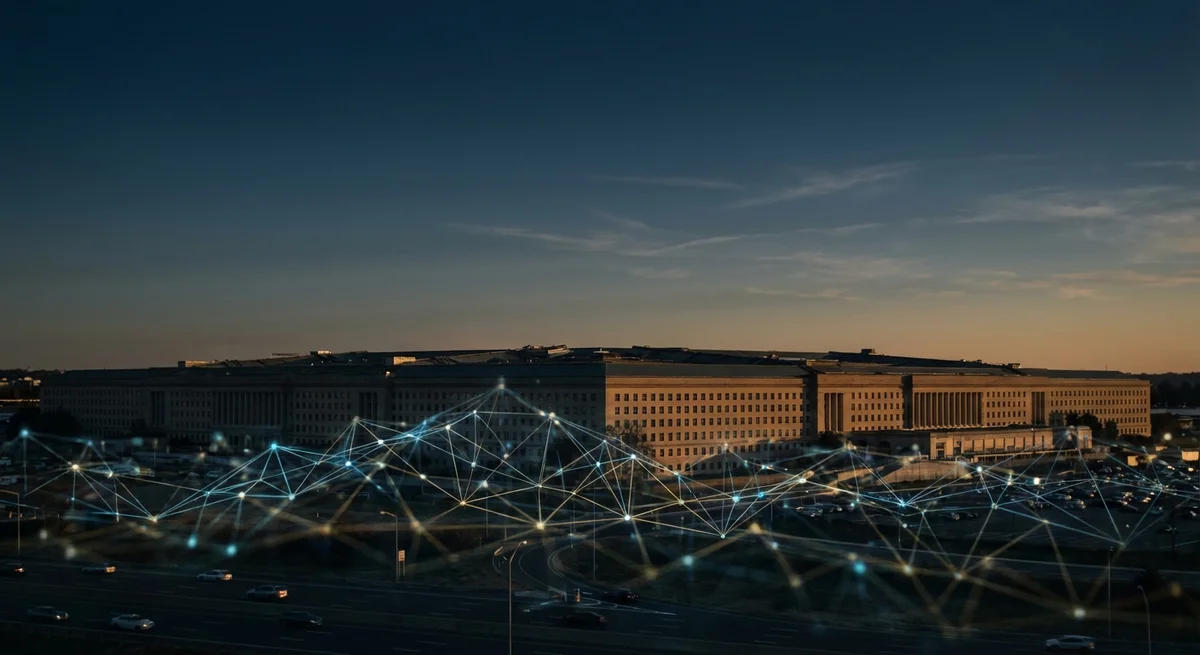
Sam Altman rarely acknowledges mistakes publicly. But on Monday evening, the OpenAI CEO essentially admitted that one of his company's most high-profile deals was, to put it mildly, handled carelessly. The contract for supplying artificial intelligence technologies to the U.S. Department of Defense—now officially called the Department of War—will be revised, with explicit restrictions added on the use of AI for mass surveillance and intelligence agency operations.
The story began when OpenAI rushed to sign an agreement with the military department, details of which leaked to the press before the company could prepare a coherent public explanation. The reaction was predictably harsh: human rights advocates, digital security experts, and parts of the tech community expressed serious concerns that ChatGPT technologies could be integrated into systems for internal monitoring of citizens. Particular alarm was raised by the potential link with the National Security Agency (NSA)—an organization whose reputation has remained toxic for any technology company that values user trust since Edward Snowden's revelations.
In his Monday statement, Altman used language uncharacteristic of a CEO of a company valued at hundreds of billions of dollars. He called the deal "opportunistic and careless"—words that in the corporate world are usually spoken not about one's own decisions, but about competitors' mistakes. This admission, however, looks less like genuine remorse and more like a calculated move to manage a reputational crisis. OpenAI found itself in a situation where silence would have cost more than public self-criticism.
The revised contract, according to Altman, will contain an explicit ban on two key scenarios: the use of OpenAI technologies for mass surveillance of the population within the country, and their transfer to intelligence divisions of the Department of Defense, including the NSA. Formally, this sounds like a serious restriction. In practice—more questions remain than answers. Who will monitor compliance with these terms? How exactly is "mass surveillance" defined in legal terms? And what prevents the military department from using the developments obtained from OpenAI in related projects that formally don't fall under the restrictions?
The context of this story is far broader than a single contract. OpenAI has undergone a remarkable evolution from a nonprofit laboratory created for "safe AI for the benefit of humanity" to a commercial giant actively seeking government contracts. As recently as 2023, the company categorically refused to work with the military. In 2024, the policy was quietly revised—first allowing collaboration in cybersecurity, then the boundaries became increasingly blurred. The contract with the Department of War became a logical, if painful, culmination of this drift. Each step was accompanied by assertions about "protective" and "defensive" purposes, but the direction of movement was clear.
For the industry as a whole, the OpenAI situation sets an important precedent. All major AI developers—from Google DeepMind to Anthropic—will sooner or later face a similar choice. Government contracts bring stable revenue and political patronage, but simultaneously put at risk the reputation among users and developers for whom data privacy is a fundamental value. Microsoft, OpenAI's largest investor, has long worked with the Pentagon through its cloud services and the JEDI project, but Microsoft doesn't have a consumer product with two hundred million users who daily entrust it with their thoughts, queries, and data.
The very fact of the Department of Defense's renaming to Department of War deserves special attention—a decision by the administration that returns the agency its historical name, which existed until 1947. For OpenAI, this creates an additional optical problem: it's one thing to cooperate with the "Department of Defense," and quite another to work with the "Department of War." Semantics in this case work against the company, reinforcing the sense that technologies created to help people could be turned against them.
Altman promised transparency and restrictions. But trust is a resource that is spent faster than it accumulates. OpenAI must prove that promises to ban mass surveillance are not just lines in a press release, but a genuinely functioning control mechanism. Otherwise, the company risks discovering that it has lost something more valuable than any government contract—the belief that it still stands on the side of people, not the systems that watch over them.
Want to stop reading about AI and start using it?
AI News is a curated feed of AI/tech news. Hamidun Academy teaches you to use AI systematically in your work.